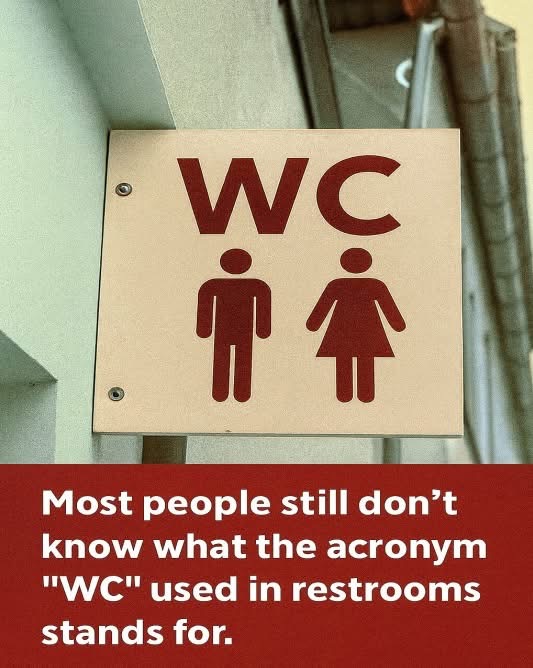
The abbreviation “WC,” meaning “Water Closet,” originated in 19th-century England when indoor plumbing was still new and reserved for wealthier households. At the time, it served as a clear way to distinguish modern indoor flushing toilets from the outdoor privies people had used for generations. Though the full term is rarely spoken today, the shorthand “WC” has remained on signs throughout Europe, Asia, and many international locations because it functions as a universally understood label for travelers.
As indoor bathrooms became standard, different countries developed their own preferred terms. In the United States, the word “restroom” became common, while Canadians often use “washroom.” The British typically say “toilet” or “loo,” and in the Philippines, the widely used term is “CR,” short for Comfort Room. French-speaking regions rely on “toilettes.”
Despite these variations, public spaces needed symbols that could communicate instantly to people from anywhere. This is where the familiar stick-figure icons emerged. Their simple shapes—one figure in pants, the other in a skirt—made them easy to understand at a glance in airports, malls, train stations, and tourist areas. Over time, some businesses added playful or creative twists, which were charming but occasionally confusing for visitors unfamiliar with the design.
Today, restroom signage continues to adapt. Many locations now feature gender-neutral or all-gender restroom signs that use neutral symbols or clear text to promote inclusivity and accessibility. The next time you see the letters “WC,” you’re witnessing more than a practical sign—you’re seeing a small piece of cultural history that has evolved for more than a century.