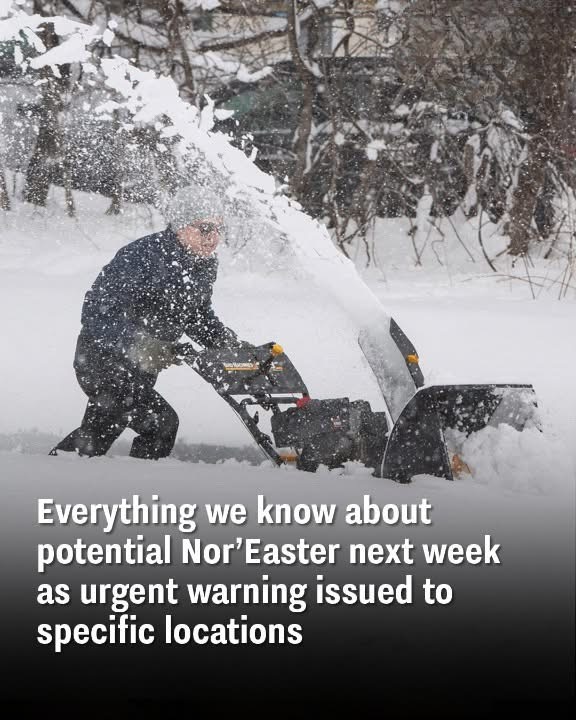
A potential Nor’Easter is expected to hit parts of the U.S. next week, and meteorologists have begun identifying regions most likely to feel its impact. The alert comes just days after a powerful coast-to-coast storm delivered freezing temperatures, leading to more than 1,900 flight cancellations and over 8,000 delays on November 29.
Chicago O’Hare was hit especially hard, reporting more than 1,000 cancellations. Travel was also severely disrupted in Indiana, where a 45-car pileup on I-70 occurred amid heavy snowfall. These conditions set the stage for what forecasters warn could be the season’s next major system.
The National Weather Service defines a Nor’Easter as a storm that travels up the East Coast with strong northeast winds, most common from September through April. These systems can bring widespread damage, coastal flooding, and major travel delays. Historic examples include the Blizzard of 1888, the Ash Wednesday storm of 1962, and Boston’s intense 2015 snowstorms.
Meteorologists at Fox Weather are currently monitoring a low-pressure system developing in the western U.S. It is expected to bring snow to the Rockies and High Plains through the weekend before shifting toward the Midwest on Monday, where it could produce light snowfall and minor travel issues.
By Tuesday or Wednesday, the system may strengthen into a Nor’Easter as it moves offshore along the East Coast. Early projections indicate heavier snow may fall along parts of the I-95 corridor, potentially affecting Washington, D.C., Philadelphia, and New York City.
Forecasters note, however, that New York City may see more rain than snow if warmer ocean air pushes inland. Nearby areas such as New Jersey and the Hudson Valley could still receive accumulating snow and freezing temperatures.
Other regions expected to experience winter weather include parts of Montana, the Dakotas, Minnesota, and Wisconsin. Additionally, up to 12 inches of snow is forecast through December 1 in Utah’s Cottonwoods and Wasatch Plateau, as well as Colorado’s Eastern San Juan Mountains.
Meteorologists continue to track the system closely as models evolve and the likelihood of a full Nor’Easter becomes clearer.