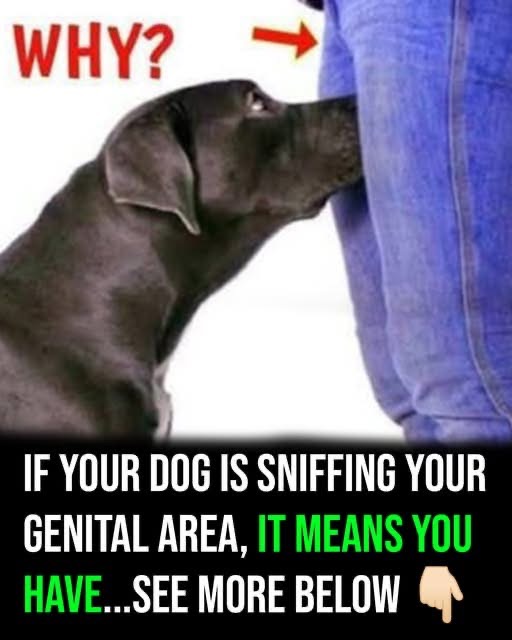
Dogs experience the world through scent far more intensely than humans, and this difference shapes how they interact with us. While people rely on sight and language, dogs depend on smell to understand identity, emotion, and health. When a dog sniffs a person’s crotch, the behavior may feel awkward to humans, but for dogs it is a natural and informative greeting.
This behavior is linked to apocrine glands, which release pheromones carrying biological details such as age, sex, stress, and emotional state. To a dog, these scents reveal more than any verbal introduction. The gesture is not inappropriate in the dog’s mind; it is simply their instinctive way of learning who someone is and how they are feeling.
Even when we understand the science, the behavior can still feel surprising because humans have different ideas about privacy. Dogs, however, are guided by instinctive social patterns that help them assess safety and relationships. Sniffing serves as a key tool for mapping their social world and building trust.
When owners prefer to discourage the behavior, gentle redirection works well. Teaching commands like “sit” or “leave it,” combined with positive reinforcement, helps dogs learn human boundaries. Their curiosity is rooted in connection, not misbehavior, and they adapt quickly when guided with consistency and patience.
A dog’s powerful sense of smell allows it to detect emotional and physical changes in humans. Dogs can sense anxiety, illness, hormonal shifts, and mood changes long before we speak them aloud. The same nose that investigates out of curiosity also comforts us when we are sad or unwell.
This remarkable sensitivity is why dogs excel as service animals and medical alert companions. They detect physiological changes that humans cannot perceive, responding with calmness, proximity, or play depending on what we need. Their behavior is rooted in interpreting scent-based information.
Understanding this reframes behaviors humans find embarrassing. Dogs use scent to build memory, attachment, and familiarity. A sniff is a gesture of recognition and reassurance, not disrespect. It strengthens the emotional bond they share with their humans.
Ultimately, sniffing is part of a dog’s instinctive communication system. Through scent, dogs perceive our emotional landscape and maintain a deep connection. What feels awkward to humans is, for dogs, an expression of attentiveness, trust, and affection.