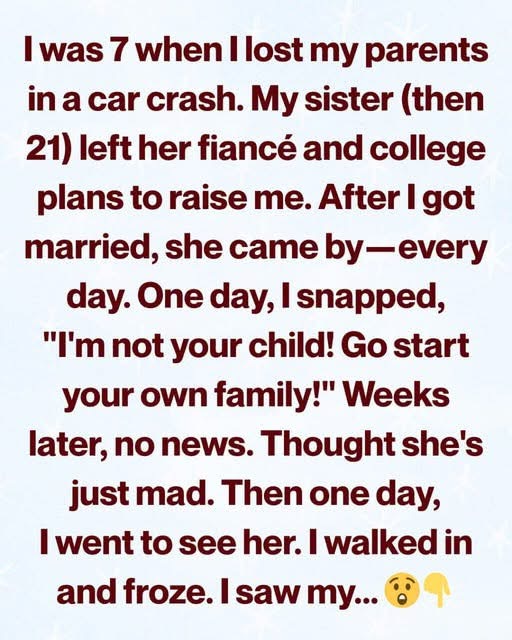
When I was seven years old, everything familiar vanished in a single night. A car accident took our parents, leaving behind silence, hospital lights, and a fear I didn’t yet have words for. My sister Amelia was only twenty-one then. She had plans, a fiancé, classes to finish, and a life moving forward. Instead of following it, she stopped.
She signed the papers, packed up our home, and stepped into a role she never asked for—becoming my guardian. Amelia raised me with quiet determination. She worked long hours, left notes in my lunches, and never missed a school event, no matter how small. I didn’t see what it cost her. I didn’t notice the dreams she postponed or the relationship that slowly faded. All I knew was that I was safe, and that safety came from her.
As an adult, that protection began to feel overwhelming. Amelia checked in constantly, rearranged my kitchen, and worried over things I could handle myself. One night, worn down and craving independence, I lashed out. I told her I wasn’t a child anymore and that she needed to stop hovering. The hurt in her eyes still haunts me. She apologized softly and walked away. Months passed with no contact. Guilt grew heavier with every unanswered message. Finally, I drove to her apartment, afraid of what distance might have done. The door was unlocked. Inside, I found boxes, pastel blankets, and tiny clothes.
Then Amelia appeared, smiling gently, and introduced me to Lily—a five-year-old who had just lost her parents. Amelia explained that after our argument, she realized she needed a life beyond caring for me. She became a foster parent. Lily’s quiet fear mirrored my own childhood, and suddenly I understood. Amelia hadn’t been clinging to me—she had been waiting to heal by helping someone else. I apologized, tears spilling freely. Amelia hugged me, lighter than I had ever seen her. She had saved me once by sacrificing everything. This time, she saved herself by letting go.