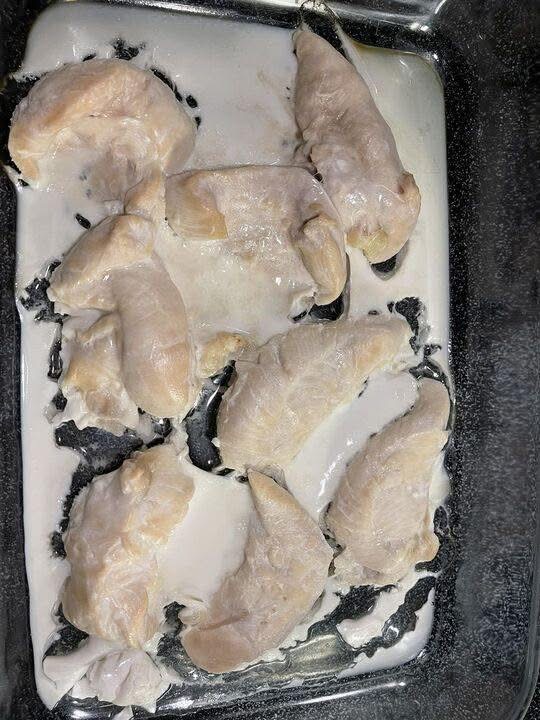
If you’ve ever cooked chicken and noticed a white, jelly-like substance appearing on the surface, it can be an unsettling sight—especially when you were expecting a golden, appetizing result. Many home cooks assume something has gone wrong, but this reaction is far more common than it looks. In fact, this white substance is a natural part of cooking chicken and appears in kitchens everywhere, from casual home setups to professional environments. While it may not be visually appealing, it’s a normal outcome of how chicken meat reacts to heat.
The white “goo” is simply a mixture of protein and water that becomes visible during cooking. Chicken meat, particularly lean cuts like chicken breast, contains a high amount of protein along with moisture. When exposed to heat, the proteins undergo a process known as denaturation, where they change structure—much like egg whites turning solid when cooked. As this happens, water is pushed out of the meat, and the proteins clump together, forming the white, slightly sticky substance on the surface. This change is permanent and harmless, and it doesn’t mean the chicken is undercooked or unsafe.
This effect tends to be more noticeable under certain conditions. Boneless, skinless chicken breasts are especially prone because they are leaner and contain less fat to buffer the protein reaction. High-heat cooking methods such as roasting, baking, or pan-searing can also cause proteins to contract quickly, forcing more liquid out at once. Cooking chicken that hasn’t been fully thawed can increase the effect as well, since freezing creates ice crystals that damage muscle fibers, leading to greater moisture loss during cooking. While these factors can make the white substance more visible, they don’t affect the safety or quality of the chicken itself.
The good news is that this white substance is completely safe to eat and does not change the flavor of the chicken. However, there are a few techniques that can help reduce its appearance if presentation matters to you. Cooking at slightly lower temperatures allows the chicken to heat more gradually, which limits rapid protein contraction. Brining the chicken in a simple saltwater solution before cooking can help it retain moisture, while searing the meat briefly before baking may lock in juices. Allowing chicken to rest at room temperature for a short time before cooking and letting it rest again after cooking can also help redistribute moisture. Choosing higher-quality or air-chilled chicken may further reduce excess water. Ultimately, while you can minimize this effect, some protein release is simply part of cooking chicken. Though it may not look perfect, it’s a natural process—and your meal is still perfectly fine to enjoy.