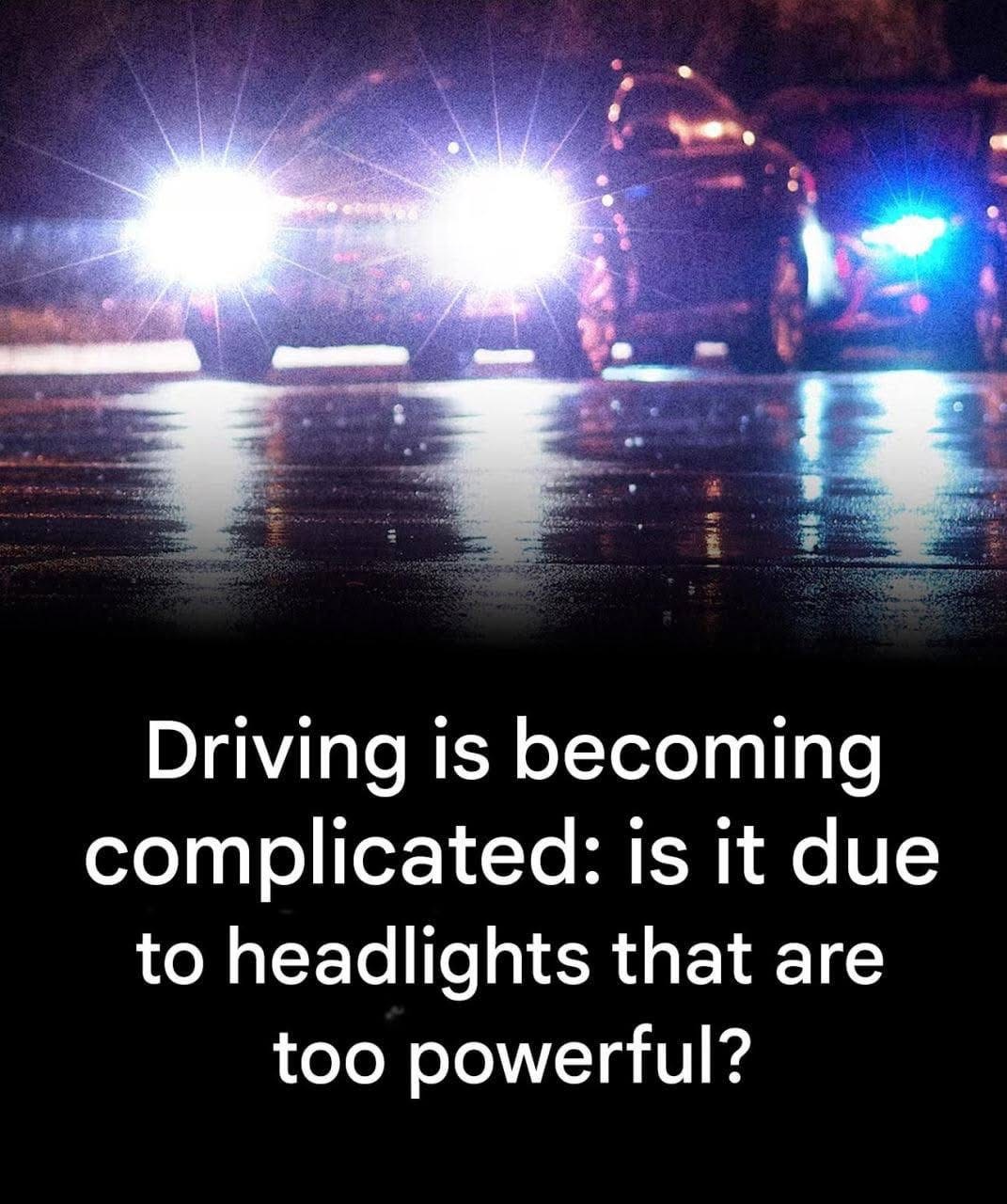
The glare hits without warning. For a split second, the road seems to vanish, your grip tightens on the steering wheel, and a familiar doubt sets in—are your eyes failing, or have headlights truly become blinding?
Night after night, millions of drivers experience the same moment of unease. What feels like a sudden problem with vision is often the result of changes in vehicle technology combined with small, overlooked factors.
Modern LED headlights are a major contributor. Designed to improve visibility, their brighter, whiter light is more intense than older halogen bulbs and can overwhelm tired eyes, especially on dark roads.
It’s not just brightness that matters. Color temperature and beam focus play a critical role. Cooler, blue-toned light scatters more in rain or fog, increasing glare and reducing contrast.
Vehicle height also adds to the issue. SUVs and trucks sit higher, so their headlights often hit oncoming drivers directly at eye level, particularly if the beams are poorly aligned.
Headlight misalignment is surprisingly common. A slightly tilted beam, worn suspension, or a heavily loaded trunk can all cause lights to shine higher than intended, intensifying glare for others.
The good news is that drivers aren’t powerless. Simple steps help: checking headlight alignment, adjusting beams when carrying extra weight, and keeping windshields clean inside and out.
Looking slightly to the right edge of the road instead of directly at oncoming lights can reduce eye strain while maintaining control. As adaptive headlights become more common, night driving may soon feel calmer, clearer, and safer for everyone.