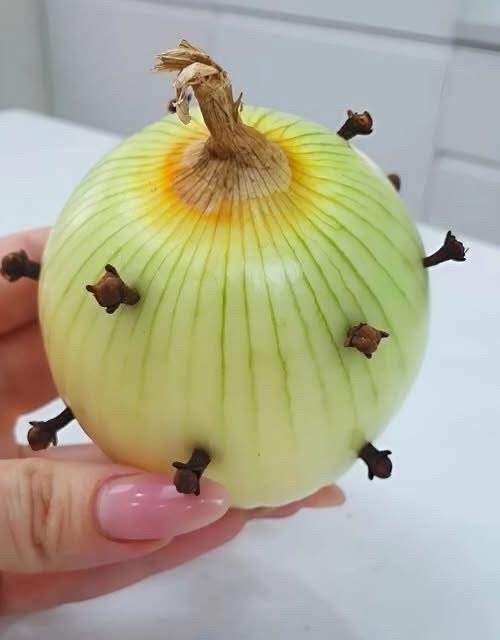
For generations, families around the world have relied on the simple, time-honored remedy of sticking cloves into a peeled onion, particularly during cold and flu season. You’ve likely heard the old saying passed down from grandparents, great-grandparents, or family friends: “Stick a few cloves into a peeled onion and leave it in your room overnight to help with a cold!” While it sounds unusual—almost like something out of an old folk-healing handbook—this small ritual has persisted through the years. People have placed clove-studded onions near their beds or in living spaces to ease congestion, freshen the air, or provide a comforting sense of care. Even though the practice may feel purely folkloric, it’s rooted in a mix of cultural tradition, chemistry, and psychology, offering mild benefits that are more related to perception and comfort than actual medical efficacy.
The traditional method is straightforward and has remained virtually unchanged over the decades. First, a whole onion—white or yellow—is peeled and prepared. Then, 6–12 whole cloves are inserted around its surface, like tiny aromatic pins. The onion is placed on a saucer or bowl near the bed, nightstand, or anywhere someone might be recovering from a cold. It is left overnight or up to a day or two. Proponents of the remedy claim that it can absorb “germs” from the air, ease nasal congestion, promote restful sleep, neutralize odors, and create a calming environment. While these effects are largely anecdotal, they reflect a long history of home-based care practices that aimed to comfort the sick before modern medicine and air purifiers existed.
Scientific analysis of the ingredients reveals that while onions and cloves do contain compounds with potential antimicrobial or aromatic effects, their powers are modest and do not match the folklore surrounding the practice. Onions are rich in sulfur-based compounds and quercetin, an antioxidant studied for its antibacterial and anti-inflammatory properties. Laboratory tests have shown that onions can inhibit certain bacteria, including E. coli and Staphylococcus aureus, in direct-contact scenarios. Historically, during the 1918 flu pandemic, people placed onions in homes to “trap” miasmas, a term used to describe harmful air. While we now understand viruses differently, the ritual persisted because it produced pleasant scents and a sense of care, even if it didn’t actually eliminate pathogens from the air.
Cloves, meanwhile, contain a powerful compound called eugenol, known for its antibacterial, antifungal, and mild antiviral properties. Clove oil is still widely used today for natural remedies, particularly to ease minor toothaches, thanks to its numbing and antiseptic qualities. However, when inserted into an onion and left in a room, cloves cannot absorb airborne germs, pull illness from the body, or cure infections. Onions and cloves may release aroma and moisture, creating a more pleasant and potentially comforting environment, but any antimicrobial effects are localized and limited. Similarly, the idea that an onion turns black because it “absorbed germs” is purely a myth—discoloration is simply a result of oxidation or moisture exposure.
Despite its lack of medicinal potency, the onion-and-cloves ritual can have real, albeit subtle, benefits. First, the combination produces a strong scent that can act like mild aromatherapy, potentially helping to open nasal passages and ease breathing during a cold. Onions also naturally release a small amount of moisture, which may slightly increase room humidity and soothe irritated sinuses, especially in dry bedrooms. Cloves contribute a warm, spicy aroma that can mask stale or unpleasant odors, while the ritual itself—preparing and placing the onion—can provide psychological comfort. The emotional and placebo effects of carrying on family traditions should not be underestimated: they can enhance feelings of care and well-being during times of sickness.
It is important to note, however, what this practice does not do. The clove-studded onion cannot cure colds or flu, shorten illness duration, replace proper hygiene or medical treatment, prevent infection, or draw out toxins from the body. Any leftover onion that has been sitting out for more than 24–48 hours can harbor bacteria or mold and should be discarded. For those who wish to use this remedy safely, the key is hygiene: use a fresh onion and fresh cloves, place them on a clean plate or saucer away from food areas, discard after a day, and wash hands after handling. The onion should never be eaten, as it may contain bacteria absorbed from the air or moisture.
For those seeking a more effective method of easing congestion, there are safer alternatives that retain the comforting aroma of onions and cloves. Simmering onion, garlic, cloves, and ginger in a pot of water allows you to inhale warm, fragrant steam for 5–10 minutes. This approach produces a real humidifying effect, helps loosen mucus, and can provide temporary relief from nasal congestion far more effectively than a raw onion sitting on a nightstand. Nevertheless, the onion-and-cloves remedy is not without merit: it serves as a cultural tradition, a comforting ritual, and a source of pleasant aromas that create a sense of care and hominess. While it is not a substitute for medical treatment, it can enhance the environment and contribute to emotional comfort.
In conclusion, the tradition of placing cloves in an onion offers more psychological and sensory benefits than genuine medical effects. It is a charming practice that has persisted across generations, providing mild aromatherapy, slight humidity, and a sense of homey comfort. Science confirms that onions and cloves have some antimicrobial and aromatic properties, but they do not draw out germs, cure illnesses, or prevent infections. Used safely, the ritual can enhance a sickroom’s atmosphere and offer reassurance during times of discomfort, embodying a blend of history, aroma, and family care. Ultimately, the remedy is best enjoyed as a supportive, comforting tradition rather than a treatment—a small act of warmth and care in a world where science and folk wisdom meet.