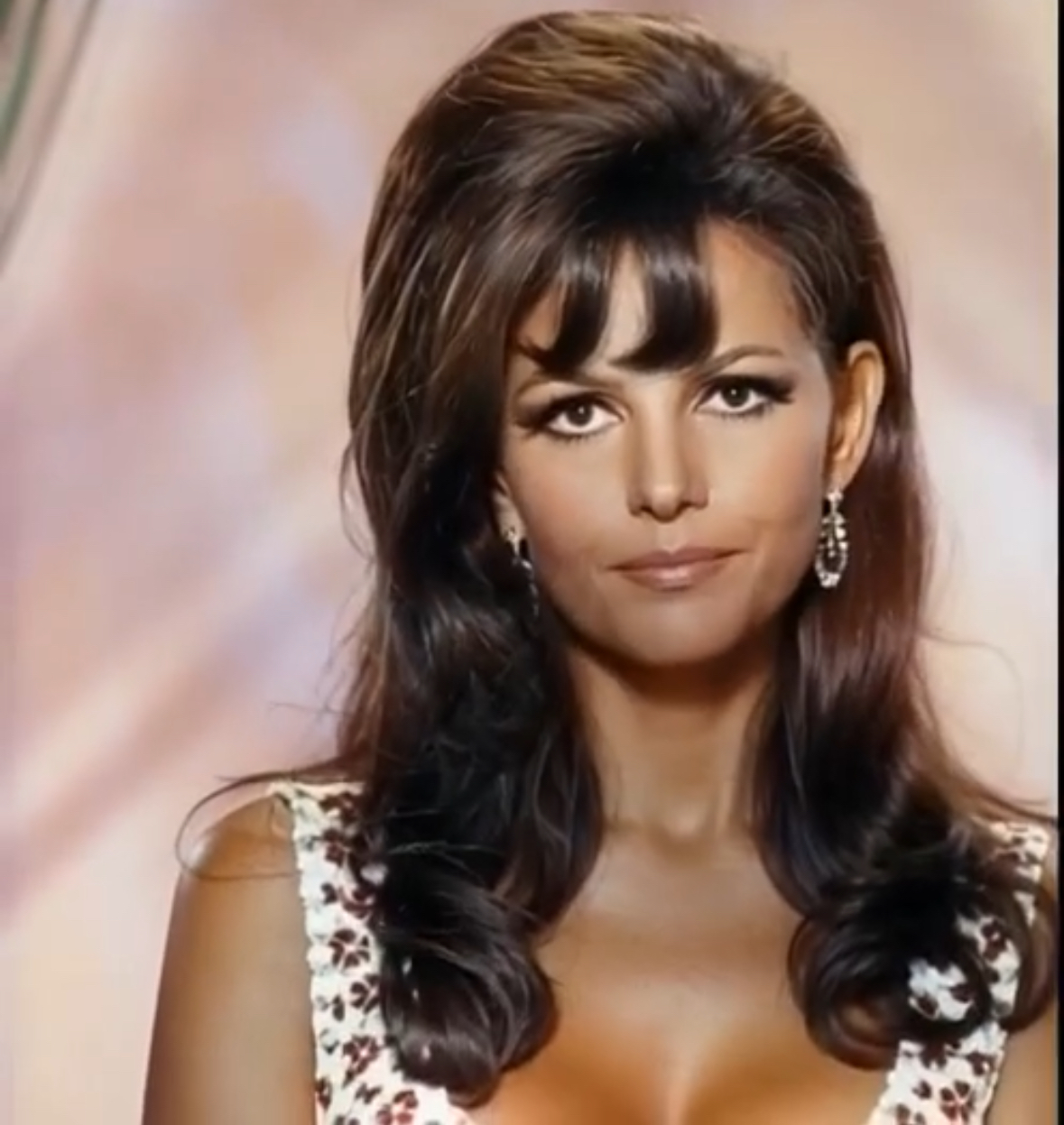
Claudia Cardinale’s emergence during the postwar flowering of Italian cinema was neither accidental nor merely ornamental; it was the meeting of historical moment, personal resolve, and an uncommon capacity to translate interior life into visible truth. Born in Tunis to Sicilian parents, she carried a Mediterranean complexity that felt instantly cinematic—familiar yet elusive, grounded yet luminous. Italian cinema of the late 1950s and early 1960s was searching for new faces that could embody realism without surrendering romance, and Cardinale arrived with a presence that answered both calls. She was not the carefully manufactured ingénue of studio mythology; she felt lived-in, alert, and self-possessed even in stillness. Directors recognized that her beauty did not overwhelm narrative but deepened it, allowing characters to breathe with contradictions intact. In early roles, she revealed an intuitive grasp of rhythm and restraint, understanding when to hold a look, when to let silence do the work, and when emotion should flicker rather than explode. This sensitivity aligned perfectly with filmmakers who were redefining cinematic language—artists interested less in spectacle than in moral texture and social truth. As Italian cinema grappled with modernization, class tension, and the aftershocks of war, Cardinale’s performances offered a human compass, guiding audiences through complexity without simplifying it.
Her collaborations with some of the most influential directors in film history cemented her status not just as a star, but as a collaborator in meaning. Working with figures like Luchino Visconti, Federico Fellini, and Sergio Leone required adaptability and courage; each brought a distinct worldview and demanded a different calibration of performance. Cardinale met these demands with an intelligence that refused to be boxed into a single archetype. In epic historical dramas, she conveyed grandeur without stiffness, grounding sweeping narratives in personal stakes. In modernist works, she embraced ambiguity, allowing characters to remain unresolved rather than neatly explained. Even within the constraints of a male-dominated industry that often prioritized image over agency, she found ways to assert interpretive authority, shaping roles from within. Her screen presence carried a paradoxical mix of vulnerability and resolve, suggesting women who were acted upon by society yet never fully erased by it. Critics responded not only to her elegance, but to her seriousness of purpose—the sense that she understood cinema as a moral art, capable of examining power, desire, and consequence. Through these partnerships, she helped define an era when Italian films spoke to the world with confidence, curiosity, and philosophical depth.
The international expansion of her career in the 1960s and 1970s brought new opportunities and new negotiations. Crossing into Hollywood and other European industries, Cardinale resisted becoming a generic export, maintaining a selective approach that favored substance over saturation. Language barriers, contractual pressures, and differing production cultures tested her resolve, yet she remained committed to roles that respected her intelligence and autonomy. This period revealed another dimension of her artistry: the ability to translate authenticity across cultural contexts without dilution. Whether performing in French, Italian, or English-language productions, she preserved a sense of inner continuity, allowing audiences to recognize a coherent artistic identity rather than a series of disconnected performances. Her choices signaled a quiet resistance to the notion that international success required self-erasure. Instead, she demonstrated that specificity—of accent, history, temperament—could be a bridge rather than a barrier. In an industry often quick to commodify difference, Cardinale insisted on complexity, trusting that audiences would meet her there. This insistence helped broaden the global conversation about what leading women could look like, sound like, and stand for on screen.
As years passed and the industry evolved, Cardinale’s relationship with fame matured into something reflective rather than performative. She did not chase reinvention for its own sake, nor did she retreat into nostalgia. Instead, she embraced the role of witness and mentor, participating in festivals, retrospectives, and dialogues that connected past innovations to present concerns. Her public presence carried the authority of experience without the brittleness of certainty; she spoke about cinema as a living language, one that must remain open to change while honoring craft. Younger filmmakers and actors often noted her generosity—her willingness to share lessons without prescribing formulas. This phase of her life underscored a truth often overlooked in celebrity culture: longevity is not sustained by visibility alone, but by curiosity and humility. By remaining engaged without dominating, she modeled a form of artistic aging that values relevance over trend, contribution over applause. Her continued involvement affirmed that legacy is not a static monument, but an ongoing conversation between generations.
Beyond filmographies and awards, Cardinale’s significance lies in the ethical texture of her career. She navigated fame while preserving a sense of self that did not depend on constant affirmation. In an era that frequently conflated desirability with disposability, she challenged the idea that a woman’s value diminishes with time or changing tastes. Her work offered counter-narratives—women who were decisive without hardness, sensual without surrender, strong without erasing tenderness. Off-screen, she advocated for cultural exchange, artistic freedom, and the dignity of labor within the arts, framing cinema as both profession and public good. These commitments added depth to her image, aligning her personal values with the stories she helped tell. Audiences sensed this coherence, responding not just to performances but to the integrity behind them. It is this alignment—between craft, choice, and principle—that has allowed her influence to persist even as cinematic fashions shift.
Looking at Claudia Cardinale then and now reveals less a contrast than a continuum, a life shaped by attentive listening to the moment while remaining faithful to an inner compass. Her journey mirrors the evolution of cinema itself, from national movements to global dialogues, from theatrical grandeur to intimate realism and back again. Through it all, she has remained a figure of balance—between tradition and innovation, visibility and privacy, artistry and humanity. Her legacy is not confined to iconic scenes or celebrated titles; it lives in the standards she set for presence, for choice, for endurance. In remembering her contributions, one is reminded that true icons do not simply reflect their time; they illuminate it, offering light that travels forward, finding new meanings as it goes.