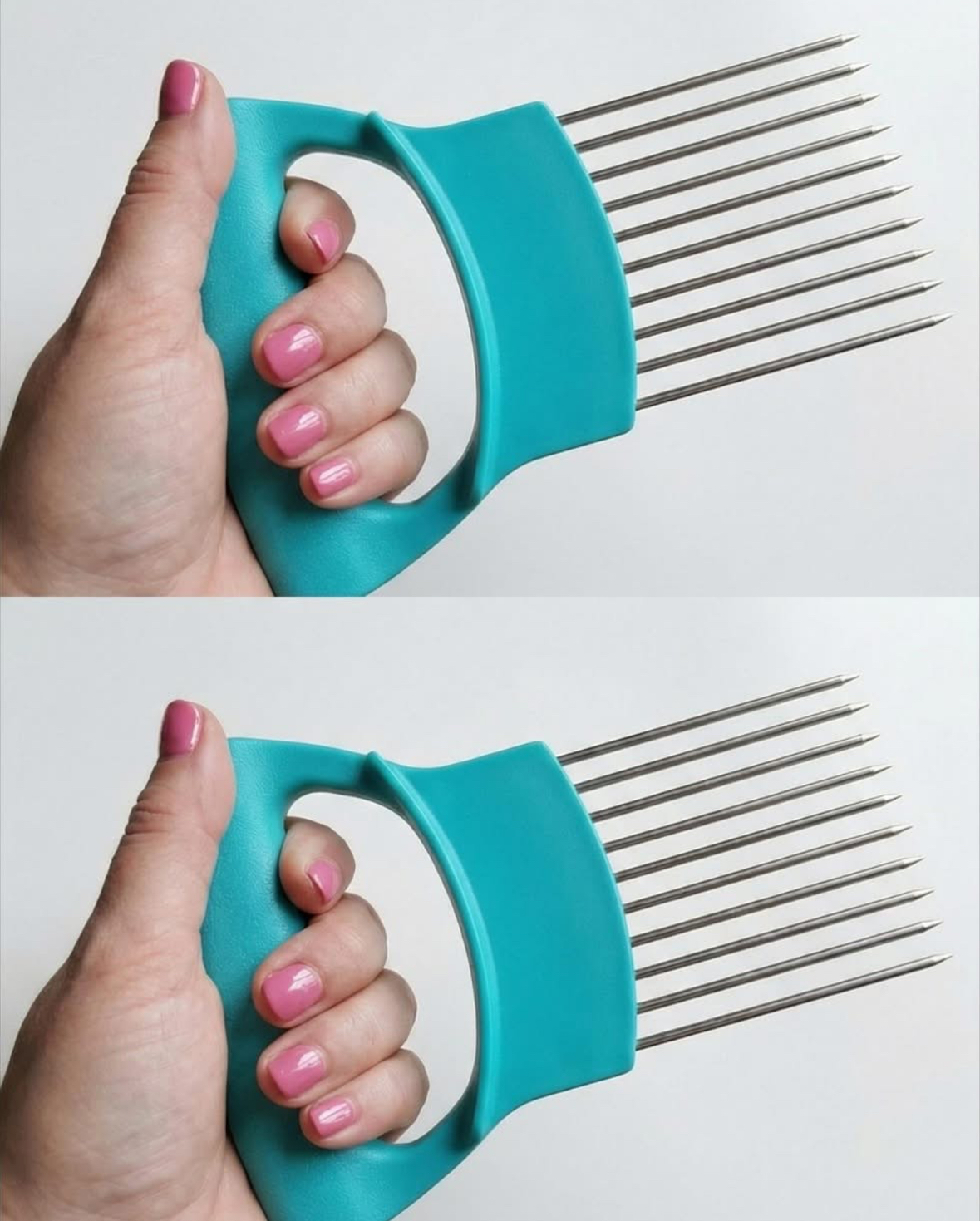
If you’ve ever brought home a curious kitchen gadget from a thrift store and wondered what it does, you’re not alone. One common mystery item is the onion and vegetable slicer—a practical tool designed to make food prep faster and more consistent. Typically made of plastic or metal, it features a base fitted with sharp, parallel blades. By pressing a vegetable through the blades, you can create even slices in seconds. Though simple in design, this handy device has remained popular because it saves time and reduces the need for advanced knife skills.
An onion and veggie slicer is especially helpful for preparing firm vegetables like onions, potatoes, cucumbers, zucchini, apples, and carrots. It produces uniform slices that cook evenly, which is ideal for dishes like roasted vegetables, salads, casseroles, or homemade chips. Because your hands stay above the blades—often with the help of a guard or pusher—it can also be a safer option for beginners or those who find detailed knife work challenging. As a bonus, slicing onions more quickly may reduce exposure to the vapors that cause tearing, making meal prep a little more comfortable.
To use the slicer effectively, place it on a stable, non-slip surface and trim the ends of your vegetable so it sits flat. Apply firm, even pressure to push it through the blades. Afterward, rinse the tool promptly, as small food pieces can lodge between the blades. A soft brush or old toothbrush works well for cleaning hard-to-reach areas. If the slicer is metal, dry it thoroughly to prevent rust. If you purchased it secondhand, soak it in warm, soapy water and sanitize it carefully before use, ensuring the blades are in good condition.
While it may not replace a chef’s knife or a mandoline for every task, the onion and veggie slicer offers simplicity and reliability. It usually provides one fixed thickness, but that limitation can also make it straightforward and easy to manage. For quick weeknight meals or batch prep, it’s a dependable helper that reflects a practical approach to cooking. Sometimes, the simplest tools are the ones that quietly make the biggest difference in the kitchen.