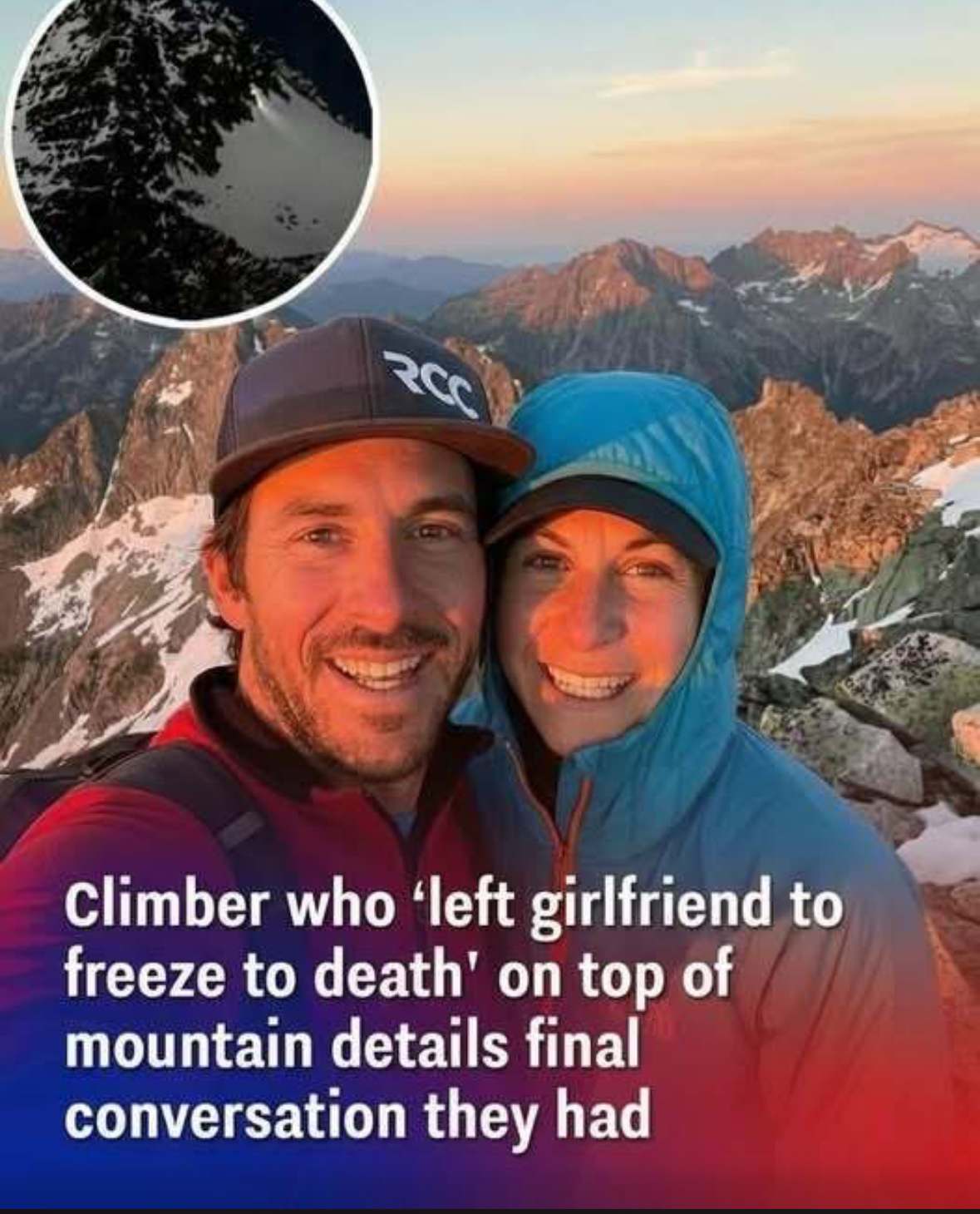
The trial unfolding in Innsbruck has drawn national attention across Austria and beyond, not only because it involves the country’s highest mountain but because it centers on an intensely personal tragedy now scrutinized through the lens of criminal law. Thirty-nine-year-old climber Thomas Plamberger stands accused of gross negligent manslaughter following the death of his partner, thirty-three-year-old Kerstin Gurtner, during a winter ascent of Grossglockner. Towering at 12,460 feet, Grossglockner is both a symbol of alpine accomplishment and a stark reminder of how swiftly conditions can become lethal. What began as an ambitious winter climb on January 19, 2025, ended in catastrophe when severe weather swept across the upper slopes overnight. Gurtner was later discovered approximately 150 feet below the summit ridge after rescue teams mounted a search in brutal, subzero conditions. Plamberger has pleaded not guilty, insisting that the events were the result of a devastating accident shaped by extreme cold, violent winds, and timing rather than recklessness or indifference. The proceedings have focused not only on the physical evidence left on the mountain but also on the couple’s final exchange—words Plamberger says still echo in his memory and that now sit at the heart of competing legal narratives.
According to testimony presented in court, the pair began their ascent in the early hours, a common strategy among winter mountaineers who seek firmer snowpack and more stable ice before daylight warming can destabilize slopes. Yet winter in the high Alps offers little tolerance for error. Prosecutors outlined that as the climbers neared the summit ridge, temperatures hovered around minus eight degrees Celsius, with windchill pushing perceived exposure closer to minus twenty. In such an environment, exposed skin can freeze within minutes, and even well-equipped climbers risk hypothermia if movement slows or shelter is lacking. Court testimony described Gurtner as the less experienced of the two, though still competent and enthusiastic. Plamberger told the court that she appeared exhausted and increasingly cold as the wind intensified and visibility deteriorated. Around two in the morning, he testified, they confronted a pivotal decision: remain together in the exposed position and attempt to endure the conditions until daylight, or have one descend to seek assistance. Plamberger recounted that Gurtner urged him to leave and find help, recalling her words as “go now.” Those words, he said, were spoken with urgency and resolve, and they form the cornerstone of his defense that the decision was mutual and made under severe pressure.
Prosecutors have taken a sharply different view, arguing that leaving a partner alone in extreme alpine conditions constitutes a breach of duty, particularly when the person departing is the more experienced mountaineer and organizer of the climb. They contend that Plamberger bore heightened responsibility for risk assessment, equipment preparation, and contingency planning. The prosecution has questioned whether adequate emergency bivouac gear was carried, whether insulating layers were properly deployed, and whether retreat should have been initiated earlier in light of deteriorating forecasts. Court filings indicate that investigators believe Gurtner might have been moved into a more sheltered position behind rock formations or snow features to mitigate wind exposure. Additionally, prosecutors have pointed to phone records suggesting potential delays in contacting emergency services after Plamberger descended. A presiding judge has reportedly described elements of the timeline as inconsistent, prompting detailed examination of GPS data and call logs. At the core of the state’s case is the assertion that experience imposes obligation, and that a seasoned climber must anticipate and respond decisively to foreseeable hazards, particularly when a less experienced partner is involved.
The defense has countered by portraying the episode as a tragic convergence of rapidly escalating factors beyond reasonable control. Plamberger’s legal team argues that high-altitude winter storms can intensify with alarming speed, transforming manageable exposure into life-threatening peril within minutes. They assert that remaining together in an unsheltered position might have resulted in two fatalities rather than one. According to Plamberger’s testimony, descending to summon help was an act driven by urgency and hope, not abandonment. His lawyers emphasize that Gurtner’s encouragement for him to leave was neither coerced nor reluctant but expressed as a clear directive born of shared understanding of their deteriorating circumstances. They also stress that hypothermia can impair both physical capability and cognitive clarity, complicating retrospective judgments about what alternatives were realistically viable. Character witnesses have described Plamberger as cautious and methodical, and notably, Gurtner’s mother has publicly defended both her daughter’s competence and Plamberger’s integrity, urging observers to withhold condemnation until all evidence is weighed. The defense maintains that criminalizing a split-second survival decision risks oversimplifying the brutal calculus of extreme environments.
Beyond the courtroom, the case has ignited broader debate within Austria’s mountaineering community about responsibility, preparation, and ethical decision-making under duress. Winter ascents of major alpine peaks demand meticulous planning: route selection, avalanche risk evaluation, constant weather monitoring, and clearly defined turnaround thresholds. Experienced climbers often repeat the maxim that reaching the summit is optional, but returning safely is mandatory. Yet near a summit ridge, after hours of exertion and exposure, the psychological pull of completion can cloud judgment. Experts note that hypothermia not only saps strength but distorts perception, slowing reaction time and impairing reasoning. Fatigue compounds these effects, narrowing focus and making complex problem-solving more difficult. The prosecution’s case rests partly on the principle that greater experience entails a higher duty of care, especially toward a partner perceived as less seasoned. The defense responds that mountains do not always offer safe alternatives and that in certain moments, every available choice carries grave risk. Translating these split-second, high-stakes decisions into legal categories of negligence or recklessness presents profound challenges, as courts must reconstruct events that unfolded in darkness, wind, and freezing cold.
As proceedings continue in Innsbruck, judges must piece together a narrative from forensic evidence, meteorological data, and human memory—each imperfect in its own way. Equipment recovered from the site, clothing layers, GPS traces, and emergency call logs form part of the evidentiary mosaic. Rescue personnel have testified about the formidable obstacles they faced reaching the summit ridge and the condition in which Gurtner was found. Meteorological experts have described wind speeds and temperature shifts that night, underscoring the volatility of alpine winter systems. Ultimately, the legal question is whether Plamberger’s conduct meets the threshold of gross negligence under Austrian law—a standard requiring more than error in judgment, but a serious breach of duty. The court must weigh his mountaineering background, the objective hazards present, the plausibility of alternative actions, and the credibility of his account of their final exchange. Whatever the verdict, the case stands as a sobering reminder of the unforgiving power of high mountains and the fragile boundary between calculated risk and irreversible loss. For climbers, peaks like Grossglockner symbolize challenge and transcendence; for families touched by tragedy, they also demand answers that may never feel complete.