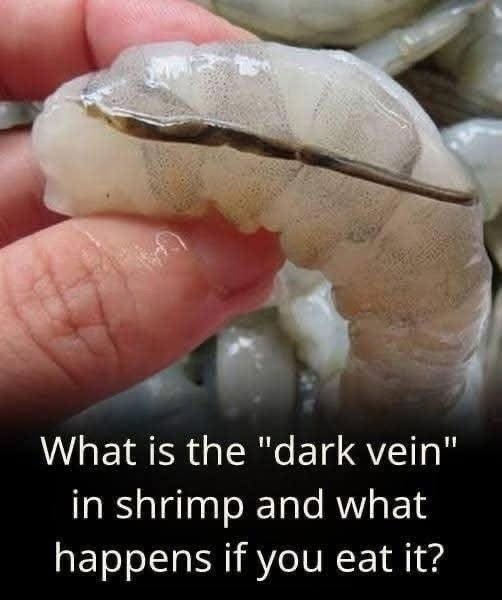
If you’ve ever noticed the dark line running along the back of a shrimp, you may have wondered what it really is. Some diners remove it quietly, while others ignore it entirely. The mystery often sounds more alarming than it actually is.
That dark “vein” is not a vein at all. It is the shrimp’s digestive tract, a thin tube that can contain partially digested food and waste. The name is misleading because shrimp do not have veins like mammals.
In most cases, the tract is harmless when the shrimp is properly cooked. Eating it does not usually pose a health risk. The concern is less about safety and more about flavor, texture, and appearance.
In larger shrimp, the tract may contain grit or sand. This can create a slightly unpleasant texture and subtly affect the taste of delicate dishes.
For that reason, many cooks choose to remove it, especially when preparing jumbo shrimp that will be clearly visible on the plate. Deveining gives the shrimp a cleaner look and smoother bite.
However, with smaller shrimp used in soups, stews, or stir-fries, many people skip the step altogether. The tract is often barely noticeable in these dishes.
Deveining is therefore a matter of preference rather than a strict rule. It depends on the size of the shrimp and the presentation of the meal.
Understanding what the dark line actually is removes the uncertainty. Instead of a hidden danger, it’s simply a natural part of the shrimp—something you can remove or leave in place with confidence.