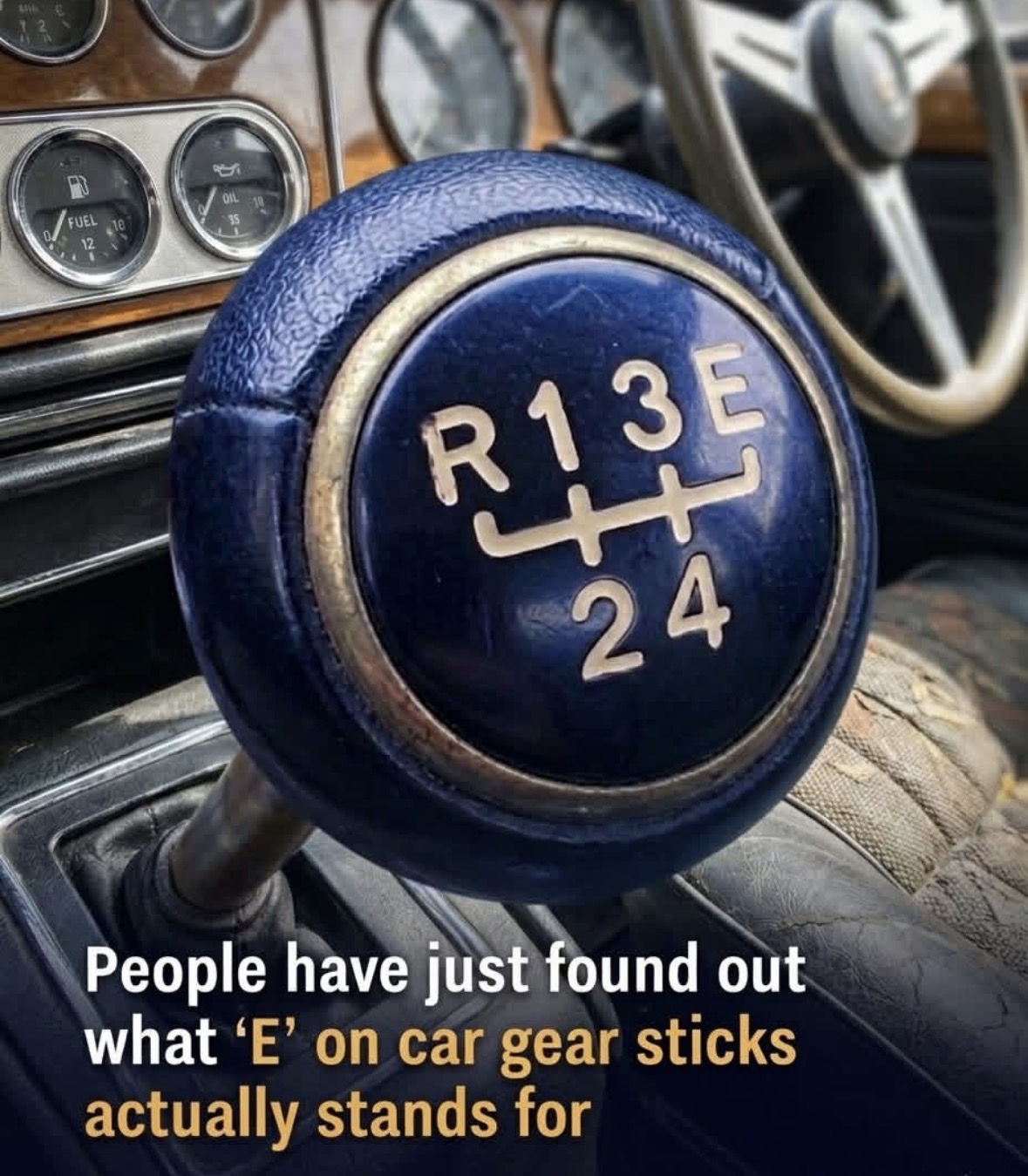
For generations, drivers have grown accustomed to the familiar letters and numbers on car gear sticks, quietly guiding movement, pause, and reverse. Manual transmissions display numbers and an “R” for reverse, while automatics show “P,” “R,” “N,” and “D,” with some adding “L” for low gear. Yet certain older vehicles also featured an “E”—a letter many younger drivers have never seen. Its presence sparked curiosity and questions about its meaning and disappearance.
The “E” stood for “Economy,” a mode aimed at improving fuel efficiency. Engaging it adjusted shift points, encouraged earlier upshifts, and reduced engine speed, making driving calmer and less fuel-intensive. Some vehicles also altered throttle sensitivity, discouraging aggressive acceleration. In a time of rising fuel costs, “E” allowed drivers to influence consumption without major changes to their habits. It reflected an era when mechanical and early electronic systems offered hands-on options, rather than fully automated optimization.
As technology advanced, the letter became unnecessary. Modern engines with sophisticated fuel injection, sensors, and onboard computers optimize performance and efficiency continuously. Transmission improvements and aerodynamic innovations removed the need for a separate economy gear. Today, even “Eco” modes are often engaged via buttons or screens rather than a dedicated lever. Meanwhile, electric vehicles, with single-speed setups and digital selectors, redefined what “E” could mean—often now referring to electric propulsion rather than economy.
The story of “E” highlights how automotive knowledge has shifted over time. It connects generations of drivers, reminding us that visible mechanical cues once shaped everyday driving experiences. From economy mode to electric power, the letter symbolizes a bridge between the analog past and a digitally optimized automotive future.