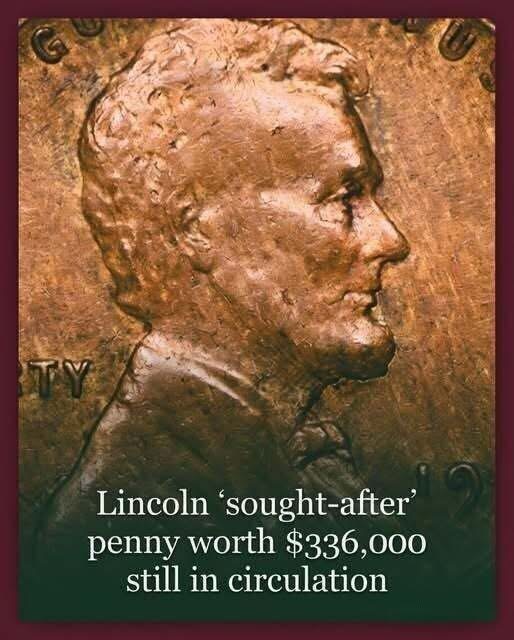
The humble copper penny has long been one of the most overlooked objects in everyday life. It ends up forgotten in jars, lost in couch cushions, or dismissed as practically worthless in modern transactions. For most people, it represents the smallest unit of money—something barely worth picking up off the ground. But hidden within the history of American coinage is a remarkable exception, a rare mistake so extraordinary that it transformed an ordinary coin into one of the most valuable collectibles ever discovered. This is the story of the 1943 Bronze Lincoln Cent, a coin that was never meant to exist and whose accidental creation turned it into a piece of history worth a fortune.
These coins were not separated or identified at the time. Instead, they were mixed in with millions of regular steel pennies and released into circulation. People spent them, saved them, or ignored them without realizing their significance. It wasn’t until a few years later, around 1947, that collectors began noticing something unusual—a small number of 1943 pennies that looked copper instead of silver.
At first, the United States Mint denied that such coins could exist. Officials insisted they were either fake or altered steel coins coated in copper. But as more examples surfaced, it became impossible to dismiss the evidence. Experts eventually confirmed that these were genuine minting errors—rare survivors of a production oversight during wartime.
What makes the 1943 Bronze Lincoln Cent so valuable is its extreme rarity. It is estimated that fewer than twenty authentic examples exist across all mint locations. That level of scarcity, combined with its unique historical background, turned it into one of the most sought-after coins in the world. Over time, collectors have paid staggering amounts to own one. Some have sold for hundreds of thousands of dollars, and at least one example has surpassed the one-million-dollar mark at auction.
Because of this, many people have tried to create fake versions—usually by coating steel pennies with copper. But there is a simple test that can help identify a real one. Steel pennies are magnetic, while bronze ones are not. A genuine 1943 bronze penny will not stick to a magnet. Of course, professional authentication requires deeper analysis, including weight, composition, and strike details, but the magnet test remains a famous first step for curious finders.
One of the most compelling stories tied to this coin involves a teenager named Don Lutes Jr.. In 1947, he received a strange-looking 1943 penny as change in his school cafeteria. Sensing something unusual, he kept it. Even after being told it wasn’t real, he held onto the coin for decades. After his passing, the coin was finally authenticated and sold at auction for over $200,000—proving that his instinct as a teenager had been correct all along.