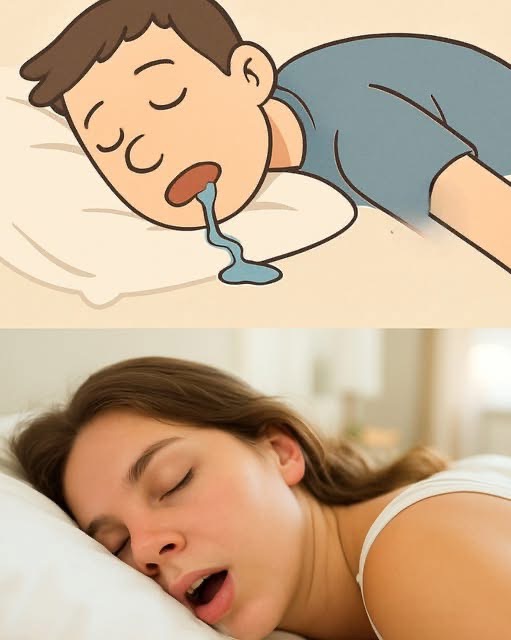
Drooling while sleeping is more common than many realize and is usually harmless. It occurs when saliva builds up but isn’t swallowed, often due to sleep position, muscle relaxation, mouth breathing, or underlying conditions like allergies, congestion, or neurological disorders.
Side or stomach sleeping allows gravity to pull saliva outward, while deep sleep stages relax muscles further. Medications can also influence saliva production or control.
Saliva aids digestion and oral health, and overflow during sleep may indicate the body feels secure enough to relax protective reflexes. Many mammals drool when content or anticipating food, a trait humans share, linking drooling to vulnerability and comfort.
Psychologically, drooling can symbolize trust, emotional openness, or desire, and may appear in dreams or subconscious behaviors. Media often exaggerates drooling for comedy or narrative symbolism, while consumer solutions address its practical aspects.