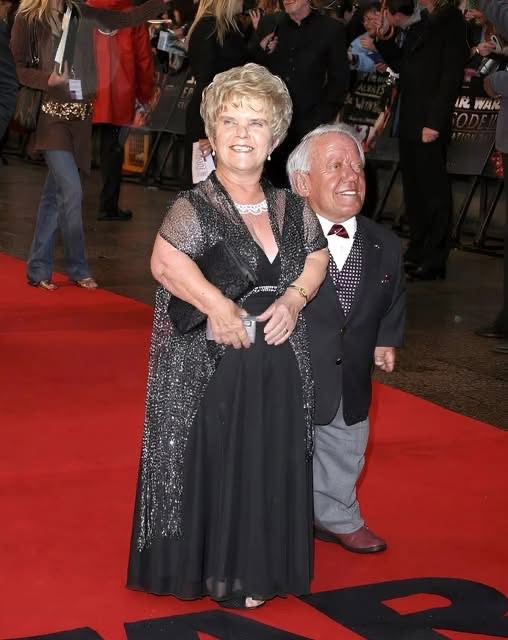
The faces that adorn the silver screen—the prominent men and women who capture our attention with a single glance—often define the world of film. However, those whose physical presence was concealed beneath layers of fabric, plastic, and metal have made some of the most significant contributions to the history of film. The tale of the man who gave life to one of the galaxy’s most cherished figures may be the most representative of this unseen bravery. He was a performer who demonstrated that stature has no influence whatsoever on the magnitude of one’s legacy despite being only 112 centimeters tall. His path from the sawdust of the circus ring to the Hollywood red carpets is a master class in human spirit transformation and resilience.
The youthful performer started his career in the rigorous world of live variety shows and circuses long before the bright lights of movie premieres became his reality. This was a demanding atmosphere that required not only a distinctive physical look but also perfect timing, a keen sense of humor, and thick skin. The entertainment industry of the mid-1900s was frequently cruel to a guy of his diminutive stature, but he refused to be treated like a curiosity. He developed a theatrical presence that was far greater than his physical size as he refined his skills as a comedian and musician. His professional personality was shaped during these formative years in performing groups, giving him the physical endurance and emotive nuance that would eventually attract the attention of forward-thinking directors.
When a young, aspirational director was looking for someone small enough to go inside a cylindrical robotic prop for a daring new space opera in the mid-1970s, he made his huge breakthrough. He had never played a role like this before. He had to spend hours controlling the actions of a droid that would later become a household name while wearing a bulky, constraining suit. This was a highly complicated emotional performance rather than just a physical task. He was able to give the robot a unique personality even though his face was completely hidden and his voice was replaced by a series of electronic chirps and whistles. He moved the droid with a purposeful tilt and a modest waddle that exuded bravery, loyalty, and a rebellious dash of snark. The character would have been nothing more than a dead prop if his soul hadn’t been inside that machine.
The movie’s success was a global sensation, and the small robot quickly rose to prominence in popular culture. The man within the machine lived in a peculiar kind of semi-anonymity, while the movie’s stars experienced instant stardom. His contribution was the glue that kept the robotic duo’s emotional core together, even though he was a worldwide celebrity whose face few fans could recognize on the street. He played the part again in several sequels, solidifying his status as one of the greatest movie legends. His work served as a link between the physical and digital eras of filmmaking, demonstrating the value of a real human performer’s heartbeat even in the age of visual effects.
He had a life characterized by deep emotional connection and stable familyrelationships, despite the demanding schedules of film sets and the weight of the metal costumes. In a world that wasn’t always meant for them, he met his ideal mate in a woman who also had dwarfism, and their union became a stronghold of support. Their bond was based on a profound awareness of the particular difficulties they encountered on a daily basis, such as navigating areas intended for taller persons and the social stigmas that frequently accompany physical differences. They demonstrated that the most conventional of dreams—a happy marriage and a prosperous family—were well within their grasp by working together to create a household full of resilience and laughter.