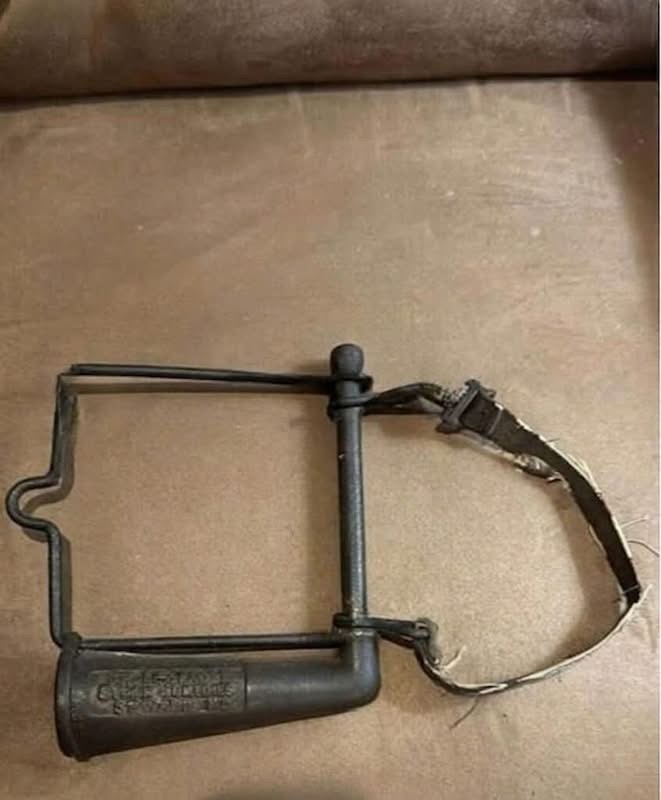
In an era defined by lightning fast technological innovation and highly sophisticated, localized veterinary hospitals, it is incredibly easy to completely lose sight of how far animal healthcare practices have actually progressed over the last century. Hidden away in the dusty corners of forgotten attics, collapsing historical barns, and private antique collections across the United States are rudimentary tools that once played an absolutely paramount role in daily agricultural survival. These heavily weathered objects tell a powerful, unyielding story about early American farming, human-animal relationships, and the gritty dawn of veterinary science. One such overlooked masterpiece is the antique horse drencher, a striking brass instrument that looks remarkably bizarre to modern eyes but once served as an irreplaceable lifeline for working horses. While the average person might easily mistake this peculiar device for a purely decorative relic or a useless piece of rusted junk, it actually represents a pivotal, groundbreaking chapter in the long evolution of equine healthcare, rural economic stability, and early mechanical innovation.
To fully comprehend the deep historical significance of the antique horse drencher, one must understand that it was far more than a simple utilitarian piece of barn equipment; it was a desperate, highly engineered solution to a catastrophic daily threat. Before the widespread commercial adoption of combustion engines, automobiles, and automated industrial machinery, horses were the absolute heartbeat of the American economy. They single handedly powered massive agricultural operations, sustained complex regional transportation systems, and backed critical military endeavors. Consequently, maintaining the physical health of a single draft horse was never an optional hobby for a farming family; it was a matter of total economic survival. The specialized brass drencher allowed rugged nineteenth century caretakers to safely and effectively administer heavy liquid remedies to massive animals suffering from Equine Colic. Colic, a potentially fatal abdominal condition involving severe digestive blockages and agonizing internal distress, was incredibly common and could easily cripple an entire farm’s productivity overnight. At a time when formal veterinary clinics were non existent in rural territories, this specialized tool represented brilliant practical innovation, extreme resourcefulness, and a deep, empathetic commitment to animal welfare.
The stunning physical construction of the horse drencher highlights the remarkable role of historic craftsmanship in early functional design. Typically constructed from heavy cast brass and carefully paired with thick, hand-stitched leather rigging, the entire device reflects an extraordinary level of industrial artistry. This premium choice of material was entirely deliberate rather than aesthetic. Brass was specifically chosen by early metalworkers because it is incredibly durable, highly resistant to the corrosive properties of acidic early medications, easy to thoroughly sanitize in primitive conditions, and completely safe for repeated contact with a thrashing animal’s mouth. The brilliant integration of a wide top funnel and a specialized, hollow bit allowed therapeutic liquids to flow directly and deeply down the horse’s throat without spilling a drop. In modern industrial terms, this ingenious mechanism would be celebrated as user-centered design, showcasing a thoughtful engineering process tailored specifically to ease user frustration and maximize animal safety during a highly stressful medical event.
For the modern antique collector and history enthusiast, these unique brass beauties have emerged as highly coveted, niche commodities in the memorabilia market. Collectors who specialize in early agricultural tools, veterinary artifacts, and equestrian history actively scan online appraisal networks and estate auctions for well-preserved specimens. When evaluating the monetary and educational value of a discovered horse drencher, experts look closely at the underlying quality of the brass, the structural integrity of the aging leather straps, the presence of the original matching funnel, and verifiable signs of actual wear consistent with historical barn use. Platforms like WorthPoint regularly witness active trading of these devices, reflecting a passionate community dedicated to preserving the tangible artifacts of America’s rural development.
Beyond its collector appeal, the legacy of the horse drencher provides timeless, foundational principles that still directly influence modern veterinary practices. Early caretakers were forced to work with exceptionally rudimentary tools, yet they developed highly sophisticated mechanical solutions by closely studying animal anatomy and adapting to the limited resources at their immediate disposal. As scientific knowledge advanced through the mid twentieth century, veterinary medicine underwent a massive, rapid transformation, shifting steadily away from rigid mechanical interventions toward refined, evidence-based treatments. By the 1950s, the physical horse drencher was completely replaced by flexible, modern stomach tubes, which allowed for infinitely more precise delivery of medications and drastically reduced the severe risk of accidental lung aspiration or internal injury. This profound evolutionary leap underscores a continuous, century long institutional focus on maximizing animal comfort and elevating welfare standards.
Successfully identifying a authentic antique horse drencher amidst a sea of old farming equipment requires a keen, trained eye for specific structural markers. True drenchers are instantly distinguished from standard equestrian bits by their hollow interior barrel, the unmistakable integrated funnel attachment at the side, and heavy leather harness attachments designed to secure the device to a horse’s head during treatment. Once a collector secures one of these rare items, proper preservation is essential to maintaining its historical and financial value. Preservationists emphasize cleaning the metal gently with non-abrasive cloths, avoiding harsh industrial chemical polishes that can strip away the valuable aged patina, storing the piece in a strictly climate-controlled environment to prevent leather rot, and maintaining all original connecting ropes or straps whenever possible.
Ultimately, the compelling saga of this brass beauty proves that knowing the profound story behind an unfamiliar object can drastically elevate its monetary worth, educational significance, and personal meaning. The antique horse drencher stands as a beautiful, enduring monument to an era when human survival was directly tied to the health of beasts of burden, and where innovation was driven purely by absolute necessity. It offers contemporary audiences an invaluable window into the evolution of medical technology, a deep appreciation for early industrial design, and a much stronger connection to our shared agricultural heritage. The next time you happen to encounter an unusual, unidentifiable metallic artifact in a rural museum or a family heirloom collection, take a much closer look; you might just uncover a forgotten narrative of human resilience waiting to be told.