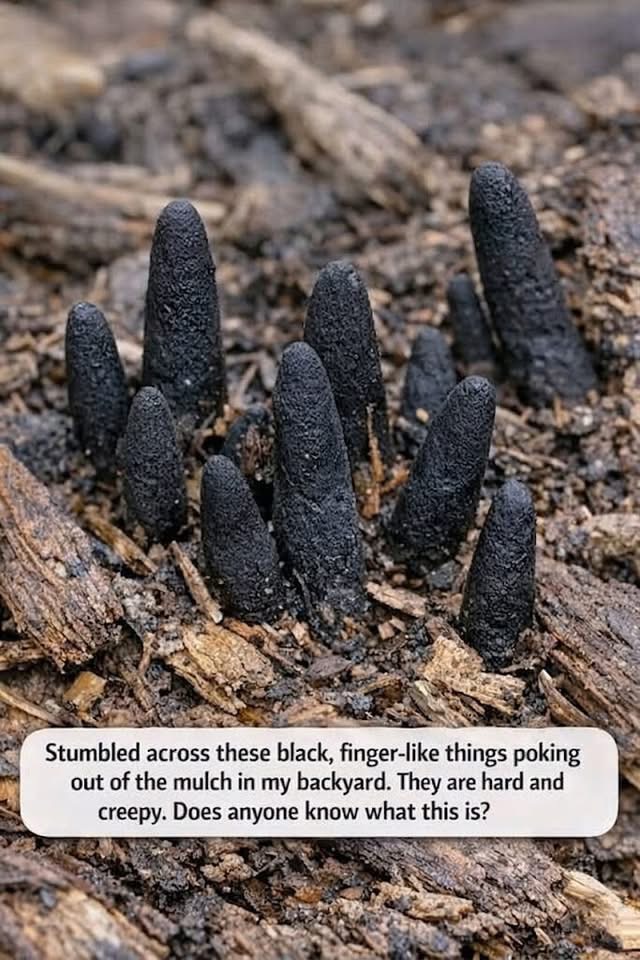
Stumbling across a cluster of black, skeletal protrusions poking straight out of the fresh mulch in your backyard is enough to send a cold shiver down any homeowner’s spine. Looking distinctly like the decayed, petrified fingers of a buried corpse reaching upward from the underworld, these creepy structures instantly transform a peaceful garden bed into a scene from a horror movie. The initial shock of discovering these rigid, charcoal-colored growths naturally triggers an immediate wave of alarm, leaving people wondering if their soil has been contaminated, if a dark secret is buried in their yard, or if the bizarre invaders pose an immediate threat to children, pets, and landscaping.
The macabre botanical phantom haunting your garden walkway is actually a highly unique and fascinating organism known appropriately by its chilling common name Dead Mans Fingers. Scientifically classified as Xylaria polymorpha, this unusual lifeform is not a plant at all, but rather a saprobic fungus that specializes in consuming dead and decaying organic matter. While the sheer sight of a cluster of these growths can be deeply unsettling, they are a completely natural and surprisingly common component of healthy forest floors and suburban garden ecosystems alike.
The reason these growths evoke such an immediate sense of dread lies entirely in their unsettling physical evolution. When the fruiting bodies of Dead Mans Fingers first emerge from the earth in the spring, they look remarkably benign, often appearing as soft, pale blue or powdery white stubs that resemble regular mushrooms. However, as the fungus matures throughout the summer and transitions into autumn, it undergoes a dramatic and grotesque metamorphosis. The outer surface gradually darkens into a deep, velvety brownish-black or charcoal color, drying out to form a tough, wrinkled, and woody texture. They typically grow in tightly packed clusters of three to five stalks, reaching heights of up to four inches. The resulting silhouette is an uncanny, anatomically accurate imitation of a decaying, weather-beaten human hand clawing its way out of the dirt.
Understanding why this specific fungus chose your backyard as its nesting ground comes down to analyzing the materials used to landscape your property. Because Dead Mans Fingers are saprobic organisms, their survival depends entirely on the presence of decomposing wood, which provides the complex carbohydrates, cellulose, and lignin they need to feed. Flower beds heavily packed with hardwood mulch, decomposing wood chips, buried roots, or decaying tree stumps provide an absolute paradise for the subterranean mycelium network of the fungus. When you combine this abundant food source with a high concentration of ground moisture, consistent shade, and restricted airflow, you create the absolute perfect storm for the zombie-like fruiting bodies to erupt through the surface.
Fortunately, despite their terrifying appearance and morbid name, the reality of Dead Mans Fingers is completely harmless. This fungus poses absolutely no danger to humans or domestic pets through touch or close proximity, as it does not release toxic airborne gasses or cause skin irritation upon contact. It is universally classified as non-edible due to its incredibly tough, woody interior and completely unappealing, bitter taste, meaning even curious dogs or outdoor cats will generally sniff the growth and walk away without attempting to ingest it.
From a horticultural perspective, discovering Dead Mans Fingers on your property is actually a sign that your soil ecosystem is functioning exactly as nature intended. Unlike predatory fungi that actively attack and parasitize living plants, this benign species restricts its diet exclusively to dead organic material. By aggressively breaking down the tough fibrous components of old mulch, decaying wood chips, and dead tree roots, the fungus plays a vital, irreplaceable role in nutrient cycling. It actively converts useless woody debris into rich, fertile, and nutrient-dense organic matter that feeds the surrounding soil, ultimately helping your living flowers, shrubs, and trees thrive.
If the sheer aesthetic of having rotting zombie appendages decorating your pristine front lawn is simply too much for your peace of mind, removing them is a relatively quick and painless process. Homeowners can simply put on a pair of sturdy gardening gloves to avoid any minor soil irritants, firmly grasp the base of the fungal fingers, and gently pry them loose from the earth. To ensure they do not immediately sprout back in the exact same location, it is critical to dig slightly beneath the surface to locate and remove the specific chunk of decaying wood or buried root that the fungus was utilizing as its primary food source. The extracted specimens can then be safely discarded into a standard yard waste container or tossed deep into a compost bin to allow them to finish their decomposition work out of sight.
For property owners determined to prevent these creepy subterranean hands from ever returning to their garden beds, the long-term solution requires managing the environment to make it far less hospitable to fungal growth. Routinely turning and refreshing your mulch prevents moisture from becoming trapped in stagnant, suffocating layers. Modifying your automatic lawn irrigation schedules to ensure the soil has ample time to dry out between waterings, alongside pruning low-hanging tree branches to allow direct sunlight to bake the garden floor, will drastically reduce the ambient humidity that fungi require to develop. Alternatively, you can completely swap out traditional hardwood mulch for alternative landscaping materials that do not decompose easily, such as clean pine needles, crushed gravel, river stones, or cedar chips.
Ultimately, discovering something as profoundly bizarre as Dead Mans Fingers in your own backyard does not need to be a source of ongoing anxiety or panic. Instead, it serves as a fascinating, front-row invitation to explore the incredibly complex and mysterious world of mycology. These strange organisms have been quietly managing the earth’s waste and rejuvenating the soil since long before humans began manicuring lawns. By shifting your perspective from fear to curiosity, you can learn to appreciate the hidden biological miracles occurring right beneath your feet, realizing that the creepiest discoveries in our yards are often just nature’s way of quietly keeping the world alive.