Skip to content

Daily News

  • Home
  • Sample Page
  • Toggle search form

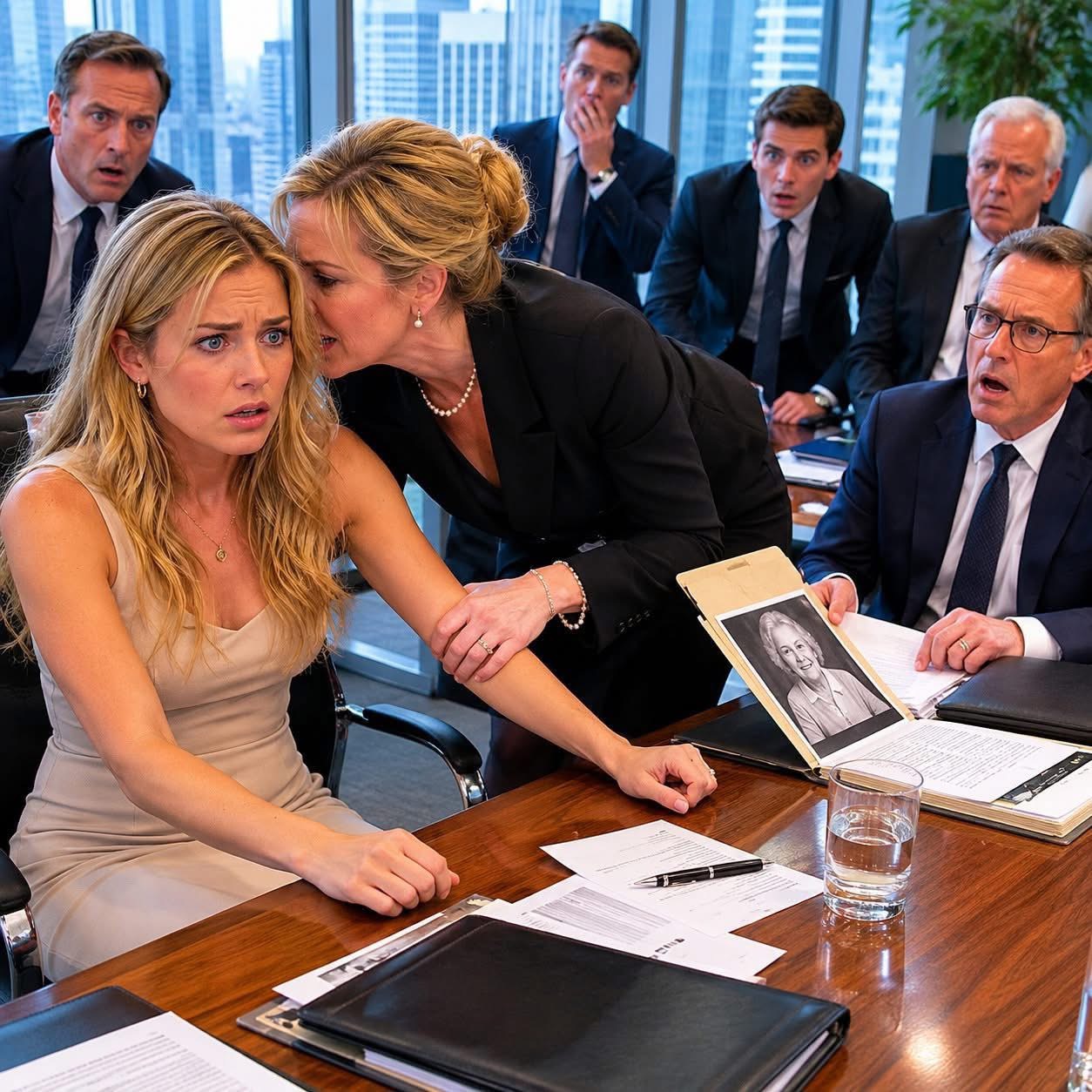
My mother squeezed my wrist before the will was read and whispered, “If you get even a single dollar, I’ll ruin you”… but when the lawyer opened another file, everyone discovered what she had done to keep me away from my grandmother. “If you receive even one dollar from my mother’s inheritance, I will ruin your life.” My mother whispered it into my ear in the lawyer’s office, squeezing my wrist with a strength that did not match her flawless black dress or the calm smile she was giving everyone else. Her name is Miranda, and when she threatens someone, she does not do it impulsively. She does it like a person who has already made up her mind. My name is Jade. I am twenty-eight years old, and I teach second grade at a public school in Charleston. Until that afternoon, I still did not fully understand how far my own mother had gone to keep me away from my grandmother Pearl. But to explain what happened in that room, I have to go back six months, to the last phone call I ever received from my grandmother. It was a Tuesday in September. I was sitting at my apartment table grading spelling notebooks, a cold coffee beside me and a drawing of a horse on a page that had nothing to do with the assignment. My phone rang, and when I saw “Grandma Pearl,” I answered before the second ring, like always. “Grandma? How are you?” Her voice hit me from the first syllable. It was hers, but weaker, as if every word had to force its way out. “Jade, listen to me carefully. No matter what happens… I already took care of it.” I sat up straight. “What did you take care of?” “Promise me you’ll remember that.” “I promise. But tell me what’s going on.” She did not answer. She changed the subject in that way she had of pulling you from worry into warmth within seconds. She asked about my students, about the boy who drew horses on every page, about whether I was still living on sweet bread whenever I was tired. That was my grandmother Pearl: the woman who picked me up from school when my mother “had commitments,” the one who taught me how to make mole without measuring anything, the one who sat me on the patio and said, “Don’t let anyone make you small.” My mother never tolerated that I loved my grandmother more than her. Not because it was not true, but because it was. The next morning, I tried to call her back. My mother answered. “My mom is resting. Don’t call again.” She hung up. I called eleven times that week. Three went straight to voicemail. Twice my mother answered only to hang up. The rest rang until they died. On the eighth day, I drove to my grandmother’s house, in the neighborhood where she had lived her entire life. The porch light was off. That alone was strange. My grandmother left it on every night “so the darkness wouldn’t feel so alone,” she used to say. I knocked. No answer. I knocked harder. Then Travis, my mother’s husband, appeared, filling the doorway with his arms crossed and his boots still on. My grandmother hated people coming inside with dirty boots. “Your mom said she can’t receive visitors,” he said. “She’s my grandmother. I just want to see her for five minutes.” “Don’t add more stress than she already has.” And he shut the door in my face. I stood on the porch listening to the lock click. I did not leave right away. I looked at my grandmother’s bedroom window. Behind the curtain, the yellow lamp she had owned since I was a child was on. She was there. Just a few meters away. And I could not reach her. That was the moment I understood my mother was not caring for my grandmother. She was controlling her. Three months passed. Every Sunday, I sent her a card by mail. Small things. That one of my students had finally learned to read a difficult word. That I tried her capirotada recipe and burned the top. That I missed her. I never knew if she received them. My mother called me only once during those months. “My mom is going to change some things in her estate. Don’t make a scene.” “What things?” “Whatever she wants. You better focus on your little job.” My little job. Yes, I did not earn much. But I taught seven-year-olds how to read. And still, every time my mother said “your little job,” she said it like I was a child pretending to be an adult. I looked for lawyers. The retainer alone was almost three months of rent. I had no proof. Just eleven unanswered calls, a closed door, and a feeling that drilled into my chest. Until one night in November, I received a message from an unknown number. “Your grandmother is in palliative care. She asks about you every day. Sorry. I can’t say more. Don’t abandon her.” I read that message seven times. I held it like it was a person. The next morning, I remembered something: years earlier, my grandmother had listed me as a secondary contact on her medical insurance. I found an old card where I had written down the policy number. I called. After forty minutes on hold, an operator confirmed she was being treated in a palliative care unit in Beaufort. I went immediately. The receptionist checked the system, then looked at me with a pity that broke me. “You are not on the authorized visitors list.” My mother had made a list to decide who could say goodbye to her own mother. And I was not on it. I sat in my car for an hour without turning it on. Then I saw a nurse coming out through a side door, exhausted, with a cloth bag over her shoulder. She looked at me a few seconds longer than normal. Like she wanted to say something. Like she could not. Two weeks later, my mother called me at seven in the morning. “My mom died today. The funeral is Thursday. Dress appropriately.” That was it. Not a “I’m sorry.” Not a “she asked about you.” Just instructions. At the funeral, while my mother cried for everyone and repeated that she had been with my grandmother “every day, until her last breath,” I felt a hand on my shoulder. It was the nurse from the parking lot. She leaned in and whispered: “Your grandmother talked about you every day.” Before I could react, she disappeared into the crowd. And a week later, when the lawyer began reading the will and everything seemed to be going to my mother, I was already starting to believe my grandmother had not been able to save anything. Until the lawyer set aside the first set of documents, placed another envelope on the table… and all the color drained from my mother’s face. (I know you’re curious about the next part, so please be patient and read on in the comments below. Thank you for your understanding of the inconvenience. please leave a ‘YES’ comment below and give us a “Like ” to get full story ) 👇

Posted on May 27, 2026 By admin No Comments on My mother squeezed my wrist before the will was read and whispered, “If you get even a single dollar, I’ll ruin you”… but when the lawyer opened another file, everyone discovered what she had done to keep me away from my grandmother. “If you receive even one dollar from my mother’s inheritance, I will ruin your life.” My mother whispered it into my ear in the lawyer’s office, squeezing my wrist with a strength that did not match her flawless black dress or the calm smile she was giving everyone else. Her name is Miranda, and when she threatens someone, she does not do it impulsively. She does it like a person who has already made up her mind. My name is Jade. I am twenty-eight years old, and I teach second grade at a public school in Charleston. Until that afternoon, I still did not fully understand how far my own mother had gone to keep me away from my grandmother Pearl. But to explain what happened in that room, I have to go back six months, to the last phone call I ever received from my grandmother. It was a Tuesday in September. I was sitting at my apartment table grading spelling notebooks, a cold coffee beside me and a drawing of a horse on a page that had nothing to do with the assignment. My phone rang, and when I saw “Grandma Pearl,” I answered before the second ring, like always. “Grandma? How are you?” Her voice hit me from the first syllable. It was hers, but weaker, as if every word had to force its way out. “Jade, listen to me carefully. No matter what happens… I already took care of it.” I sat up straight. “What did you take care of?” “Promise me you’ll remember that.” “I promise. But tell me what’s going on.” She did not answer. She changed the subject in that way she had of pulling you from worry into warmth within seconds. She asked about my students, about the boy who drew horses on every page, about whether I was still living on sweet bread whenever I was tired. That was my grandmother Pearl: the woman who picked me up from school when my mother “had commitments,” the one who taught me how to make mole without measuring anything, the one who sat me on the patio and said, “Don’t let anyone make you small.” My mother never tolerated that I loved my grandmother more than her. Not because it was not true, but because it was. The next morning, I tried to call her back. My mother answered. “My mom is resting. Don’t call again.” She hung up. I called eleven times that week. Three went straight to voicemail. Twice my mother answered only to hang up. The rest rang until they died. On the eighth day, I drove to my grandmother’s house, in the neighborhood where she had lived her entire life. The porch light was off. That alone was strange. My grandmother left it on every night “so the darkness wouldn’t feel so alone,” she used to say. I knocked. No answer. I knocked harder. Then Travis, my mother’s husband, appeared, filling the doorway with his arms crossed and his boots still on. My grandmother hated people coming inside with dirty boots. “Your mom said she can’t receive visitors,” he said. “She’s my grandmother. I just want to see her for five minutes.” “Don’t add more stress than she already has.” And he shut the door in my face. I stood on the porch listening to the lock click. I did not leave right away. I looked at my grandmother’s bedroom window. Behind the curtain, the yellow lamp she had owned since I was a child was on. She was there. Just a few meters away. And I could not reach her. That was the moment I understood my mother was not caring for my grandmother. She was controlling her. Three months passed. Every Sunday, I sent her a card by mail. Small things. That one of my students had finally learned to read a difficult word. That I tried her capirotada recipe and burned the top. That I missed her. I never knew if she received them. My mother called me only once during those months. “My mom is going to change some things in her estate. Don’t make a scene.” “What things?” “Whatever she wants. You better focus on your little job.” My little job. Yes, I did not earn much. But I taught seven-year-olds how to read. And still, every time my mother said “your little job,” she said it like I was a child pretending to be an adult. I looked for lawyers. The retainer alone was almost three months of rent. I had no proof. Just eleven unanswered calls, a closed door, and a feeling that drilled into my chest. Until one night in November, I received a message from an unknown number. “Your grandmother is in palliative care. She asks about you every day. Sorry. I can’t say more. Don’t abandon her.” I read that message seven times. I held it like it was a person. The next morning, I remembered something: years earlier, my grandmother had listed me as a secondary contact on her medical insurance. I found an old card where I had written down the policy number. I called. After forty minutes on hold, an operator confirmed she was being treated in a palliative care unit in Beaufort. I went immediately. The receptionist checked the system, then looked at me with a pity that broke me. “You are not on the authorized visitors list.” My mother had made a list to decide who could say goodbye to her own mother. And I was not on it. I sat in my car for an hour without turning it on. Then I saw a nurse coming out through a side door, exhausted, with a cloth bag over her shoulder. She looked at me a few seconds longer than normal. Like she wanted to say something. Like she could not. Two weeks later, my mother called me at seven in the morning. “My mom died today. The funeral is Thursday. Dress appropriately.” That was it. Not a “I’m sorry.” Not a “she asked about you.” Just instructions. At the funeral, while my mother cried for everyone and repeated that she had been with my grandmother “every day, until her last breath,” I felt a hand on my shoulder. It was the nurse from the parking lot. She leaned in and whispered: “Your grandmother talked about you every day.” Before I could react, she disappeared into the crowd. And a week later, when the lawyer began reading the will and everything seemed to be going to my mother, I was already starting to believe my grandmother had not been able to save anything. Until the lawyer set aside the first set of documents, placed another envelope on the table… and all the color drained from my mother’s face. (I know you’re curious about the next part, so please be patient and read on in the comments below. Thank you for your understanding of the inconvenience. please leave a ‘YES’ comment below and give us a “Like ” to get full story ) 👇

My mother squeezed my wrist before the will was read and whispered, “If you receive even a single dollar of my mother’s inheritance, I will ruin your life.”

She said it quietly, with the particular control of a woman who has learned to deliver cruelty without disturbing the surface. Her black dress was pressed. Her expression, for everyone else in the room, was composed grief. Her nails were in my skin hard enough that I would have a mark there for two days.

Her name is Miranda Sterling. My name is Jade Sterling. I am twenty-eight years old and I teach second grade at a public school in Charleston, and I have spent most of my adult life understanding the difference between a person who loves you and a person who needs you to be small.

To understand what happened in that law office, I need to take you back six months to a Tuesday in September.

I was at my desk after school, checking spelling notebooks with cold coffee beside me, when my phone rang and I heard my grandmother’s voice. Pearl’s voice. Thin and careful in a way that did not sound like her, and underneath the thinness, something that sounded like warning.

“Jade, listen to me carefully,” she said. “Whatever happens, I have already taken care of it. Promise me you’ll remember that.”

I promised. I did not fully understand what I was promising.

She changed the subject immediately, with the particular skill she had always had for moving a conversation from worry to warmth in a single breath. She asked about my students. She asked if I was still eating nothing but sweet bread when I was tired and overworked. I laughed and said no and we both knew I was lying about that, and I felt the specific comfort of being known by someone who does not require you to be other than you are.

That was Pearl. The woman who picked me up from school when my mother had other commitments, which was most days. The woman who taught me to bake by feel rather than measurement. The woman who told me, so many times it became the sentence I use to hold myself together in difficult moments, never to let anyone make you feel small.

The next morning I tried to call her back. My mother answered.

“She’s resting and you are not to call again.”

Click.

I called eleven more times that week. Voicemail. Hang-up. Voicemail. Hang-up. On the eighth day I drove to my grandmother’s house in the old historic district where the porch light was off, which it never was, which Pearl had always kept on because she said a house should look like it was expecting someone.

Travis answered the door. My mother’s husband. He stood in the doorway with his arms crossed and the particular expression of a man who has been given instructions he is following precisely to avoid consequences.

“Your mother said she cannot have visitors right now,” he said.

“She is my grandmother and I want five minutes with her.”

“Don’t add stress to her condition.”

The door closed. The lock clicked. I stood on the porch and looked up at the yellow lamp in her bedroom window and understood, in the way that understanding sometimes arrives all at once rather than gradually, that my mother was not taking care of Pearl. She was containing her.

Three months passed.

Every Sunday I mailed my grandmother a card. Small things, the kinds of things she had always liked to hear about, a funny thing a student said, the way the light looked on the harbor in the early morning, which book I had been reading on the back porch after dinner. I did not know if she was receiving them. I had no way to know anything.

My mother called me once during those months to tell me Pearl was changing her estate and that I should focus on my little job. She said little job the way she had always said anything I achieved, with an emphasis designed to remind me of its dimensions.

I tried to find a lawyer who could help. The retainer alone cost more than three months of what I made. I had no documentation, no evidence, no proof that what I suspected was happening behind my grandmother’s door was anything other than the concern of a devoted daughter.

Until November, when I received a message from an unknown number saying my grandmother was in palliative care in Beaufort.

I went the same night.

The receptionist at the facility was kind and matter-of-fact about it in the way of people who have had to deliver this particular message before. I was not on the authorized visitor list. My mother had submitted a list of people permitted to see Pearl in her final weeks. She had made it carefully. My name was not on it.

My mother had made a list to decide who could say goodbye to Pearl. And she had decided I could not.

I sat in the parking lot for a long time.

Two weeks later, Miranda called at seven in the morning to say Pearl had died.

The funeral was on Thursday. I wore the dark blue dress my grandmother had always said made me look like someone who knew where she was going. At the service, a nurse came to me from the direction of the parking lot. She kept her voice very low. She told me my grandmother had talked about me every day.

I held that information like a stone in my pocket through the entire service while my mother accepted condolences with the composed expression of a devoted daughter. I held it through the reading of Pearl’s name by the pastor, through the hymns, through the drive to the cemetery, through the reception at my mother’s house where people said what people say and where I ate nothing and talked to no one for very long.

My grandmother had talked about me every day.

She knew I had not stopped.

The office of attorney Silas Thorne was on the second floor of an old brick building in the downtown legal district, the kind of building that has been there long enough that the floors creak in specific places and the windows let in a particular quality of afternoon light. My mother arrived before me. She was already seated to the lawyer’s left when I came in.

She was wearing Pearl’s pearl earrings. Not her own. Pearl’s. Before a single page had been read.

She leaned toward me as I sat and she whispered the words about ruin and she squeezed my wrist and I did not look at her because I had learned a long time ago that meeting her eyes in moments like this was giving her something she wanted.

The lawyer began to read.

The original will left the house and all savings to Miranda Sterling. The jewelry, furniture, books, all distributed at my mother’s discretion. A complete transfer of everything to the woman who had kept me from saying goodbye.

Miranda sat with the serenity of someone watching a conclusion arrive that she had been engineering for years. She said, quietly, that Pearl had known who was truly with her at the end. She said, louder and with a precision designed to land as publicly as possible, that I had not visited once in three months, that Pearl had died wondering why I had abandoned her.

I felt the floor move. Not because she had power over me. Because she was right that I had not been there, and she was using the wall she had built to prove that I had not tried to climb it. The cruelty of it was architectural, she had constructed the distance and was now using the distance as evidence.

And then I noticed the lawyer had not closed the file.

Under the first stack of papers was a second folder. A bright red clip.

“Is there anything else?” my mother asked, with a small laugh that was trying very hard to sound like casual curiosity and sounding instead like a woman who has noticed something and needs it to be nothing.

Attorney Thorne placed the second set of documents in front of him with the expression of a man who has been waiting for this moment and has been patient about the waiting.

“There is an amendment signed three days before Pearl’s death,” he said. “And an irrevocable trust.”

The word trust fell into the room. My mother sat up straighter.

“The trust designates Jade Elena Sterling as the sole beneficiary of all savings and the property at—”

Miranda’s chair scraped. She said it was impossible, that her mother had been sedated, that it could not be legal. Her voice had lost the composed grief it had been wearing all morning and was now the voice I had heard my whole life, the voice she used when something was being taken from her.

“The signature was witnessed by a certified nurse,” the lawyer said. “Validated by a mobile notary.”

He turned toward the door.

The nurse from the parking lot walked in.

Her name was Megan. She sat beside the lawyer with the composure of someone who has been waiting to tell the truth and has had to wait longer than was fair. She stated clearly that Miranda had taken Pearl’s phone while she was sleeping. That she had restricted my visits. That she had brought documents to Pearl when Pearl was weakened and pressed her to sign.

My mother said that was not true. She said it in the flat, automatic way of someone saying something they know will not be believed.

Nobody in the room was listening to her anymore.

The lawyer pulled out a photocopied page. Pearl’s handwriting, from her diary, in the particular sloping cursive she had always used for the things she felt most carefully.

Miranda hasn’t let Jade in for more than two months. She took my phone while I was sleeping. My granddaughter is the only person who has loved me without expecting anything in return.

The lawyer read the final lines where Pearl said goodbye to me in writing because she had not been permitted to do it in person.

The composed daughter had nowhere to be composed. There was nothing left of the performance.

Miranda looked at me with pure hatred and said I had manipulated her. That I had turned Pearl against her. That I was the reason for everything that had gone wrong.

I looked at her steadily. “I didn’t speak to her for three months because you made sure of that. We both know that.”

I stood slowly and told the lawyer I accepted the trust. I told him I wanted the locks changed that week. Then I left.

I did not look back.

Outside on the sidewalk the afternoon air was warm and salt-scented, the way Charleston air is in early spring, and I stood for a moment just breathing it.

The town found out quickly, the way towns do when four people leave a law office carrying the same story in different directions. A family friend called to apologize. She told me Pearl had kept all my Sunday cards in a basket beside her bed.

I sat down on my kitchen floor and cried.

She had received them. She had kept them. She had known every Sunday that I had not stopped.

I moved into the house that week. It smelled of old books and waxed wood, exactly as I remembered from every afternoon of my childhood when it had been the place that felt most like belonging. I found Pearl’s fourteen diaries in her bedroom, the last one on top of the stack.

I opened the final page.

Jade, if you are reading this, my plan worked. Do not be sad. Never let anyone make you feel small again.

I held that notebook to my chest and cried with a relief I had not felt in years, the particular relief of being told by someone you have lost that they saw you clearly and they chose you and the choice was deliberate.

I started living there. I took up her habit of reading on the porch swing in the afternoon. I made coffee the way she made it, a little too strong, in the blue pot she had owned since before I was born. I went back to school on Monday and taught spelling and fractions and how to sound out long words, and some days one of my students said something that made me laugh the way she used to make me laugh.

The peace lasted five months.

It was a rainy Tuesday in April when Travis appeared on my porch, drenched, looking a decade older than the man who had blocked my grandmother’s doorway and told me not to add stress to her condition.

He held out an envelope with both hands.

Inside were foreclosure notices. Legal threats. A medical evaluation indicating my mother’s health was declining rapidly from severe stress. Miranda, who had spent her life in a pristine house with pressed clothes and manicured nails and the particular armor of a woman who believed she had everything managed, was losing the apartment. She was not opening the mail. She was sitting in the dark.

For three days I looked at those papers on my kitchen table beside Pearl’s last diary.

I knew my mother had built this ruin herself, piece by piece, choice by choice. I had no illusions about what she had done or what she was. I was not going to pretend that cruelty was complexity or that what she had subjected me to for twenty-eight years was anything other than what it was.

But my grandmother had also taught me something else, underneath and alongside the instruction not to be made small. She had taught me that holding onto the desire for someone’s suffering was just another way of letting them continue to occupy space inside you.

On Friday I drove to the apartment on the edge of town.

The woman who answered the door was not the Miranda I had known. The dress was faded. The hair unwashed. The eyes, for the first time in my memory, did not contain calculation. They contained a hollowness that I found, despite everything, genuinely difficult to look at.

“Did you come to watch me drown?” she asked.

“No,” I said. “I came to do what grandmother would have done. Even though you don’t deserve it.”

I did not give her Pearl’s inheritance. I did not bring her home. I did not invite her back into my life. I used a portion of the savings to settle her immediate debts and arrange a managed care facility where she would be properly looked after by people who were not me.

When the paperwork was done she sat by the window of her new room looking out at a small garden. She did not thank me. She did not apologize. She had spent too many years being the kind of person she was to know how to do either of those things cleanly.

“You think you won,” she said.

“There was no war,” I said. “I just stopped fighting it.”

I walked out into the April evening and the sun broke through the clouds and hit my face, and I understood something I had been working toward for a long time without knowing what to call it.

Breaking the cycle was not about her. It had never been about her. It was about deciding what I was going to carry forward from everything that had happened and what I was going to put down.

I put down the anger on a sidewalk outside a care facility in April.

I went home.

That evening I sat in Pearl’s living room in the dark and it was not heavy, the dark. The shadows were just shadows. The quiet was the actual quiet of a house that belongs to you and is full of the memory of a person who loved you without condition.

My mother tried to make me nothing with a threat delivered through whispered teeth and manicured nails.

My grandmother made me whole with a diary entry and a basket of Sunday cards.

I am Jade Elena Sterling. I teach second grade. I read on the porch in the afternoon. I make the coffee a little too strong in the blue pot that has been in this kitchen since before I was born.

I am finally, completely, in a room with a door that opens from the inside.

And I know my own name.

Uncategorized

Post navigation

Previous Post: A Rich Woman Forced Her Maid To Wait Outside While She Ate Inside… Then The Restaurant Owner Recognized The Maid PART 1 It was just after noon. The heat outside Casa D’Ouro pressed down like punishment. At the entrance of one of the most expensive restaurants in São Paulo, Estela stepped out of her car wearing oversized sunglasses, a designer handbag on her arm, and the kind of perfume that announced wealth before she even said a word. Behind her came her housekeeper, Lourdes. Sixty years old. Plain uniform. Worn sandals. Exhausted eyes. Lourdes had followed her all morning, running errands, carrying bags, opening doors, staying quiet the way women like her learn to do after years of surviving other people’s moods. So when Estela walked toward the entrance, Lourdes naturally moved to follow. That was when Estela stopped, turned, and looked at her like she had just dragged dirt across a white carpet. “Excuse me,” Estela said coldly. “Where exactly do you think you’re going?” Lourdes blinked, confused. “Ma’am… I thought we were having lunch.” Estela gave a short, cruel laugh. “I’m having lunch. You’re not.” Her eyes moved slowly over Lourdes’s sandals, her faded uniform, her tired face. “Look at yourself. Those shoes. That outfit. You’d embarrass me in there. This place is exclusive. Honestly, I’d lose my appetite just seeing you at one of the tables.” Then she reached into her purse, pulled out a fifty-real bill, and pushed it into the older woman’s hand. “There,” she said. “Go buy yourself some bread from the bakery on the corner. And stay right here outside where the security guard can watch you.” Then she turned and walked inside without another word, disappearing into the cold air, polished glass, and luxury of the dining room as if the whole world existed to serve her. Lourdes stayed outside. In the heat. Hungry. Humiliated. Drained. She sat near the entrance holding the crumpled bill in one hand, fanning herself with a piece of cardboard. Through the window, she could see Estela being led to a beautiful table, already smiling at the menu, already ordering wine and expensive dishes as if the woman outside did not exist. A few minutes later, a black Mercedes pulled up in front of the restaurant. Out stepped Marcos Albuquerque, the owner of Casa D’Ouro. Young. Elegant. Controlled. One of those men who never has to raise his voice to command attention. He was heading toward the entrance when he noticed the woman sitting off to the side in the heat. He slowed down. Looked again. Then stopped completely. Something in his face changed. “Ma’am…” he said softly, almost as if he did not trust his own eyes. “Mrs. Lourdes?” The elderly woman looked up, confused. “Do you know me?” Marcos stepped closer. And suddenly his expression was not only surprise. It was recognition. Deep, emotional recognition. His eyes were already filling as he gently took both her hands into his. “Don’t you recognize me?” he asked, his voice shaking now. “It’s me… Marquinhos. That skinny little boy from the countryside who used to knock on your door asking for a plate of food.” Lourdes stared at him. Really stared. Then her eyes fixed on the small scar near his eyebrow. Her hand began to tremble. “Marquinhos?” she whispered. “My God… is it really you?” And in that moment, the entire past seemed to crash back into the present. Because the woman Estela had just left outside in the heat was not invisible to the man who owned the restaurant. Not even close. Years earlier, when Marcos had nothing, when he was just a hungry child nobody cared about, Lourdes had fed him with the little she had, protected him when no one else did, and treated him like he mattered. And now he was standing in front of her as the owner of one of the finest restaurants in the city. Which meant Estela had just humiliated the one person in front of the wrong witness. Marcos straightened, looked through the glass toward the table where Estela was comfortably sipping wine, then turned back to Lourdes with a tenderness that made her eyes fill instantly. “Please come with me,” he said. “You’re not staying out here.” Then he offered her his arm. And as he led her toward the private VIP room inside Casa D’Ouro, every head in the restaurant began to turn. Including Estela’s. And the look on her face the moment she realized who was being escorted past her table… was only the beginning. (I know you’re curious about the next part, so please be patient and read on in the comments below. Thank you for your understanding of the inconvenience. please leave a ‘YES’ comment below and give us a “Like ” to get full story ) 👇
Next Post: I lied to my father and told him I had failed the entrance exam, even though my score was 98.7. He simply answered, “Get out of the house.” I did not cry. I did not beg. Because I already knew that house had never been a home… it was a trap waiting for my signature. The phone screen lit up my face in the dark. 98.7 percentile. Ranked among the very best. My mother would have cried from pride. My father would not. From the living room, I heard Celia, my stepmother, laughing, and the excited voice of Arthur Reed, the man who still had the nerve to call himself my father. “Lily is really going to make us proud,” he was saying. “That girl deserves a huge celebration.” My girl. That was how he spoke about Lily. To him, I was only “the burden.” I took a deep breath, called his number, and waited. He answered, sounding irritated. “What do you want, Dianne?” “The results are out.” There was a brief silence. “And?” I looked at the 98.7 one more time. Then I told the coldest lie of my life: “I didn’t make it, Dad. I failed.” On the other end, I heard his heavy breathing. Then his voice came—hard, dry, without a single drop of sadness. “I gave you food, school, a roof over your head… and this is how you repay me?” I did not answer. “You’ve embarrassed me.” I swallowed hard. “Dad…” “Don’t come back. There is no room in this house for useless people.” He hung up. I stared at the black screen. Not one tear. Not a single one. Because two weeks earlier, I had walked past his study and heard the truth behind everything. The door was slightly open. Celia was speaking softly, but her words were laced with poison. “Dianne just turned eighteen, Arthur. You can finally take that house her mother left her.” I froze. My mother’s house. The only thing she had managed to protect before she died. A beautiful historic brownstone in Brooklyn Heights. The deed was in my name, with full control handed to me when I turned eighteen. Celia continued: “Lily wants to study in Europe. That’s expensive. If we sell that house, we’ll be set.” My father sighed. “The will is clear.” “So what? She’s a kid. You’re her father. Make her sign.” There was silence. Then he said something that tore away the last shred of love I still had for him: “When she fails the exam, I’ll kick her out. She’ll realize she’s nothing without me. When she’s desperate enough, I’ll throw her a few bucks, and she’ll sign whatever I want.” Celia laughed. I stopped breathing. I went back to my room, locked the door, and turned on my phone’s voice recorder. The next day, I hid the phone behind a planter in his study. I recorded everything. Their plan. The forged renunciation papers. The pressure. The hunger. The way my own father planned to break me so he could steal the only thing my mother had left me. That is why I lied. That is why I let him throw me out. That is why, that night, I packed my clothes into a suitcase without making a sound. I did not have much. Three pairs of jeans. Two tops. My documents. My birth certificate. My ID. A copy of the will. And a small wooden box with a photo of my mother. In the photo, she was holding me in front of the Brooklyn Heights house. Blooming bougainvilleas filled the background. I was six years old. She was still alive. I pressed it against my chest. From the living room, they were still laughing about Lily’s “bright future.” The irony. I dragged my suitcase to the door. Before leaving, I looked one last time at the hallway where I had so often waited for my father to love me. I did not feel nostalgia. I felt clarity. When I came back, I would not be asking for permission. I was going to take everything back. My Aunt Susan welcomed me that same night at her apartment in Park Slope. She was my mother’s best friend—the only adult who never treated me like I was an obstacle. When she saw me with the suitcase, her smile disappeared. “He kicked you out?” I nodded. I played the recording for her. Halfway through the audio, she started crying. By the end, her fists were clenched. “Your mother chose a terrible husband, but she left behind a very smart daughter.” “Aunt Susan, I need to lay low for a few days.” “You’re staying right here.” “And I’m going to need you to play a part with me.” She did not ask questions. She simply said, “Tell me my lines.” A week later, my father organized a massive party for Lily in a ballroom in Manhattan. Flowers. Live music. Waiters. Photos. A ridiculous banner that read: “Congratulations, Future University Student!” Lily had barely passed her exams. But for Arthur, it was enough. He stepped onto the stage with a glass in his hand, his voice thick with pride. “My daughter is incredible. Intelligent. Disciplined. As a father, I couldn’t ask for more.” The crowd applauded. I was at the back of the room, dressed in black, holding a brown envelope in my hands. Inside were ten copies of my test results. 98.7 percentile. The recording. The will. And a letter my mother had left sealed for this very day. My father had not seen me yet. Neither had Celia. Lily was smiling like a queen. Then my phone vibrated. It was Mr. Santos, my mother’s lawyer. I answered in a whisper. “Mr. Santos, I’m here.” His breathing sounded shallow. “Dianne, listen to me carefully. Do not enter that ballroom yet.” I froze. “Why?” “Because your father just arrived at a notary’s office with a girl claiming to be you.” (I know you’re curious about the next part, so please be patient and read on in the comments below. Thank you for your understanding of the inconvenience. please leave a ‘YES’ comment below and give us a “Like ” to get full story ) 👇

Leave a Reply Cancel reply

Your email address will not be published. Required fields are marked *

Recent Posts

  • The Photo Is Not Edited. Look Closer And Try Not To Gasp When You See It In The First Comment Below😱⬇
  • I went to the store and bought some bacon, brought it home to eat. When I opened the package and took a few slices, I found this in the bacon. Honestly, my appetite disappeared instantly. I’ve been sitting in the kitchen for half an hour staring at it, trying to figure out what it is. Does anyone know what this could be? Check the first comment for the answer 👇
  • At Almost 103, He Is The Oldest Living Star, Check👇
  • Check Comment
  • Check Comment

Recent Comments

No comments to show.

Copyright © 2026 Daily News.

Powered by PressBook WordPress theme