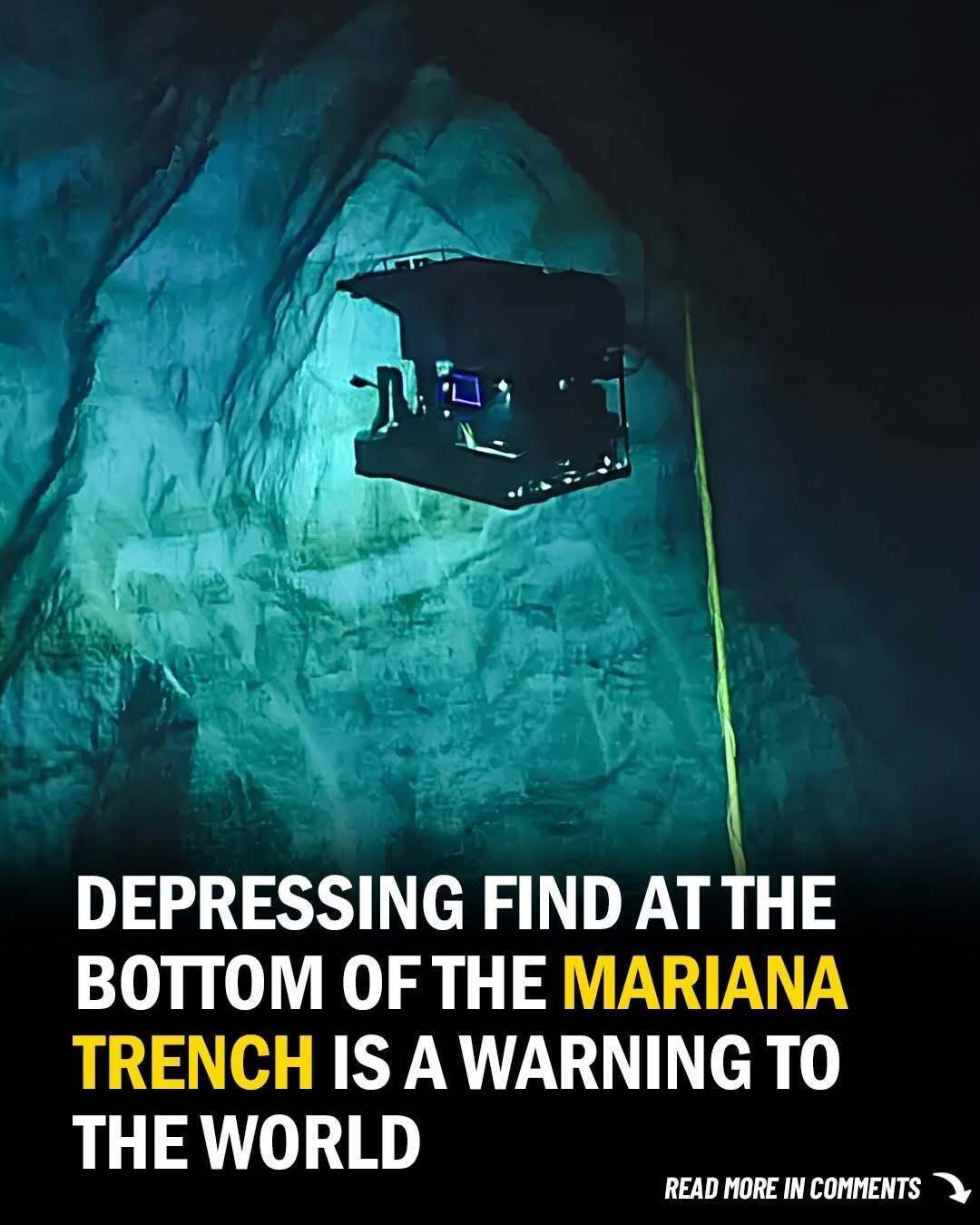
The discovery stunned even the most experienced researchers. Deep within the darkest reaches of the ocean, in a place once believed to be untouched by human activity, explorers found something that never should have been there: a discarded plastic bag resting near the bottom of the Mariana Trench. At a depth where sunlight cannot penetrate and where pressure is strong enough to crush most forms of life, evidence of human waste had somehow arrived. The finding was more than just another piece of litter—it was a sobering reminder that no corner of our planet remains beyond the reach of pollution.
For decades, people comforted themselves with the belief that the oceans were vast enough to absorb humanity’s mistakes. Trash disappeared from sight, and many assumed it disappeared altogether. The Mariana Trench challenged that assumption in the most dramatic way possible. Long regarded as one of Earth’s last truly remote frontiers, the trench was imagined as a pristine environment isolated from the damage occurring elsewhere. Instead, researchers discovered that even this distant abyss bears the fingerprints of human consumption.
What makes the discovery especially disturbing is that the trench is not an empty wasteland. Although it appears barren from the surface, it supports a surprisingly diverse ecosystem. Strange fish, deep-sea crustaceans, delicate corals, jellyfish, and countless microorganisms have adapted to survive in conditions unlike anywhere else on Earth. These creatures evolved in isolation over millions of years, yet they now face threats created by human behavior thousands of miles away. Plastic waste is increasingly entangling marine animals, damaging habitats, and introducing harmful substances into ecosystems that were once considered protected by their remoteness.
Scientists studying deep-sea debris have documented numerous cases in which marine life interacts directly with plastic waste. Animals become trapped in abandoned fishing equipment, consume plastic fragments mistaken for food, or suffer injuries caused by discarded materials. Research suggests that a significant percentage of deep-sea litter sightings involve wildlife being negatively affected by human-generated debris. These encounters are no longer rare exceptions—they are becoming part of everyday life in the ocean’s depths.
Single-use plastics remain among the largest contributors to the problem. Designed to serve a purpose for only a few minutes, products such as shopping bags, food wrappers, bottles, and packaging materials often persist in the environment for decades or even centuries. Once discarded, many of these items eventually enter rivers, streams, and drainage systems before making their way to the sea. Studies examining debris on the ocean floor consistently identify plastic as the most common form of pollution, and a large proportion of that waste consists of items intended for only temporary use.
The presence of plastic in the Mariana Trench highlights the global nature of the crisis. Many people assume pollution found in the open ocean originates primarily from ships and industrial activities at sea. While maritime sources contribute to the problem, researchers estimate that the majority of marine plastic pollution begins on land. Waste from cities, towns, and communities is carried into waterways and eventually transported across vast distances by ocean currents. The plastic bag discovered in the trench may have traveled thousands of miles before finally settling in one of the deepest places on the planet.
Another major source of pollution comes from lost or abandoned fishing equipment, often referred to as “ghost gear.” Nets, ropes, traps, and other materials continue drifting through the ocean long after they are discarded, trapping wildlife and contributing significantly to marine debris accumulation. Massive concentrations of floating waste, including the well-known garbage patches found in parts of the Pacific Ocean, contain large quantities of abandoned fishing gear mixed with consumer plastics.
The problem extends far beyond visible litter. Over time, larger plastic items break apart into increasingly smaller fragments known as microplastics. These particles spread throughout the water column and eventually settle onto the seafloor. Scientists have now detected microplastics in remote environments across the globe, including polar regions, mountain ranges, and deep-sea trenches. Because these particles are so small, they can be consumed by organisms at nearly every level of the food chain.
As plastics degrade, they may also release chemical compounds into the surrounding environment. Researchers continue investigating the long-term impact of these substances on marine ecosystems, but growing evidence suggests they may alter biological processes, affect reproduction, and contribute to broader environmental stress. In fragile deep-sea habitats, even small disruptions can have significant consequences due to the slow pace of ecological recovery.
The image of a plastic bag resting in the Mariana Trench has become a powerful symbol of humanity’s environmental footprint. It demonstrates that pollution does not simply vanish when it leaves our sight. Instead, it travels, accumulates, and ultimately reaches places we once believed were beyond our influence. The discovery serves as a warning that the consequences of our actions are far more extensive than many people realize.
Addressing this challenge will require meaningful changes at every level of society. Individuals can reduce their reliance on disposable plastics by choosing reusable alternatives whenever possible. Communities can improve recycling systems and waste management infrastructure. Governments can introduce stronger regulations aimed at reducing unnecessary plastic production and encouraging sustainable materials. Businesses, meanwhile, can invest in product designs that prioritize environmental responsibility rather than convenience alone.
Education and awareness also play an essential role. The more people understand where waste ends up and how it affects ecosystems, the more likely they are to support solutions that reduce pollution. Environmental problems of this scale cannot be solved by a single action or a single group. They require cooperation, innovation, and long-term commitment.
The plastic bag found in the Mariana Trench is more than an isolated piece of debris. It is evidence of a global challenge that has reached even the most remote places on Earth. It reminds us that the oceans are not limitless dumping grounds but complex, interconnected systems that sustain life across the planet. If there is any lesson to be learned from this discovery, it is that every choice matters. The future health of our oceans depends on what we do today, before the damage reaches a point from which recovery becomes impossible.