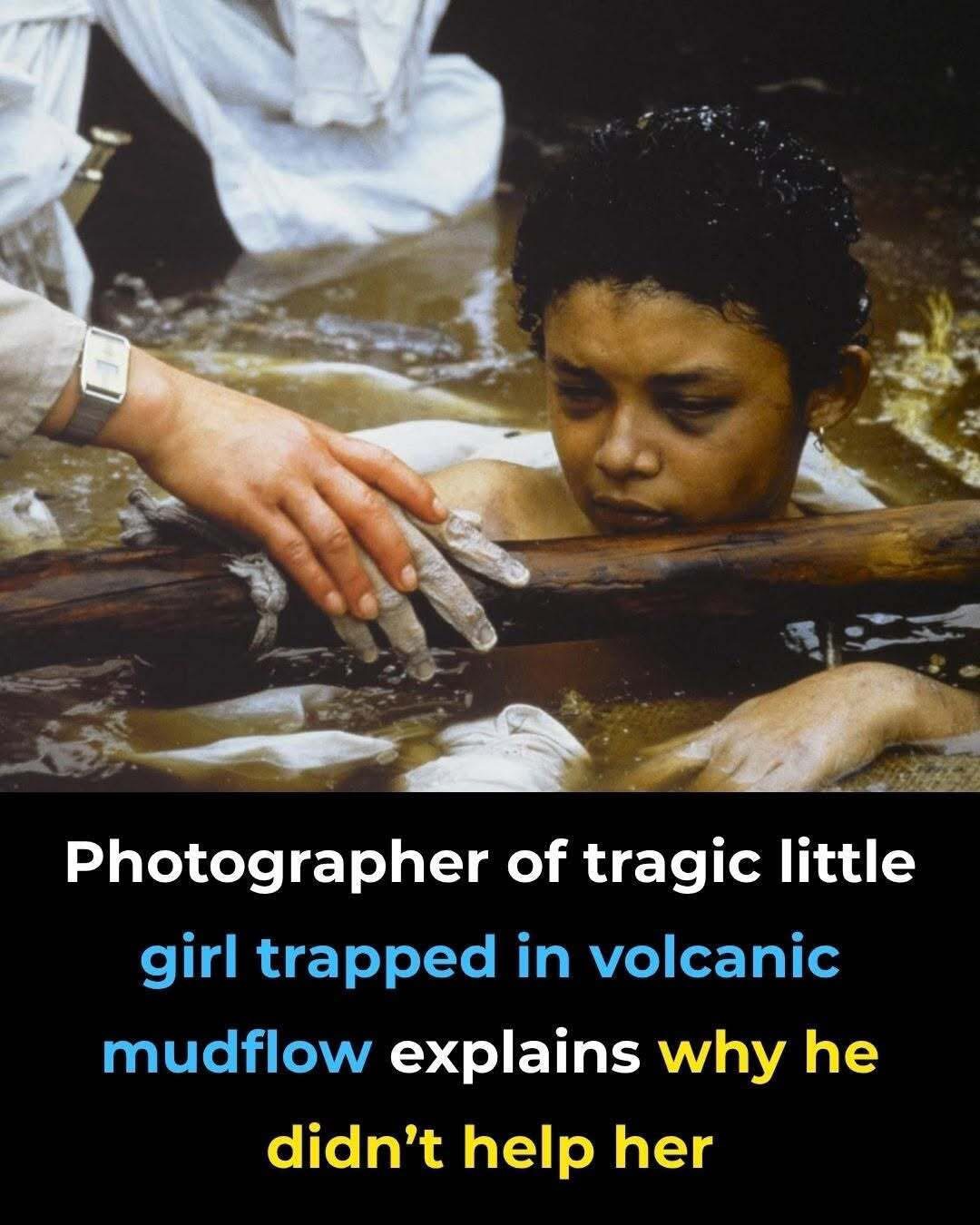
She was only thirteen years old, trapped in a nightmare that the world would never forget. Buried in freezing volcanic mud and pinned beneath the remains of her destroyed home, Omayra Sánchez looked directly into the camera with a calmness that seemed impossible under such horrific circumstances. For nearly three days, she remained trapped as rescuers fought desperately to save her. One photograph of her final hours would eventually become one of the most powerful and controversial images ever captured. To some, the photographer revealed a devastating truth the world needed to see. To others, he crossed a moral line by documenting a dying child.
On November 13, 1985, the Nevado del Ruiz volcano erupted in Colombia, triggering one of the deadliest natural disasters in the country’s history. The eruption melted massive amounts of ice and snow near the summit, creating enormous mudflows known as lahars. These fast-moving torrents of water, ash, rocks, and debris rushed down the mountainside and overwhelmed entire communities. Among the hardest hit was the town of Armero, home to approximately 29,000 residents. Within hours, much of the town disappeared beneath the mud, and nearly 25,000 people lost their lives.
In the midst of this unimaginable destruction was thirteen-year-old Omayra Sánchez Garzón. Her home collapsed during the disaster, trapping her beneath heavy debris. A concrete structure pinned her legs underwater, making escape impossible. Rescue workers quickly realized that freeing her would require equipment and resources they simply did not have. Every attempt to move the wreckage risked causing additional collapses that could kill her instantly.
For seventy-two heartbreaking hours, Omayra remained trapped while rescue teams worked tirelessly around her. Journalists, photographers, volunteers, and emergency workers gathered at the scene, all hoping for a miracle that never came. Among them was photojournalist Frank Fournier, whose camera captured the image that would become permanently associated with the Armero tragedy. The photograph showed Omayra exhausted yet composed, her dark eyes reflecting both suffering and remarkable courage.
When the image was published around the world, it triggered intense debate. Many people praised Fournier for documenting the human cost of the disaster and bringing global attention to the suffering of Colombia. Others criticized him harshly, arguing that taking photographs of a dying child was exploitative and unethical. The discussion quickly expanded beyond the photograph itself and became a broader conversation about the responsibilities of journalists during moments of human tragedy.
Fournier consistently defended his decision. He explained that there was little anyone at the scene could physically do to save Omayra given the lack of specialized equipment. According to him, his role was not to perform rescues but to ensure the world witnessed what had happened. He believed the image exposed the failures of authorities who had ignored warnings about the volcano and failed to organize a proper evacuation. The international attention generated by the photograph helped raise awareness, donations, and questions about government accountability.