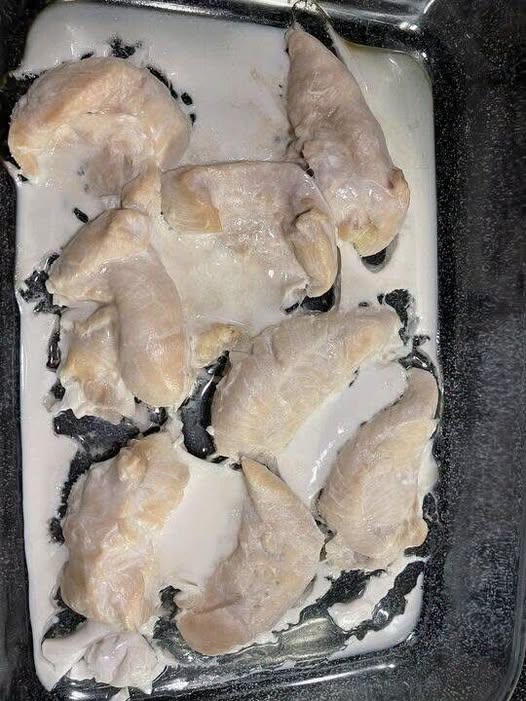
The amount of white substance depends heavily on how chicken is prepared.
Cooking temperature plays a major role.
Extremely high heat can cause proteins to tighten quickly.
When that happens, more liquid can be forced out of the meat.
One simple way to reduce the effect is adjusting the cooking method.
Using moderate heat can help protect the chicken’s texture.
Allowing the chicken to rest after cooking also makes a difference.
Resting gives the juices time to redistribute throughout the meat.
Cutting into chicken immediately can release more moisture.
Another factor is whether the chicken was fully thawed.
Frozen chicken can produce more of the white substance during cooking.
Freezing creates ice crystals inside the muscle fibers.
Those crystals can damage the structure of the meat.
When the chicken thaws, more moisture may escape.
That extra moisture can mix with proteins during cooking.
The result is a greater chance of seeing the white coating.
The good news is that the substance itself is completely safe.
It is simply cooked protein mixed with water.
It does not mean the chicken is unhealthy.
It does not mean the meat has gone bad.
The appearance can be surprising, but the science behind it is simple.
Cooking transforms food in many visible ways.
Some changes look strange even when they are completely normal.
Understanding what happens during cooking helps people feel more confident in the kitchen.
Instead of throwing away perfectly good chicken, you can recognize what is happening.
A little patience and the right cooking technique can also minimize the effect.
The next time you see white goo on your chicken, you will know the truth.
It is not a warning sign.
It is just evidence that heat has changed the proteins inside the meat.
Sometimes the strangest-looking parts of cooking have the simplest explanations.