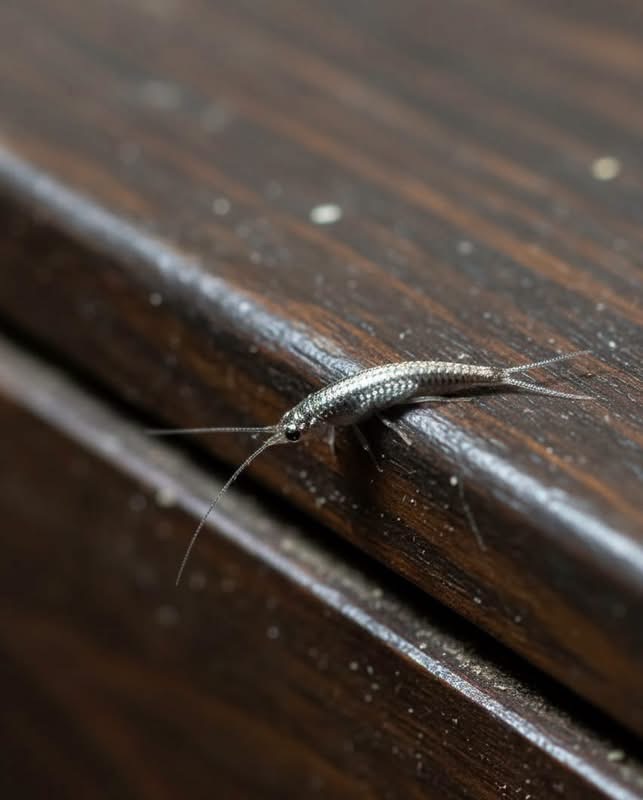
You are walking into your bathroom in the middle of the night, half-asleep, when you flip the switch and freeze in absolute terror. There, twitching on your pristine white floor, is a metallic, alien-looking creature that seems to have crawled straight out of a horror movie. It isn’t just a bug; it’s an ancient, prehistoric menace that has survived mass extinctions for 300 million years, and now, it has decided to take up permanent residence inside your home. Are you unknowingly sharing your space with a swarm of these silver, darting invaders? Your home is under attack, and you need to act now.
My first encounter with this unwelcome guest occurred in an ancient basement apartment—the kind with floorboards that groaned like a haunted house and pipes that wept in the dark. It was two in the morning when I stumbled toward the sink, only to find a tiny, shimmering entity waiting for me. To the untrained eye, it looked like a terrifying cross between a shrimp and a centipede, dipped in liquid silver and cursed with an unnerving, fluid gait. When it darted toward the baseboard and vanished into a crack, I felt a primal urge to burn the entire building to the ground. I spent that sleepless night scouring the internet, convinced that I had been invaded by some form of extraterrestrial larvae.
The reality, as I soon learned, is both more fascinating and more infuriating. The silverfish (Lepisma saccharina) is not an alien; it is a survivor. Having scuttled across the earth since long before the dinosaurs arrived, these wingless insects have navigated ice ages and environmental cataclysms, only to find their way into your pantry. They are named for their metallic, silvery-blue hue and their distinct, fish-like wiggling movement. They are nocturnal, photophobic, and remarkably resilient. If you spot one in the light of day, you aren’t just seeing a stray wanderer; you are likely seeing the scouts of a much larger, hidden population that has already made itself at home behind your drywall.
Contrary to popular belief, the presence of a silverfish is not a definitive indictment of your housekeeping. You can be the most diligent cleaner in the world and still host these ancient scavengers. They are not interested in the crumbs on your floor so much as they are obsessed with the fundamental conditions of your home: high humidity, deep darkness, and the presence of starchy carbohydrates. They are attracted to moisture and feast upon the cellulose, glue, and starches found in book bindings, wallpaper paste, photographs, clothing, and even the dust bunnies gathering in neglected corners. They are the ultimate houseguests who contribute nothing and consume everything, slowly nibbling away at your heirlooms and paper goods while you sleep.
Are they dangerous? In the medical sense, no. They do not bite, they do not sting, and they do not transmit the diseases associated with cockroaches or rodents. They are not poisonous to your pets, and they have no interest in your skin or blood. However, they are fundamentally destructive to your lifestyle. An infestation left unchecked can devastate a collection of antique books, ruin sensitive documents, and cause costly damage to wallpaper and fabrics. Furthermore, their shed skins and fecal matter can act as potent allergens, potentially triggering respiratory issues or asthma in sensitive individuals. They are not monsters of the night, but they are undeniably a destructive nuisance that requires a strategic, disciplined response.
So, why have they chosen your home specifically? It comes down to basic survival. Silverfish require high humidity—ideally above 70 percent—to thrive. They thrive in damp, stagnant environments like bathrooms with poor ventilation, leaking pipes, and cluttered basements. If you have cardboard boxes stacked against walls, piles of old magazines, or forgotten pantry staples, you have essentially laid out a buffet for a thriving colony. They enter your home through the smallest of gaps, hitchhiking inside shipping packages or second-hand furniture before finding the damp, dark sanctuary they need to reproduce.
If you suspect you are dealing with an infestation, look for the signs. Consistent sightings are the most obvious, but look closer. You might find translucent, pearlescent scales—their shed skins—discarded in your cupboards or drawers. You might see tiny, black, pepper-like droppings, or irregular, yellow-stained holes in your favorite books or fabrics. A musty, unexplained odor in an otherwise clean room can also be a telltale sign that a colony has reached a significant size.
Getting rid of them is a process of total environmental management. You cannot simply spray your way out of this; you must change the conditions that allow them to persist. Begin by identifying the source: fix that dripping pipe under the sink, install an exhaust fan in the bathroom, or use a dehumidifier to drag the humidity levels in your basement down to an inhospitable range. Deny them their food supply by transferring your pantry staples into airtight plastic or glass containers and clearing away the mountains of cardboard and paper clutter that serve as their nesting grounds. Seal the perimeter of your home by caulking cracks around windows, doors, and utility conduits to prevent new scouts from entering.
For those looking for natural deterrents, cedar shavings, dried lavender, and essential oils like cinnamon or citrus can act as effective repellents. Diatomaceous earth, a food-grade powder, is a powerful, non-toxic weapon; when sprinkled in the dark crevices where they travel, it works by dehydrating the insects upon contact. For more severe infestations, targeted application of boric acid—kept safely away from pets and children—or professional-grade insecticides may be required.
When I finally took control of my situation, I stopped feeling like a victim of a “gross” infestation and started feeling like a master of my own home. I fixed the leaks, I sealed the gaps, and I reduced the moisture that fueled their existence. Within weeks, the silverfish were gone, not because I hated them, but because I had effectively dismantled their world. Understanding their nature is the first step toward reclaiming your space. You are not a failure because a prehistoric insect found your basement appealing; you are simply a homeowner in need of a better maintenance strategy. Take a deep breath, implement these changes, and restore the order of your home. You have the power to evict these ancient guests for good.