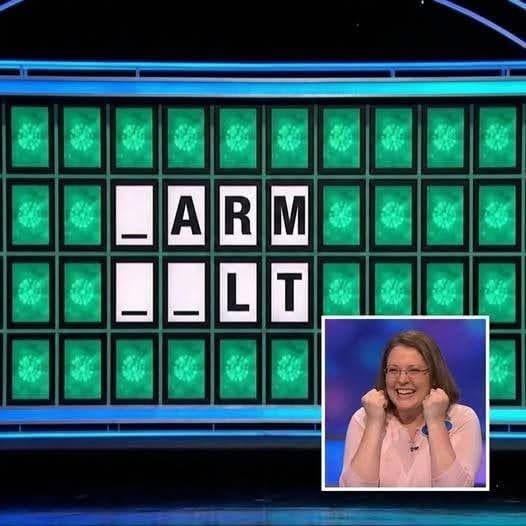
The long-running game show Wheel of Fortune has served as a centerpiece of American living rooms for decades, producing a mountain of highlights that range from heartbreaking bankruptcies to miraculous million-dollar wins. Yet, every so often, a contestant comes along who doesn’t just play the game, but seems to transcend its mechanics entirely. This was the case during a recent broadcast featuring Delinda Rood, a resident of Rosemount, Minnesota, who managed to transform a standard evening of televised puzzles into a viral masterclass in cognitive speed and unshakable composure.
Rood’s journey to the winner’s circle began on the November 4 episode, where she faced off against Justin Zamora of Palo Alto, California, and Shateria Smith of Chattanooga, Tennessee. From her initial introduction, Rood presented herself with a calm, balanced demeanor, identifying as an “ambivert”—someone who possesses a blend of introverted and extroverted traits. While many contestants arrive on the Sony Pictures Studios stage with practiced, high-energy personas designed for the cameras, Rood’s approach was notably grounded. She was there to play a game of letters and logic, and her steady temperament would soon prove to be her greatest tactical advantage.
The episode did not immediately suggest a historic performance was in the offing. In fact, the beginning of the match was uncharacteristically sluggish. The opening toss-up puzzle, “My Game Face,” proved surprisingly elusive, with all three contestants failing to buzz in with the correct answer. This collective miss cast a brief shadow of uncertainty over the round, leading to a period of tentative play where the rhythm of the game felt disjointed. Rood herself seemed to be finding her footing, trailing slightly as her opponents took early stabs at the board.
The momentum shifted during the second toss-up: “Practical Joker.” With the $2,000 prize on the line, Rood’s reflexes sharpened. She buzzed in with total certainty, solving the puzzle cleanly and effectively hitting the “reset” button on her performance. From that moment forward, the “ambivert” from Minnesota was a different player. She stopped fighting the tempo of the wheel and began to dictate it. Her strategy was one of surgical precision; she avoided the high-risk gambles that often lead to “Bankrupt” spins, opting instead for consistent letter calls and efficient solves. By the time the main game concluded, Rood had navigated the complexities of the various rounds to emerge as the day’s champion, securing her place in the high-stakes Bonus Round.
The Bonus Round is the crucible of Wheel of Fortune, a segment designed to maximize tension through isolation and a ticking clock. As Rood stood center stage with host Ryan Seacrest, the air in the studio was thick with the usual anticipation. The category was revealed, the mandatory R-S-T-L-N-E letters flipped into place, and Rood provided her additional consonants and vowel. Typically, this is the part of the show where the “agony of the solve” takes place—viewers watch as contestants murmur half-formed words, eyes darting across the board, brows furrowed in a desperate race against time.
However, Delinda Rood bypassed the drama entirely.
The instant the final letters were illuminated, before the countdown clock could even establish its rhythm, Rood spoke. Her delivery of the correct answer was so immediate and so devoid of hesitation that it seemed as if she were reading from a script rather than solving a mystery. There was no stuttering, no “is it…?”, and no filler. She saw the pattern, recognized the solution, and voiced it with the matter-of-fact tone of someone reciting their own phone number.
The reaction in the studio was a rare blend of jubilation and genuine shock. Ryan Seacrest, a veteran broadcaster accustomed to the unpredictable nature of live television, was visibly stunned. For a brief second, he stood motionless, his expression a mix of a smile and a “did that really just happen?” look of disbelief. The studio audience, momentarily silenced by the sheer speed of the solve, erupted into a roar of approval. When the envelope was opened to reveal a $65,000 prize, bringing Rood’s total nightly winnings to $65,650, the atmosphere reached a fever pitch.
In the hours following the broadcast, the “Delinda Solve” became a digital sensation. Social media platforms were flooded with clips of the moment, with viewers marveling at the sheer cognitive processing speed required to solve a puzzle of that complexity in under a second. Longtime fans of the show began cross-referencing the clip with legendary solves from the Pat Sajak era, debating where Rood’s performance ranked among the fastest in the show’s forty-plus-year history.
What resonated most with the public, however, was the contrast between the magnitude of the win and Rood’s understated reaction. In an era of reality television where emotional outbursts and exaggerated celebrations are the norm, her composure was refreshing. She didn’t scream or collapse; she simply smiled with the quiet satisfaction of someone who knew she had done her job well. This restraint made the excellence of the moment feel even more earned. It wasn’t a stroke of luck or a fortunate guess; it was the result of a sharp mind operating at peak efficiency under pressure.
Linguists and game show enthusiasts often point out that such “instant” solves are the result of advanced pattern recognition. While most people process the board letter-by-letter, elite players view the puzzle as a singular architectural structure, using the placement of vowels and common consonant clusters to “fill in the blanks” mentally before the physical letters even appear. Rood demonstrated this rare ability to a degree that felt almost supernatural. She didn’t just win a game show; she provided a brief, electric demonstration of human intuition at its finest.
As the news cycle moves on, Delinda Rood’s name will remain etched in the archives of Wheel of Fortune lore. Her performance serves as a reminder of why the simple format of the show continues to endure: the thrill of watching an ordinary person achieve something extraordinary through nothing more than their own wits. She arrived on the set as a quiet “ambivert” from Minnesota and left as a permanent part of television history, proving that sometimes, the loudest statement you can make is a single, perfectly timed word. In the end, Rood’s victory wasn’t just about the $65,650; it was about the indelible image of a contestant who looked at a wall of hidden letters and, without a moment’s doubt, saw exactly what was there.