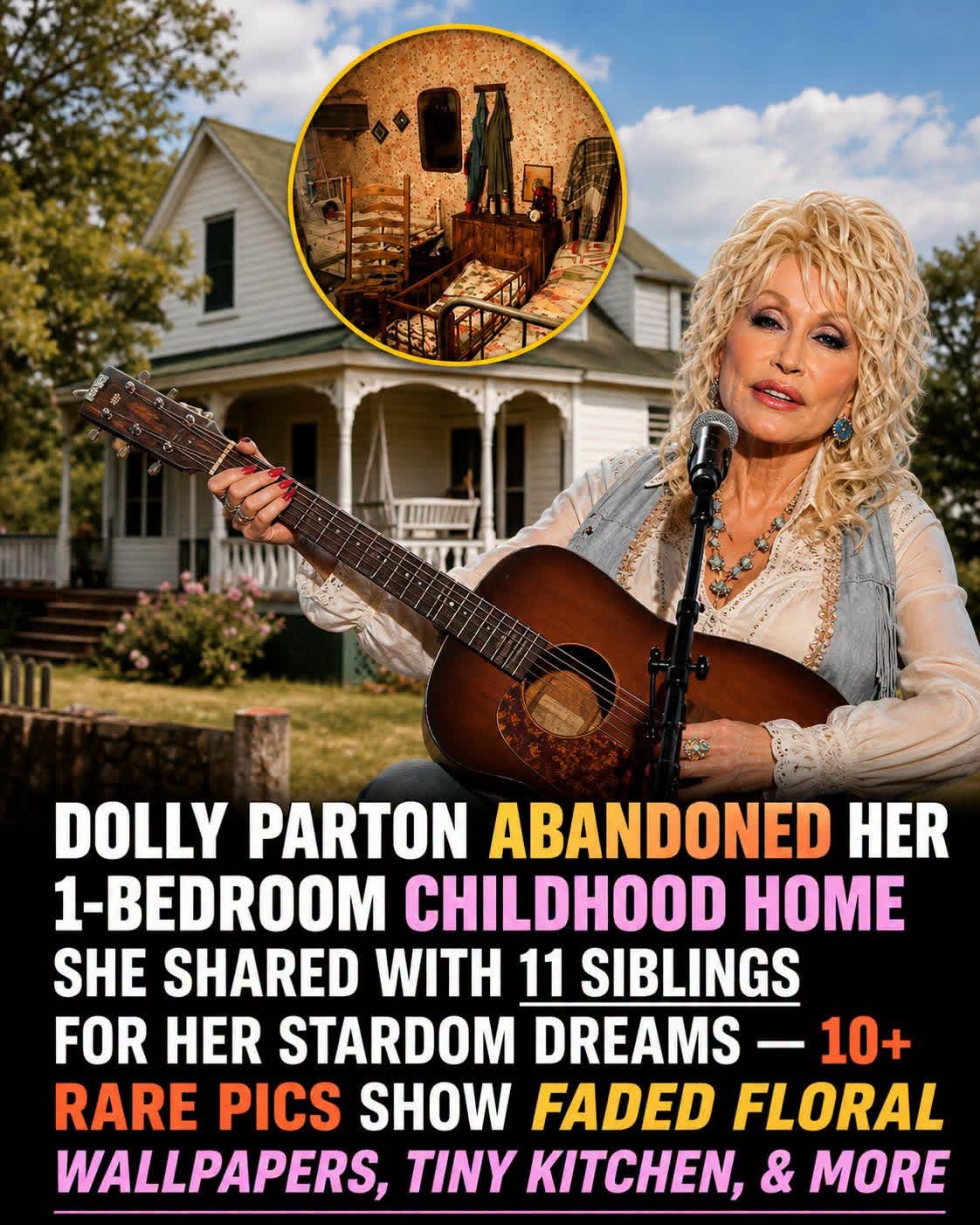
Dolly Parton’s childhood home in the mountains of East Tennessee was tiny, crowded and short on comforts, but it contained the beginning of an extraordinary dream. Long before sequins, stages and worldwide fame, she sang on the porch of a one-bedroom cabin near Locust Ridge. Her microphone was a tin can, and her audience could be family members, neighbors, chickens or anyone else within earshot. The setting was modest, yet her imagination was already enormous.
Parton was one of twelve children born to Robert Lee and Avie Lee Parton. Money was scarce, and the family learned to make use of everything available. Her mother sewed curtains and quilts, remade old garments and fashioned clothes from feed sacks and scraps. Those memories later shaped Parton’s writing, including the story behind “Coat of Many Colors.” The famous song transformed a painful childhood experience into an enduring lesson about love, dignity and the value of what cannot be bought.
The cabin’s significance lies less in its dimensions than in what happened there. On the porch, a young Dolly rehearsed the future she wanted. Singing into her homemade microphone was play, but it was also practice. Music surrounded the family, and church, relatives and the sounds of the mountains helped form the voice that would eventually become instantly recognizable. The cabin was not a monument then. It was simply home: busy, noisy and filled with the daily work of raising a large family.
The day after graduating from high school in 1964, Parton left East Tennessee for Nashville. She did not leave her origins behind. As her career grew, the mountains, family stories and lessons of poverty remained central to her songs and public identity. She could describe hardship without romanticizing it, while also recalling the humor, affection and creativity that helped the family endure it. That balance made the story of her childhood meaningful to listeners who had never seen the Smoky Mountains.
Years later, Parton helped preserve a replica of the family cabin at Dollywood. Visitors can see the close quarters, simple furniture, kitchen tools and handmade details that evoke the environment in which she grew up. Her mother assisted with the interior so that it would feel personal rather than like a generic historical display. A sign associated with the cabin describes it with two memorable words: “Dolly’s Tennessee Mountain Home.” Those words connect a world-famous entertainer with the place that supplied some of her deepest material.
The recreated home also offers a useful correction to the polished image of celebrity. Success can make an artist’s beginnings seem inevitable, but nothing about Parton’s childhood guaranteed the career that followed. She had talent, ambition and an unusual willingness to work, but she also had to travel far beyond the life that was expected of a girl from her community. The tin-can microphone matters because it shows imagination arriving before opportunity.
Parton repeatedly turned success into help for the region that formed her. Dollywood created employment and tourism in East Tennessee, while her philanthropic work expanded educational opportunities. Her Imagination Library, which provides books to young children, reflects the same belief that a dream often begins with access to stories. The cabin therefore represents more than nostalgia. It helps explain why she saw giving back as part of her achievement, not an afterthought.
Looking at the little rooms and handmade objects, visitors encounter a life measured by resourcefulness rather than possessions. They can imagine a child performing on the porch, unaware of the arenas ahead but certain that she wanted to sing. Parton’s journey from that cabin to the center of popular culture remains remarkable because she never treated the distance as something to hide. She made it the foundation of her art.
The childhood home preserves the contrast at the heart of her story: limited space and limitless aspiration. A tin can became a microphone, scraps became a treasured coat, and family memories became songs heard around the world. The cabin’s greatest treasure is not an object. It is the evidence that a powerful creative life can begin in the humblest room.