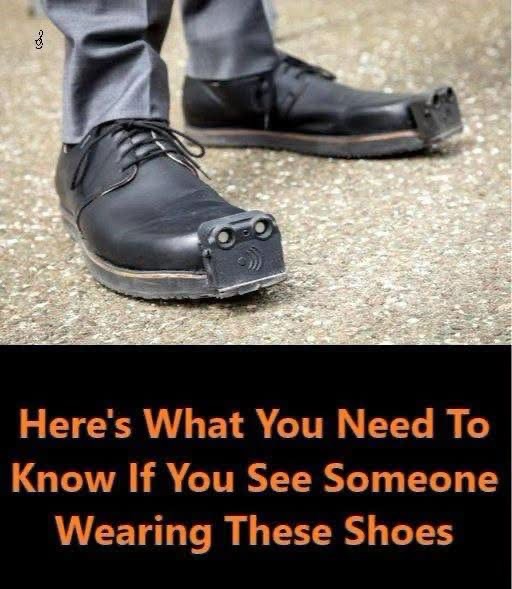
A pair of shoes may soon do more than protect the feet. InnoMake smart shoes were designed to detect obstacles ahead and warn the wearer through vibration, sound or a connected phone. Developed by Austrian company Tec-Innovation with research support from Graz University of Technology, the footwear illustrates how assistive technology can be woven into an ordinary object instead of carried as a separate gadget.
The concept is aimed especially at people with visual impairments. Sensors mounted near the front of the shoes scan the space ahead, rather like the parking sensors found on a car. When the system recognizes an object within its detection range, it alerts the wearer. A vibration can provide private, immediate feedback, while an acoustic signal or smartphone notification can supply another option. The user can select the warning mode that works best in a particular environment.
That flexibility matters because no single signal is ideal everywhere. Sound may be difficult to hear on a busy street and intrusive in a quiet room. A phone can provide detailed information but may not be convenient during every walk. Tactile feedback through the shoe is direct and does not require the wearer to look at a screen. Combining several methods gives the technology a better chance of fitting real routines.
The smart module is designed to be attached to compatible footwear and can detect obstacles several meters away, depending on conditions and configuration. Developers have also explored camera-based recognition that could distinguish among types of objects. That is a more demanding task than simple distance sensing, because a system must interpret a constantly changing scene quickly and reliably. Curbs, walls, people and moving vehicles do not present the same kind of risk.
Smart shoes are intended as an additional layer of awareness, not a wholesale replacement for established mobility tools. A white cane, guide dog and professional orientation training provide information and judgment that a small electronic sensor cannot reproduce. Technology can fail, batteries can run down and certain surfaces or angles may confuse a detector. Responsible design therefore treats the shoes as a complement that may help identify obstacles at upper-body height or offer earlier notice of something ahead.
The project is notable because it locates assistive equipment in an item people already use. Wearable design reduces the need to hold another device, and the sensors naturally point in the direction of travel. If the system is comfortable and durable, it can become part of getting dressed rather than a separate preparation step. That unobtrusiveness can make technology easier to adopt.
Practical questions remain central. Shoes face rain, dust, impacts and constant movement, so the electronics must tolerate everyday conditions. They also need dependable battery life, intuitive controls and clear warnings that do not overwhelm the wearer. Price and availability determine whether an inventive prototype becomes a useful product. Accessibility is not achieved merely by proving that the sensors work; it requires listening to users and supporting the device over time.
Future versions of this idea could combine distance sensors with machine learning, mapping and navigation. A shoe might one day communicate whether an obstacle is temporary, identify a safe direction around it or coordinate with street infrastructure. Those possibilities bring privacy and reliability questions as well. A wearable camera, for example, must process surroundings without creating unnecessary surveillance.
InnoMake’s greatest contribution may be the shift in perspective it represents. Rather than asking users to adapt to another complicated machine, designers asked how a familiar object could quietly provide useful information. The result looks unusual at first, but its purpose is straightforward: help a person walk with greater awareness and confidence while keeping choice in the wearer’s hands.