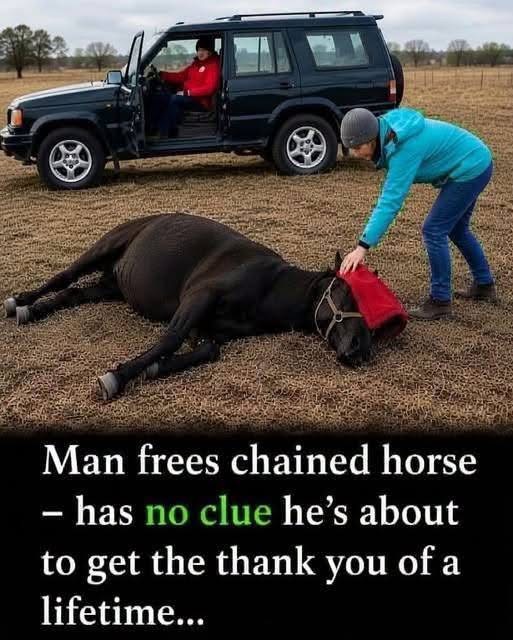
In Romania, veterinarian Ovidiu Roșu discovered a wild mare whose front legs were bound with chains, restricting movement and risking injury. He sedated the animal and carefully removed the metal restraints, stabilizing her condition.
After the rescue, another free-roaming horse approached the mare, appearing to nuzzle or comfort her. While humans interpret this as gratitude, it likely reflects natural social bonding and reassurance within horse herds after stress.
Romania’s free-roaming horses, especially in the Danube Delta and Letea Forest, have existed for centuries. Their population increased after 1989 when changes in land use and ownership left more animals unmanaged and released into the wild.
By 2011, debates intensified over whether to remove or even cull the growing herds. Conservationists warned of habitat damage, while animal welfare groups opposed cruelty, highlighting the complex balance between ecology, policy, and responsibility.
Organizations such as FOUR PAWS introduced nonlethal management programs using veterinary care and immunocontraception. These methods aim to gradually control population growth without mass killing, requiring ongoing monitoring and cooperation with local authorities.
Tying or hobbling horses with chains can cause severe injury, infection, and distress. Safely freeing them requires sedation and expertise, since frightened horses are powerful and unpredictable, posing risk to both animals and rescuers.
By 2025, responsibility for managing these herds was shifting back to national and local authorities. Long-term success depends on humane population control, habitat protection, enforcement against cruelty, and sustained community involvement.
The rescue’s emotional image masks a larger truth: real welfare depends on ongoing care, not single interventions. Visitors should avoid disturbing horses, follow guidance, and support credible conservation efforts to ensure lasting protection and balance.