Skip to content

Daily News

  • Home
  • Sample Page
  • Toggle search form

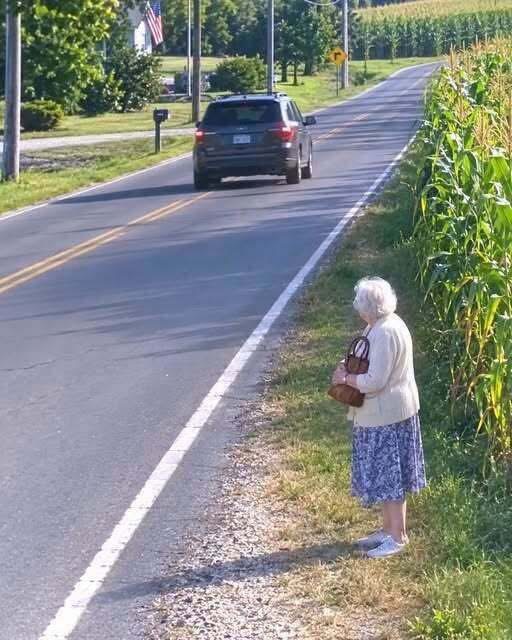
After we laid my husband to rest, my son drove me to a quiet road outside town and said, “This is where you get out. The house and the business are mine now.” I stood in the dust, clutching my bag, as he pulled away without looking back. No phone. No cash. And that’s when I realized—I wasn’t alone. I was free… but he had no idea what I’d put in place before his father passed away… The gravel crunched under my funeral shoes like it had been waiting for me. I watched my son’s SUV roll forward, hesitate for half a second—just long enough to pretend this wasn’t real—then pick up speed and disappear past the bend where the cornfields start and the town stops pretending it’s still the center of the world. I didn’t scream his name. I didn’t throw my hands up. My throat was too dry for drama, and my heart was too tired for begging. Three days ago, I stood at the cemetery with a paper program folded in my hands and my husband’s favorite hymn stuck in my head even though we weren’t the hymn-singing type. People brought comfort the only way they knew how—Costco trays, foil pans, paper plates stacked on my counter like a quiet army. Neighbors hugged me and whispered, “He was a good man,” the way Americans say goodbye when they don’t have better language for loss. My children flew in like they were arriving for an appointment. My son carried himself the way men do when their lives are scheduled in fifteen-minute blocks—eyes already elsewhere, phone always face-down, like he didn’t want the screen to betray how quickly he could move on. He talked about flights, meetings, the interstate traffic he’d “have to beat” on the way back. My daughter arrived with expensive sunglasses and a brittle smile, hugging me like she was performing tenderness for an audience. That first night after the funeral, the house felt too quiet for two grown kids who used to fill it with noise. I made coffee out of habit and stood at the sink staring at the yard, at the bare branches that would bud soon, at the life my husband and I had built with our hands. Then my son opened his laptop on the dining table—our dining table—and said, “We should talk about next steps.” Next steps. Not grief. Not memories. Not even, “Mom, are you sleeping?” Just next steps, like I was a file that needed closing. They spoke softly, politely, the way you speak when you’re trying to move an older woman out of the way without calling it what it is. They used words like “practical” and “manageable,” and my daughter kept nodding like she’d rehearsed the nods in a bathroom mirror. In the morning, they handed me a suitcase I didn’t recognize and told me we were going to “look at a place” that would be “good for me.” I said, “I’m not going anywhere.” My son smiled like he’d heard that sentence before, like resistance was just a phase. “Just come take a look, Mom. It’s easier if we do this calmly.” So I walked through my own house—my own rooms—like a guest. I passed the living room where my husband used to fall asleep during football games. I passed the hallway where the paint still held the faint marks of my kids’ height lines. I picked up my purse, heavier than it should’ve been, and followed them to the car because something in me wanted to see how far they’d go. They didn’t head toward town. They didn’t get on the interstate. My son turned onto the kind of road you take when you don’t want witnesses—two lanes, no shoulders, fields on both sides, the sky wide enough to swallow a person whole. Then he pulled over. He turned to me and said it again, calm as a weather report: “This is where you get out.” My daughter’s mouth opened, then closed. No argument. No refusal. Just that same brittle silence, like she was afraid any sound might crack the plan. I stepped out. The air smelled like damp earth and early spring. Dust clung to my hem. The car door shut behind me with a soft, final click. No phone. No cash. Or so they believed. I held my bag close and watched the SUV shrink until it became nothing but movement in the distance. And for the first time since the funeral, my chest loosened—not because it didn’t hurt, but because I finally understood what this was. A clean cut. A release. I slid my hand into the deepest pocket of my purse and felt the sharp corner of something they never knew existed—something that still carried my name from long before I became “Mom.” Then I started walking. . . The story continues in the first comment. (I know you’re curious about the next part, so please be patient and read on in the comments below. Thank you for your understanding of the inconvenience. please leave a ‘YES’ comment below and give us a “Like ” to get full story )

Posted on September 5, 2026 By admin No Comments on After we laid my husband to rest, my son drove me to a quiet road outside town and said, “This is where you get out. The house and the business are mine now.” I stood in the dust, clutching my bag, as he pulled away without looking back. No phone. No cash. And that’s when I realized—I wasn’t alone. I was free… but he had no idea what I’d put in place before his father passed away… The gravel crunched under my funeral shoes like it had been waiting for me. I watched my son’s SUV roll forward, hesitate for half a second—just long enough to pretend this wasn’t real—then pick up speed and disappear past the bend where the cornfields start and the town stops pretending it’s still the center of the world. I didn’t scream his name. I didn’t throw my hands up. My throat was too dry for drama, and my heart was too tired for begging. Three days ago, I stood at the cemetery with a paper program folded in my hands and my husband’s favorite hymn stuck in my head even though we weren’t the hymn-singing type. People brought comfort the only way they knew how—Costco trays, foil pans, paper plates stacked on my counter like a quiet army. Neighbors hugged me and whispered, “He was a good man,” the way Americans say goodbye when they don’t have better language for loss. My children flew in like they were arriving for an appointment. My son carried himself the way men do when their lives are scheduled in fifteen-minute blocks—eyes already elsewhere, phone always face-down, like he didn’t want the screen to betray how quickly he could move on. He talked about flights, meetings, the interstate traffic he’d “have to beat” on the way back. My daughter arrived with expensive sunglasses and a brittle smile, hugging me like she was performing tenderness for an audience. That first night after the funeral, the house felt too quiet for two grown kids who used to fill it with noise. I made coffee out of habit and stood at the sink staring at the yard, at the bare branches that would bud soon, at the life my husband and I had built with our hands. Then my son opened his laptop on the dining table—our dining table—and said, “We should talk about next steps.” Next steps. Not grief. Not memories. Not even, “Mom, are you sleeping?” Just next steps, like I was a file that needed closing. They spoke softly, politely, the way you speak when you’re trying to move an older woman out of the way without calling it what it is. They used words like “practical” and “manageable,” and my daughter kept nodding like she’d rehearsed the nods in a bathroom mirror. In the morning, they handed me a suitcase I didn’t recognize and told me we were going to “look at a place” that would be “good for me.” I said, “I’m not going anywhere.” My son smiled like he’d heard that sentence before, like resistance was just a phase. “Just come take a look, Mom. It’s easier if we do this calmly.” So I walked through my own house—my own rooms—like a guest. I passed the living room where my husband used to fall asleep during football games. I passed the hallway where the paint still held the faint marks of my kids’ height lines. I picked up my purse, heavier than it should’ve been, and followed them to the car because something in me wanted to see how far they’d go. They didn’t head toward town. They didn’t get on the interstate. My son turned onto the kind of road you take when you don’t want witnesses—two lanes, no shoulders, fields on both sides, the sky wide enough to swallow a person whole. Then he pulled over. He turned to me and said it again, calm as a weather report: “This is where you get out.” My daughter’s mouth opened, then closed. No argument. No refusal. Just that same brittle silence, like she was afraid any sound might crack the plan. I stepped out. The air smelled like damp earth and early spring. Dust clung to my hem. The car door shut behind me with a soft, final click. No phone. No cash. Or so they believed. I held my bag close and watched the SUV shrink until it became nothing but movement in the distance. And for the first time since the funeral, my chest loosened—not because it didn’t hurt, but because I finally understood what this was. A clean cut. A release. I slid my hand into the deepest pocket of my purse and felt the sharp corner of something they never knew existed—something that still carried my name from long before I became “Mom.” Then I started walking. . . The story continues in the first comment. (I know you’re curious about the next part, so please be patient and read on in the comments below. Thank you for your understanding of the inconvenience. please leave a ‘YES’ comment below and give us a “Like ” to get full story )

Naomi Canton, born Naomi Marie Blackwood, spent more than forty years married to Nicholas, building a modest farmhouse and a successful organic orchard in Pennsylvania. Together they transformed twenty acres of neglected apple trees into a respected local business. After Nicholas died at sixty-eight, Naomi expected her children, Brandon and Melissa, to support her through grief. Instead, they quickly became focused on the property and business.

One evening, Brandon presented Naomi with a document claiming that he and Melissa should take control of the orchard. Naomi immediately noticed that the signature looked different from Nicholas’s. Her suspicions grew when Melissa revealed that a developer wanted to purchase the property and that they believed selling it would provide financial security.

The situation became even more disturbing when her children suggested she move into a retirement community. The next morning, they drove her away with a suitcase and abandoned her on a quiet rural road. Although frightened, Naomi remembered the emergency money Nicholas had insisted she keep and immediately contacted their longtime attorney, Vincent Hargrove.

Vincent examined the suspicious document and confirmed that it was not the will Nicholas and Naomi had prepared. He also reviewed an older deed proving Naomi had purchased twenty acres before their marriage. Bank records, business documents, and property records revealed additional information that required investigation.

With the attorney’s help, Naomi challenged the proposed sale. The developer could no longer proceed until the ownership issues were resolved. Eventually, Brandon and Melissa admitted they were experiencing financial difficulties and had convinced themselves that selling the orchard would solve their problems.

Although they apologized, Naomi understood that trust could not be restored instantly. She protected her legal rights and ended their attempt to control the property. Only afterward could she finally focus on grieving Nicholas and remembering the life they had created together.

Rather than abandoning the orchard, Naomi chose to continue its legacy. She hired a local manager, introduced new agricultural projects, and began developing educational programs and a scholarship fund. When Melissa eventually asked to talk, Naomi remained open but cautious. She learned that forgiveness could be possible without forgetting what happened.

Nicholas and Naomi had spent forty years planting trees, but their greatest inheritance was never the land or money. It was the life, community, and legacy they had cultivated together. Even after Nicholas’s death, Naomi decided to keep that legacy growing.

Uncategorized

Post navigation

Previous Post: Not everyone will understand the lesson behind this. But those who have lived, learned, and gained experience will recognize it instantly.
Next Post: Check the comments

Leave a Reply Cancel reply

Your email address will not be published. Required fields are marked *

Recent Posts

  • See full Story Below👇
  • My wife left me with our seven children for our wealthy neighbor, saying she “deserved a better life” — 10 years later, she came back for our youngest daughter’s birthday, but what she showed her mother made her knees buckle. I remember that day like it was yesterday. I came home from work early and caught my wife, Vanessa, with our neighbor Rob right there in our bedroom. Everything inside me dropped. Then she put her hands on her hips and said: “Well, what did you expect? You never gave me the life I deserve! But Rob gives me everything I want. We even went to the Maldives recently.” Rob wasn’t just our neighbor. He was also my best friend. My voice trembled. “God, Vanessa, how can you do this to our family? We have seven children! And Sophie just turned two!” Vanessa just packed her bags and said that I “would manage on my own” and that she needed to “build her own life, and the kids would only get in the way.” Then Vanessa and Rob simply disappeared. Can you imagine what it’s like when seven little kids cry at night and call for their mom? I didn’t have to imagine it. It was incredibly hard for me. At first, I took two jobs. Then, somehow, I took on a third just to keep us afloat. I never remarried. Women stayed away once they heard I had seven kids. I basically devoted my entire life to my children. And I don’t regret a thing. They grew into incredible people. At first, Vanessa would occasionally ask how the kids were doing, but then she disappeared completely. She chose that path, but you know, I don’t want to judge anyone. Ten years passed. And yesterday was Sophie’s birthday. She invited some of her friends from school, our whole family, and we just had a barbecue in the backyard. Then suddenly, someone knocked on the door. It was Vanessa and Rob. My stomach twisted. She stood on the porch smiling. Then she walked into the house as if I weren’t even there. Sophie happened to be in the kitchen getting another slice of cake when she saw her mother. Sophie looked absolutely shocked to see her mom for the first time in 10 years. Then Vanessa smiled and said: “Sweetheart, now we can finally be together. Look at all the gifts I brought you. See? I left to build a better life so you could have all of this now.” Rob wheeled a brand-new bike into the hallway, and Vanessa handed her a new tablet. It was the exact one Sophie had been dreaming about, but I couldn’t afford something that expensive. Then Sophie smiled and said: “Mom, thank you. I’m glad to see you too, and I’d like to show you something. I have something here on my phone.” Sophie tapped something on her phone. Then she handed it to Vanessa. Rob was standing beside her and looked at the screen too. Vanessa went pale. And Rob looked like he’d just bitten into a whole lemon. Then Vanessa screamed so loudly that all the guests came running to see what had happened: “How dare you, you little brat?!” – Comment “YES” and leave a “Like” to discover the entire story. Full version below ⬇️
  • Check Comment
  • Hollywood Legend ….. D!es at 93…See more…
  • See coments

Recent Comments

No comments to show.

Copyright © 2026 Daily News.

Powered by PressBook WordPress theme