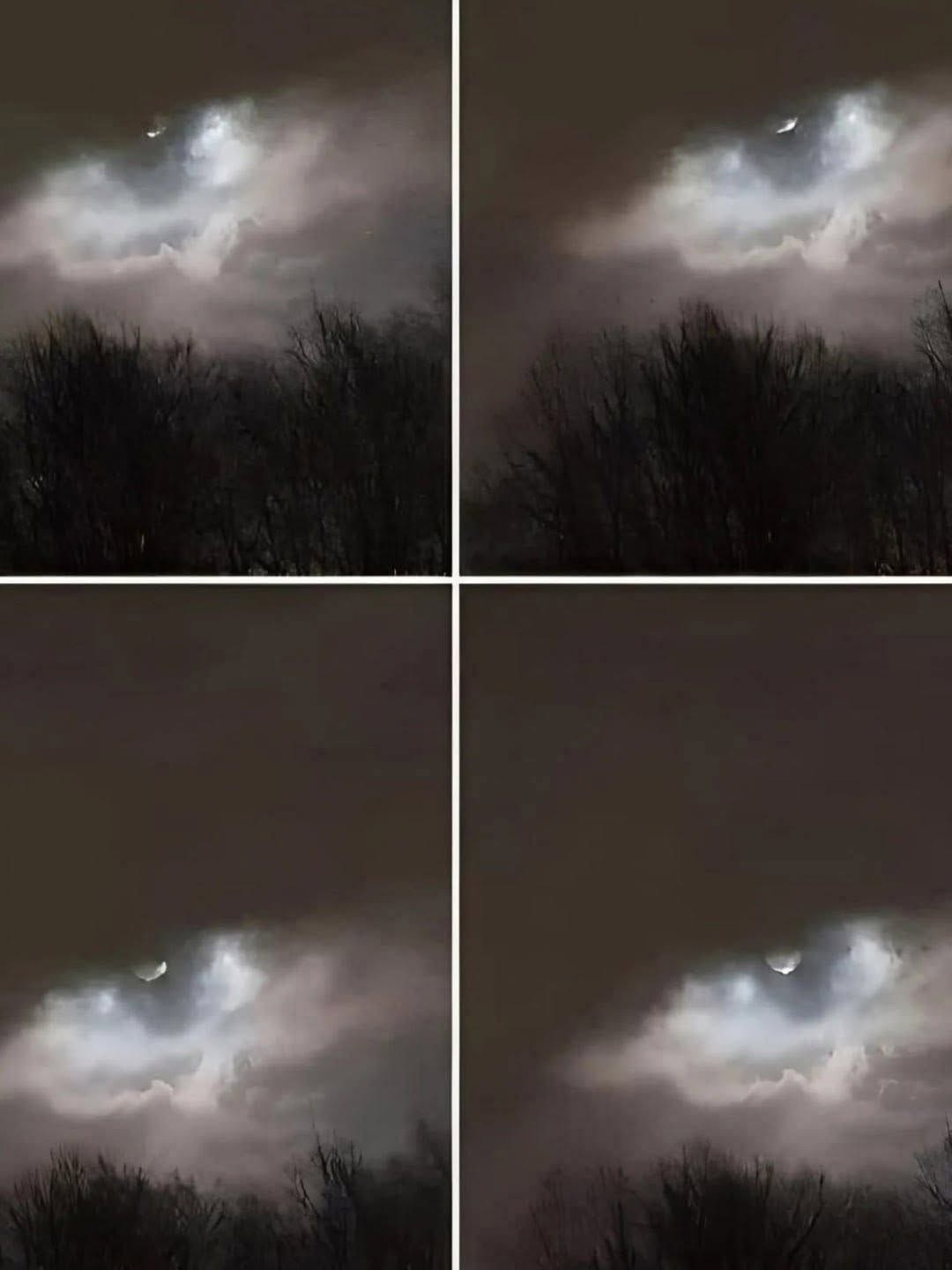
The most likely explanation is a psychological phenomenon called pareidolia—the tendency of the human brain to see familiar patterns, especially faces and figures, in random stimuli.
Think about it:
Seeing faces in clouds
Recognizing shapes in rock formations
Spotting animals in constellations
Our brains are wired for pattern recognition. It kept our ancestors alive (that shape in the bushes could be a predator). Today, it makes us see Jesus in toast and statues in clouds.
Why it fits: The cloud formation happens to resemble a shape our culture has primed us to recognize—a statue with outstretched arms.
While pareidolia explains why we see a statue, the cloud itself is real. Certain cloud types can create dramatic, unusual shapes:
Lenticular clouds – Often mistaken for UFOs, these lens-shaped clouds form near mountains
Mammatus clouds – Pouch-like formations that can appear dramatic
Wave clouds – Formed by atmospheric waves
The Tyrrhenian Sea region has complex weather patterns that could produce striking formations.
The angle of the sun, the time of day, and atmospheric conditions can transform ordinary clouds into extraordinary silhouettes. The outstretched arms effect could be a play of light and shadow on a cloud layer.
Of course, whenever an unusual image appears, speculation runs wild:
Spiritual significance – A divine sign or visitation
Unexplained phenomenon – Something science can’t yet explain
Hoax or digital manipulation – Always possible in the age of editing
The beauty of images like this is that they invite us to pause and wonder. Is it:
A striking natural phenomenon?
A trick of the mind?
Something that defies easy explanation?
Simply a beautiful cloud?
Whatever this image represents, it touches something fundamental in us: the desire to find meaning, to see signs, to connect the ordinary with the extraordinary.
Pareidolia isn’t a debunking—it’s a feature of being human. Our ability to see patterns, to find faces in clouds, to imagine stories from shapes—it’s part of what makes us creative, spiritual, and curious.
Is this photograph evidence of something miraculous? Probably not. Is it a beautiful, thought-provoking image that invites wonder and discussion? Absolutely.
Sometimes the magic isn’t in what the image is, but in what it makes us feel—that moment of pause, that flicker of possibility, that conversation with others about what we see.
And that’s pretty wonderful on its own.
The photograph was taken only twenty-one kilometers from the family’s home, which made the image feel especially immediate. Instead of a distant spectacle found on an unfamiliar page, it was something a relative had seen in the local sky. That closeness helped the picture spread as viewers tried to identify the shape and compared it with landmarks, figures, and familiar religious images.
Clouds can change form within seconds as wind moves moisture through different layers of air. A photograph freezes one of those brief arrangements, preserving an outline that may never appear in exactly the same way again. Sunlight from behind or beside a cloud can sharpen certain edges while hiding others, making a loose formation look solid and intentional. Distance also removes the depth cues that would normally help the eye understand its true shape.
The surrounding landscape matters as well. Coastal air, nearby hills, temperature differences, and shifting winds can combine to create unusual formations over the Tyrrhenian region. When a large cloud stands apart from the background and catches light unevenly, the result can resemble a person, animal, monument, or object depending on the viewer’s experience. Two people can study the same photograph and confidently describe completely different things.
That variety of interpretations is part of the picture’s appeal. The image does not need to be digitally altered or supernatural to feel extraordinary. It captures a real moment when weather, light, perspective, and the brain’s instinct for patterns aligned. The brother’s photograph became memorable because it encouraged people to stop and look carefully at something that might otherwise have disappeared unnoticed within minutes.