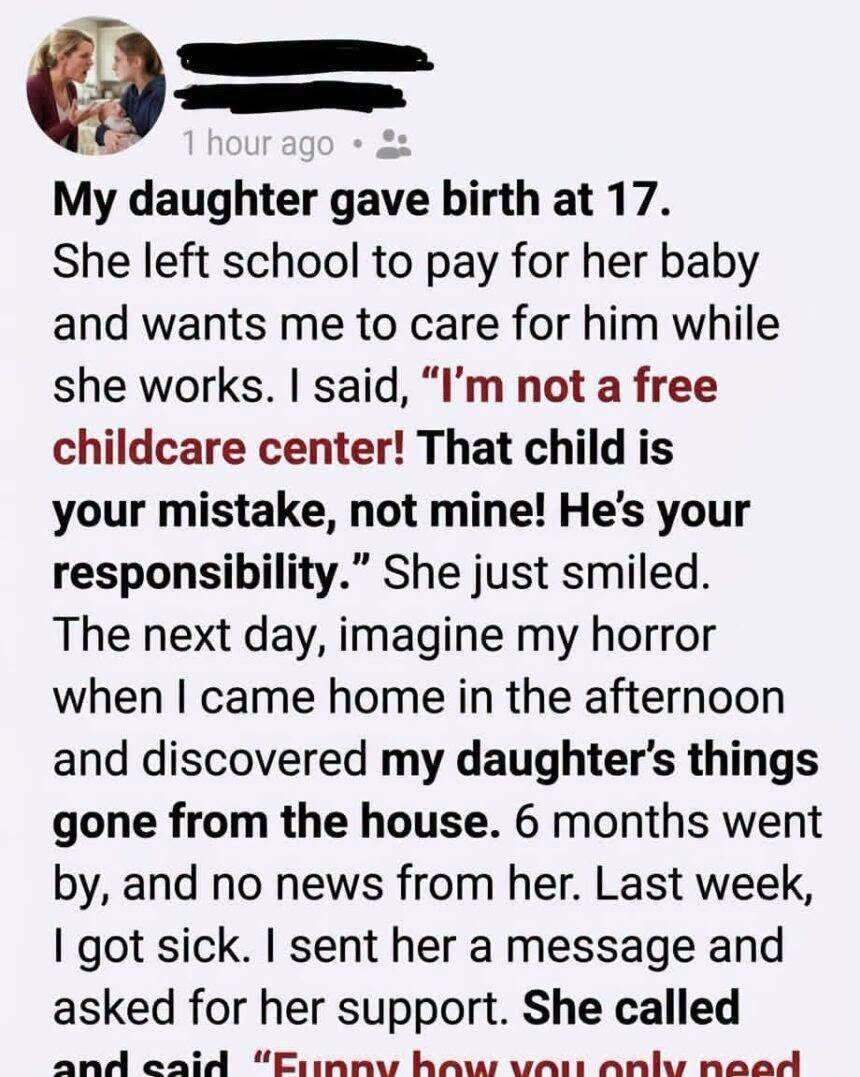
I never imagined one conversation could change my relationship with my daughter forever. She was only seventeen when she gave birth, standing in my kitchen with her newborn in her arms. Exhausted and frightened, she told me she wanted to leave school and find work. She asked me to care for her baby until she could get back on her feet.
Instead of recognizing how scared she was, I became defensive. I told her I wasn’t a free childcare service and that having a child meant accepting responsibility. I convinced myself I was teaching her independence, but I never stopped to consider how desperately she needed her mother’s support.
She didn’t argue or raise her voice. She simply nodded, gathered her belongings, and walked out. The following morning, I discovered that she had taken everything, including the baby’s blanket. On the kitchen table lay a short note: she understood my position and wouldn’t expect visits or phone calls anymore.
At first, I thought she was being dramatic. I assumed she’d eventually return when life became difficult. Days became weeks, and weeks became months, but neither my daughter nor my grandchild came back. Pride kept me from reaching out, and I told myself she needed to learn to manage her own life.
Then my health began deteriorating. After several medical tests, doctors diagnosed me with a serious illness. Suddenly, the future I’d taken for granted seemed frighteningly uncertain. I began thinking about the years I’d wasted being stubborn and the little girl I’d raised who no longer wanted anything to do with me.
Finally, I called my daughter and admitted I was frightened. I told her I needed her, hoping the news would soften her heart. She listened quietly before answering, “Mom, I’m not your free caregiver either.”
I reminded her that I was her mother, expecting her to remember everything I’d sacrificed for her. Her response broke me: “And I was your daughter when I needed you most.” Then she ended the call. I sat alone, staring at my phone, realizing that motherhood didn’t give me unlimited chances to hurt someone and expect forgiveness.
For the first time, I understood that my boundaries had consequences. I’d refused to help when my daughter was vulnerable, and now she was protecting herself. My illness had taught me what pride never could: love isn’t proven by demanding loyalty, but by showing compassion when someone needs you most.