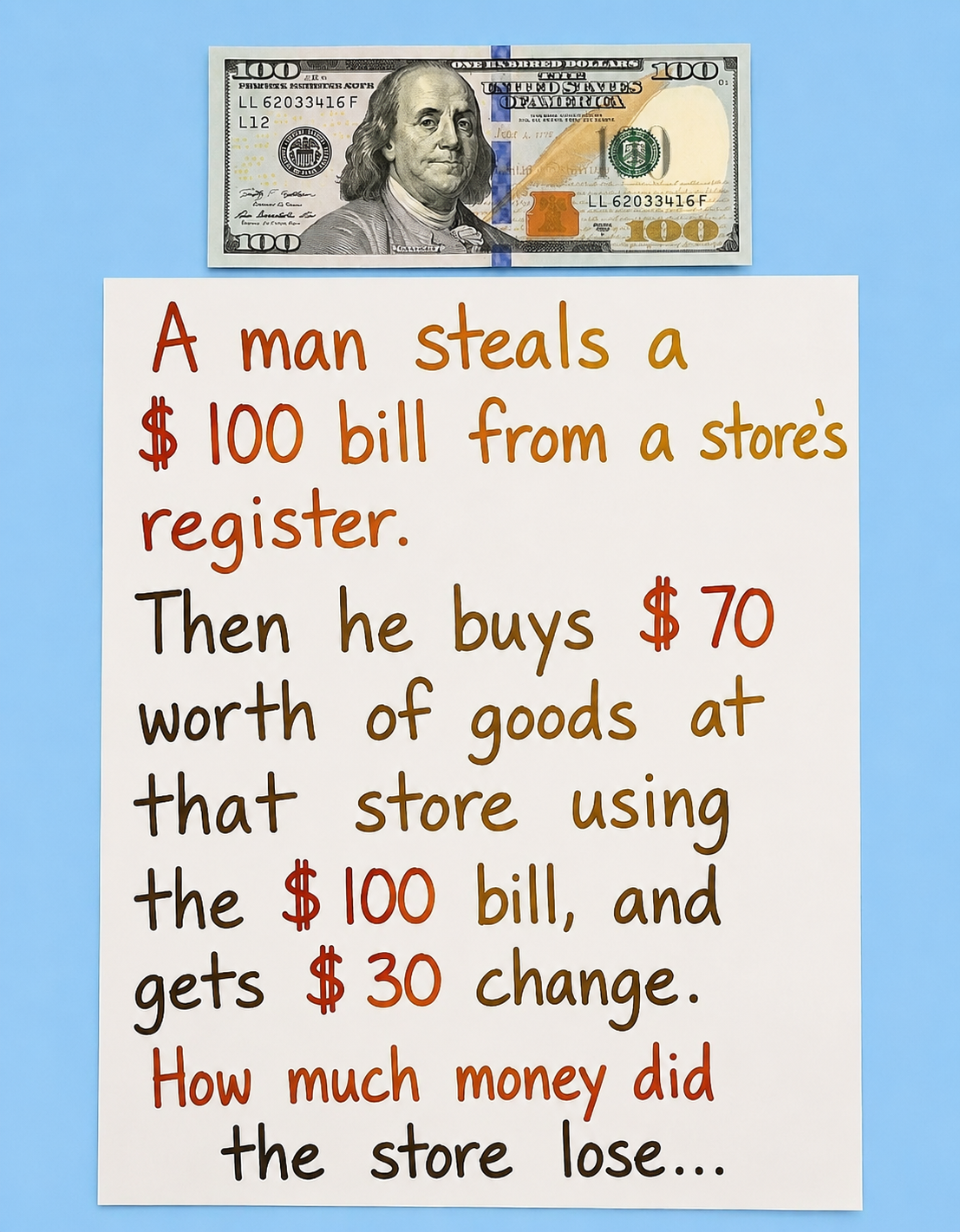
At first glance, the famous store riddle seems difficult because the story encourages people to think emotionally instead of logically. A man steals a $100 bill from a store register, then later returns and uses that same bill to buy merchandise. Many readers immediately assume the store suffers multiple losses at once, which makes the answer appear more complicated than it really is.
The key to solving the puzzle is separating the events into clear financial steps. The theft removes $100 from the register. However, when the same bill is later used for a purchase inside the store, that cash returns to the register. This means the original missing money is no longer permanently gone.
At that point, the transaction becomes easier to evaluate. The store accepts the $100 as payment and then gives the customer two things in exchange: $70 worth of merchandise and $30 in cash change. Those are the only items that permanently leave the business.
Many people become confused because they continue counting the stolen bill as a separate loss after it returns to the register. This creates double counting. The bill acts only as the payment method and does not create an additional loss once it is back inside the store’s cash system.