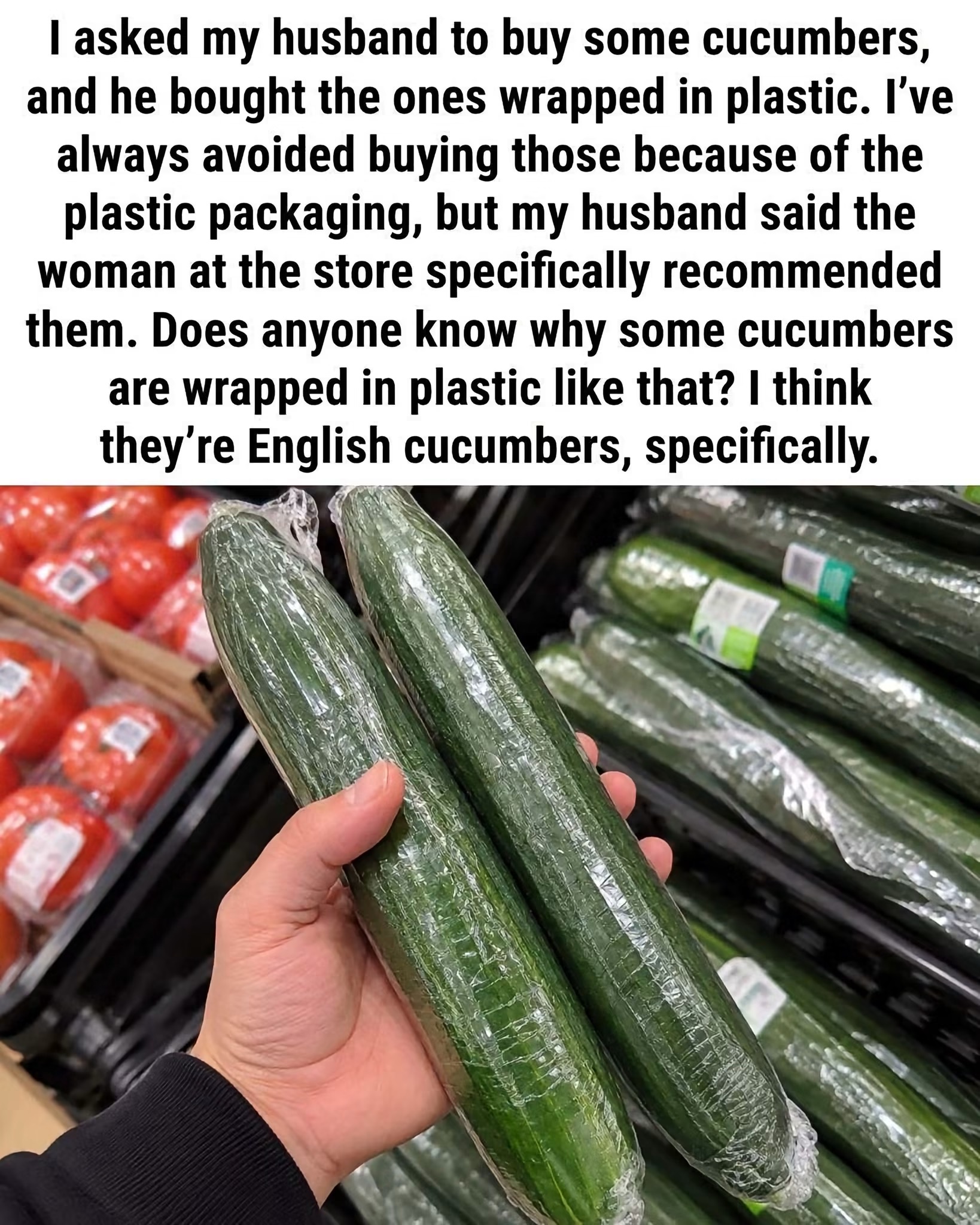
English cucumbers are popular in grocery stores because of their mild flavor, crisp texture, and thin skin. They are commonly used in fresh salads, sandwiches, wraps, and other everyday meals. However, shoppers may notice that English cucumbers are often sold individually wrapped in plastic. Although this packaging might seem unnecessary at first, it serves several practical purposes, including helping preserve freshness, reducing moisture loss, and protecting the vegetable during transportation.
The packaging may also help protect the cucumber from minor scratches and scuffs that could affect its appearance. Since shoppers often select produce based on its visible condition, maintaining a fresh-looking surface can help reduce the number of vegetables rejected because of cosmetic damage.
However, plastic packaging should not be considered a guarantee of food safety. Cucumbers can still become contaminated during growing, harvesting, packing, transportation, or handling. Proper food preparation remains important, even when a vegetable looks clean and comes in sealed packaging.
Why English Cucumbers Are Different
English cucumbers are often marketed as a convenient alternative to traditional slicing cucumbers. They typically have fewer noticeable seeds, a mild taste, and skin that many people prefer not to peel.
Their delicate outer surface makes moisture management particularly important. Plastic wrapping can help maintain their quality while allowing retailers to offer them in a condition that is appealing to shoppers.
Rinse the cucumber under cool, running water and gently rub its entire surface with clean hands. Dry it with a clean paper towel or a clean kitchen towel before cutting. Soap, household detergents, and disinfectants should not be used to wash produce because they are not intended for this purpose.
Use a clean cutting board and knife, and avoid allowing the washed cucumber to come into contact with raw meat, poultry, or other sources of contamination. Refrigerate cut cucumber promptly and follow recommended food-storage practices.
Final Thoughts
English cucumbers are often wrapped in plastic primarily because their thin skin makes them susceptible to moisture loss. The wrapping can help preserve firmness, maintain appearance, and protect the vegetable during transportation and handling. At the same time, it introduces an environmental consideration that shoppers may want to weigh against the potential reduction in food waste.
Understanding the purpose of this packaging helps explain why it remains common in grocery stores. With proper washing, careful handling, and appropriate storage, consumers can enjoy fresh English cucumbers while making informed decisions about packaging and waste.