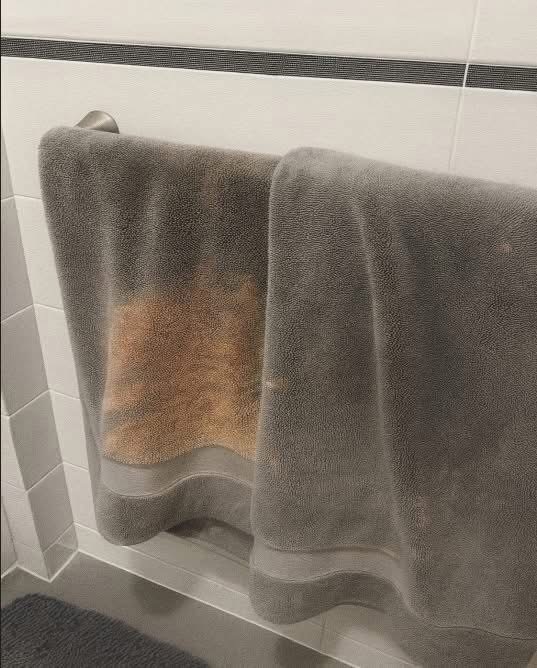
For years, I believed my laundry routine was nearly flawless. I sorted colors carefully, used trusted detergents, cleaned my washer regularly, and followed all the advice I thought mattered. That’s why a tiny orange dot on one of my gray towels didn’t worry me at first. It looked harmless—something that a normal wash would remove.
But after several cycles, scrubbing, soaking, and switching detergents, the mark didn’t fade. Instead, it became brighter. Within weeks, more towels developed the same discoloration, and I knew something unusual was happening. I checked everything: the washer, the dryer, the pipes, even the bathroom counter. Nothing explained the spreading orange marks.
After researching and talking with a friend in skincare, the answer finally became clear. The towels weren’t stained—they were bleached. A common skincare ingredient, benzoyl peroxide, was slowly breaking down the dye in the fabric. Even without direct contact, tiny amounts left on the skin, hands, pillowcases, or bathroom surfaces were enough to cause permanent orange discoloration. Heat from washing and drying only intensified the effect.
Once the dye is removed, it cannot be restored. The best solutions are using white towels, waiting for products to absorb, washing hands thoroughly, or keeping skincare towels separate. This small discovery changed how I approach skincare, laundry, and home care—reminding me how everyday habits quietly affect the things we use every day.