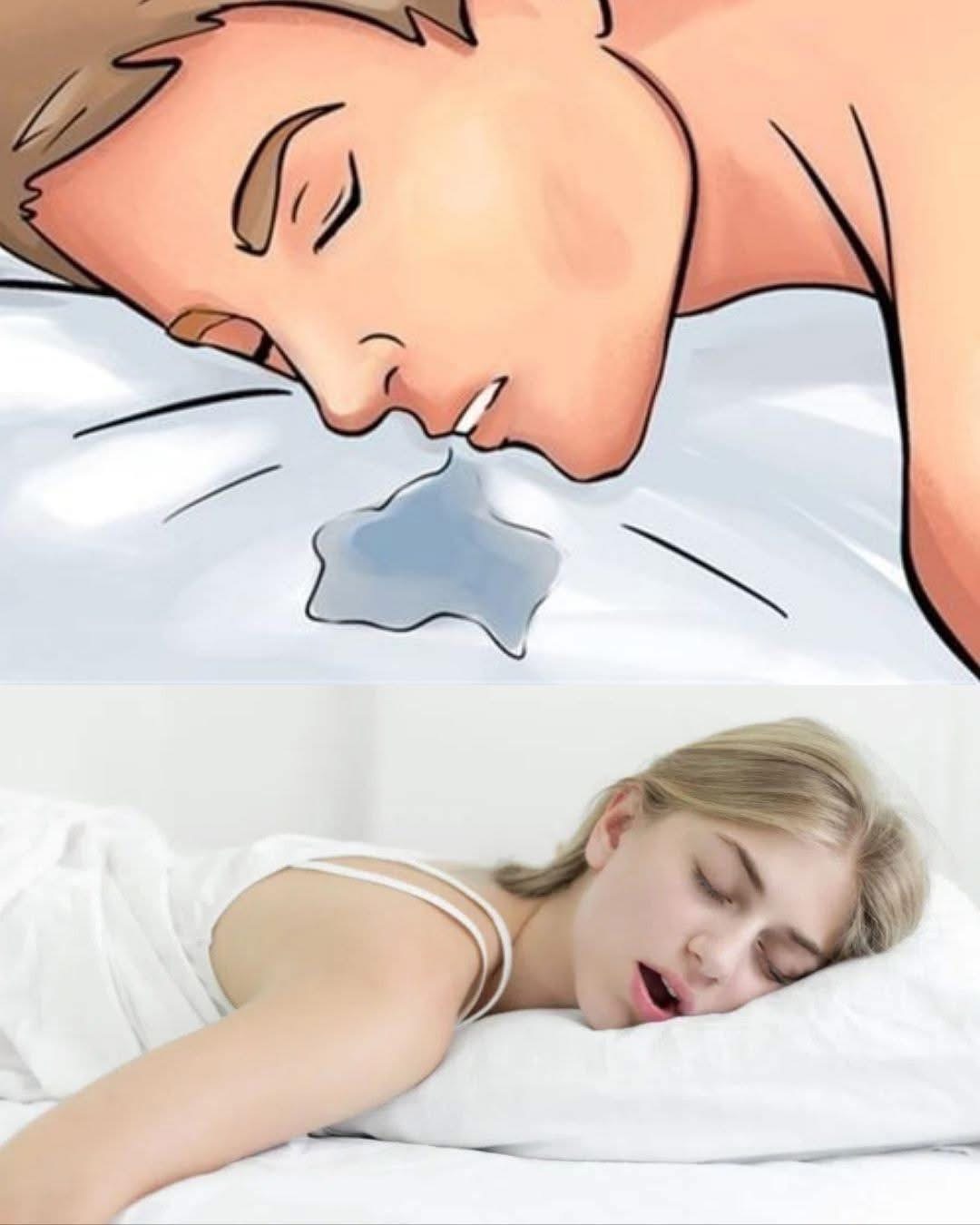
Occasional drooling during sleep is very common and, in most cases, completely harmless. It often happens when someone sleeps deeply, relaxes facial muscles, or rests on their side. However, when drooling is new, persistent, excessive, or clearly one-sided, it may be worth paying closer attention, as it can sometimes be linked to underlying health or lifestyle factors.
One common cause is blocked or irritated nasal passages. Allergies, colds, sinus congestion, or a deviated septum can encourage mouth breathing during sleep. When this happens, the body may produce extra saliva, which can escape once the jaw and facial muscles fully relax. Snoring, dry mouth in the morning, or restless sleep often accompany this type of drooling.
Digestive issues can also play a role. Nighttime acid reflux may stimulate saliva production as the body tries to neutralize irritation in the throat. People with reflux may notice heartburn, a sour taste, or coughing when lying down. Adjusting meal timing and sleep position can often reduce symptoms. Oral health is another factor. Gum inflammation, dental problems, or throat infections may temporarily increase saliva as the body responds to irritation.
Once treated, drooling usually improves. Drooling is generally not a concern if it has always happened occasionally, appears during illness, or depends on sleep position. However, sudden changes, persistent one-sided drooling, or difficulty swallowing should be discussed with a healthcare professional. In most situations, nighttime drooling is simply a normal part of sleep. Paying attention to patterns helps ensure peace of mind and overall well-being.