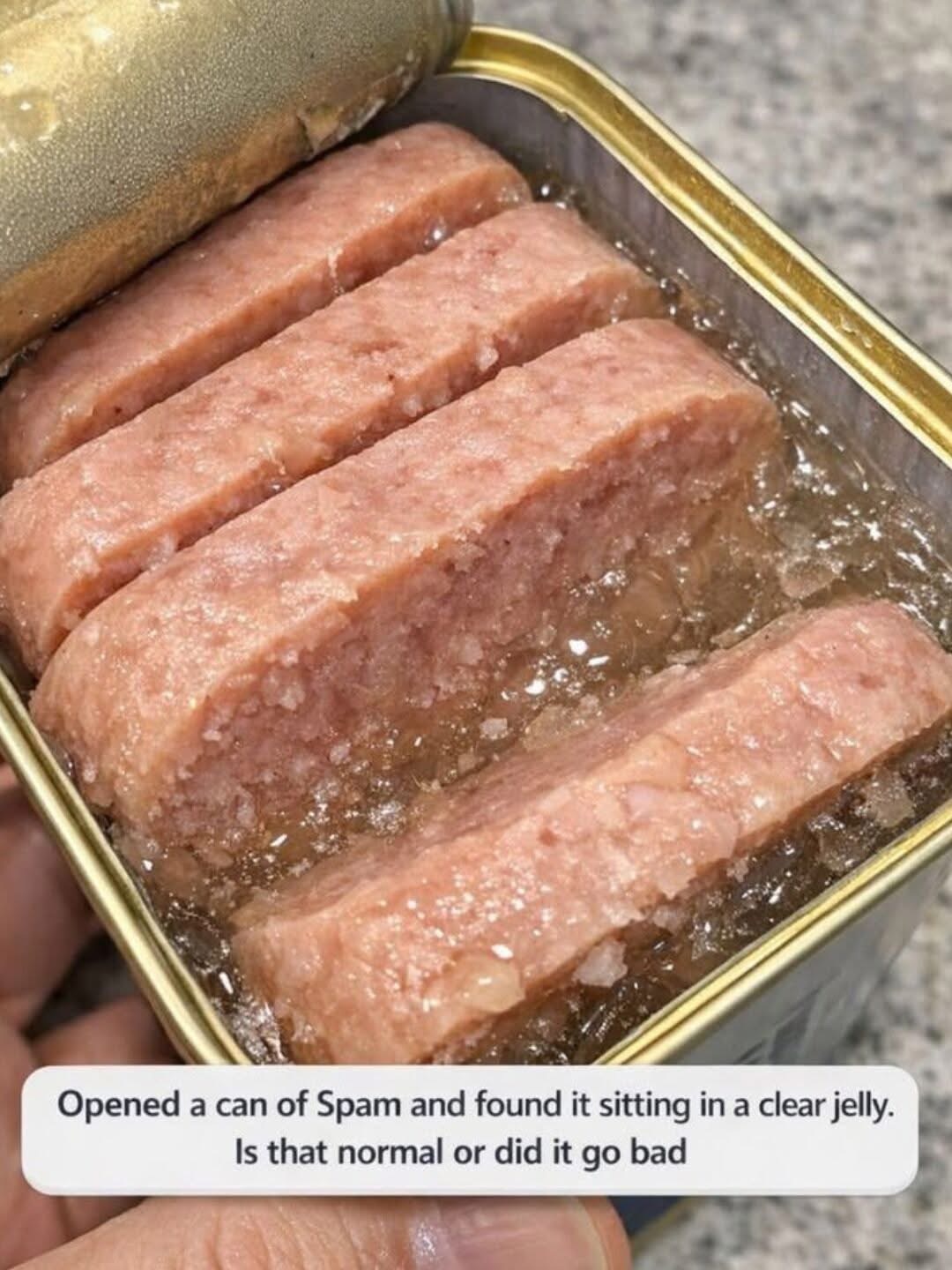
Spam is one of those pantry staples that people either love or love to hate, but almost everyone has encountered the same odd little surprise: a clear, jelly-like layer sitting on top of the meat after you open the can. For many, the first thought is, “Is this supposed to be here?” or “Did it go bad?” The truth is, that jelly is completely normal, and it’s actually a sign that the meat was processed correctly. Spam is made from pork shoulder and ham, and during the cooking process, proteins and fats break down and create gelatin. When the product cools, that gelatin solidifies into a clear, pale jelly. It’s similar to what happens when you make bone broth and it turns into a gel in the fridge. That’s not a flaw, it’s just the natural result of how the product is made and stored. The jelly has no harmful bacteria in it by itself, and it’s perfectly safe to eat or cook with, as long as the can and the meat show no signs of spoilage.
However, even though jelly in Spam is normal, canned foods can still go bad if the can is damaged or has been stored improperly. Cans are designed to keep food safe for a long time, but they aren’t invincible. A dent in the wrong place or a rusted seam can allow air and bacteria to enter, which can lead to dangerous spoilage. That’s why it’s smart to do a quick inspection every time you open a can of Spam, even if it looks fine at first glance. The simplest way to protect yourself is to use a three-point check: look at the can, inspect the meat and jelly, and then trust your nose. These steps take less than a minute but can prevent you from accidentally eating something unsafe. If any warning signs appear during these checks, it’s better to throw the can away than risk getting sick.
Start by checking the can itself. The outside condition of the can can reveal a lot about what happened during storage. A safe can should feel firm, with smooth sides and no dents, rust, or bulges. The top and bottom should be flat, and there should be no leaks. When you open the can, it should open normally without any strange pressure release. If you notice a hissing sound, a bulging lid, or if liquid sprays out when opened, that can be a sign that bacteria have been growing inside. These are not things you should ignore because they could indicate serious contamination, including the risk of botulism. Even if the meat looks okay, a compromised can is not worth the risk. If you see any of these issues, discard the entire can immediately and wash your hands after handling it.
Once the can is open, take a close look at the jelly and the meat. Normal jelly should be clear or slightly pale amber, smooth, and gelatinous. It should sit on top of the meat like a firm layer, and the meat should look uniformly pink with clean edges when sliced. Spam is meant to be solid and slightly springy, not mushy or sticky. Spoilage indicators include jelly that looks cloudy, greenish, dark brown, or slimy. If the jelly has bubbles, foam, or a strange separation, that could mean bacterial activity. The meat itself should not have any gray, green, or brown patches, and it should not feel slimy. Texture matters just as much as color; if the meat feels soft, mushy, or sticky, it’s best not to eat it. If anything looks off, don’t taste it to test it—just throw it away.
The third step is the smell test. Your nose is one of the most reliable tools for detecting spoilage. Fresh Spam has a mild, slightly salty, meaty smell that’s not strong or unpleasant. If the smell is sour, rancid, sharp, or otherwise “off,” it’s a clear sign the meat has spoiled. Even if the can looks normal and the jelly appears clear, a bad smell means the product should be discarded. Trusting your instincts is important because some spoilage bacteria do not always cause visible changes right away. Never taste canned meat if it smells strange, because tasting it won’t make it safer and could expose you to harmful bacteria. If you have any doubts, throw it out—your health is not worth the risk.
Now, what about the jelly itself—can you cook it away, and is it edible? Yes and yes. The jelly is simply gelatin created from the proteins and fats released during cooking, and it melts away when heated. If you fry, bake, or grill Spam, the jelly melts and either absorbs back into the meat or cooks off into the pan. It often improves the texture and flavor of the Spam because it adds moisture. The jelly is also completely edible and doesn’t taste bad or weird. In fact, many people don’t even notice it once the Spam is cooked. If the jelly looks watery, that’s usually not a problem either. Temperature changes during storage can cause gelatin to loosen and become more liquid. As long as the color and smell are normal, watery jelly is fine.
The bottom line is that clear jelly in Spam is not a flaw—it’s a normal byproduct of the cooking and cooling process. It’s evidence that the meat was cooked and sealed properly. The only time you should worry is if the can shows damage, the meat or jelly looks abnormal, or the smell is wrong. If the can is intact, the meat looks firm and pink, and the smell is mild, you can safely eat it or cook with it. Spam has been a pantry staple for nearly a century, and that jelly is just part of its history and design. If you’ve ever been surprised by it, you’re not alone—many people are. But now you know the truth: that jelly is simply a sign of a w