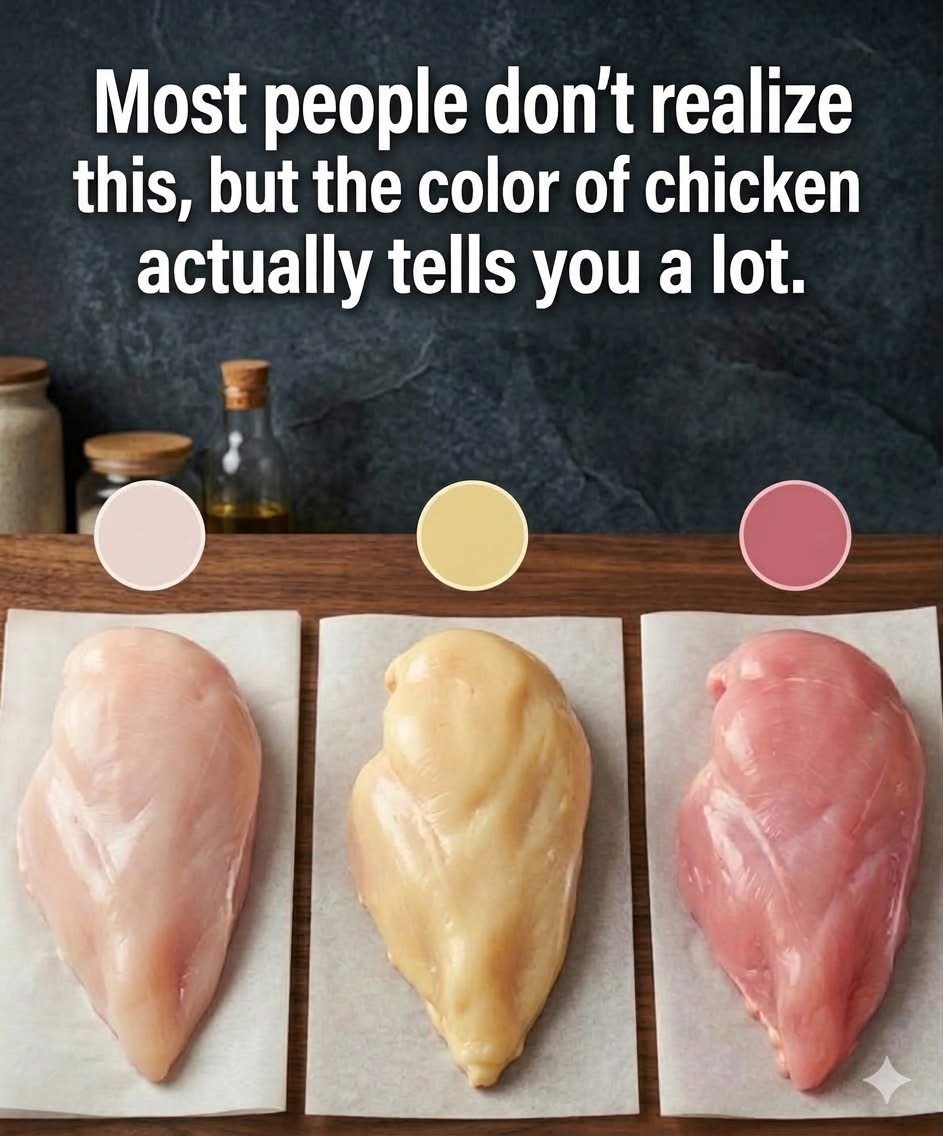
When it comes to chicken, the color of the meat often raises questions about its quality, taste, and healthiness. Some pieces may appear pale or slightly pink, while others have a deeper yellow hue. At first glance, you might assume that certain pieces are healthier or more natural, but color alone isn’t a reliable indicator of a chicken’s freshness or quality.
Pale chicken meat is commonly associated with industrial farming practices. In these systems, chickens are raised indoors on controlled diets and bred for rapid growth, resulting in mass production and lower costs. These chickens often don’t have the opportunity to roam freely or eat a varied diet, which can affect the color and flavor of the meat. On the other hand, chicken with a yellowish tint typically comes from birds fed natural, pigment-rich diets such as corn, grass, or other plants.
These chickens tend to be raised in more natural environments, with access to open spaces and a wider range of food, contributing to firmer meat and richer flavor. However, some producers may adjust a chicken’s diet to artificially enhance its yellow color, even when raised under industrial conditions. As a result, color can sometimes be misleading.