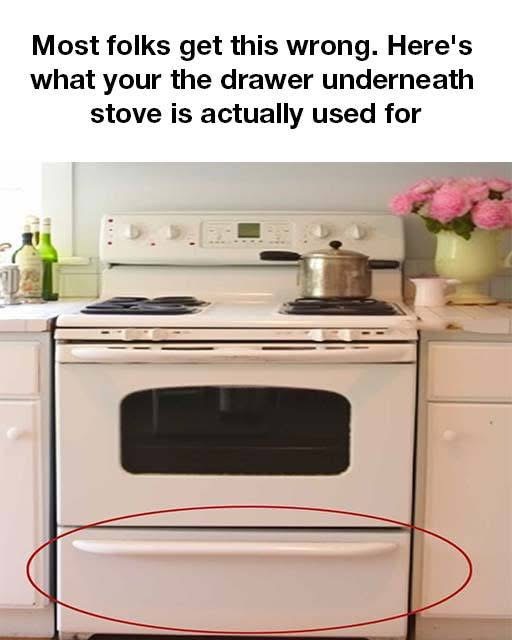
The kitchen is often called the heart of the home, and one appliance most of us use daily is the stove. If you’ve ever owned one, you’ve probably noticed the drawer underneath the oven. Many people assume it’s simply extra storage for pans or baking sheets, but in most cases, that drawer was designed for a different purpose.
Using the drawer for storage can actually cause problems. Heat from the oven can transfer into the drawer, which may damage certain items and create safety risks—especially if anything plastic or flammable ends up inside. It can also block airflow or make cleaning harder, allowing crumbs and debris to build up in a spot that’s often overlooked and hard to reach.
In many stoves, that lower drawer is a warming drawer. Its main job is to keep cooked food warm until everything is ready to serve. This is especially helpful when you’re cooking multiple dishes at once or hosting guests. Instead of letting food cool on the counter, you can place it in the drawer so it stays warm without drying out or overcooking.
Warming drawers can also be surprisingly versatile. Some people use them to warm plates, proof dough for baking, or even dry herbs at a low setting. If your stove has temperature controls for the drawer, it’s a strong sign it was built for warming—not storage. Using it the right way can make meals smoother, hotter, and more enjoyable for everyone at the table.