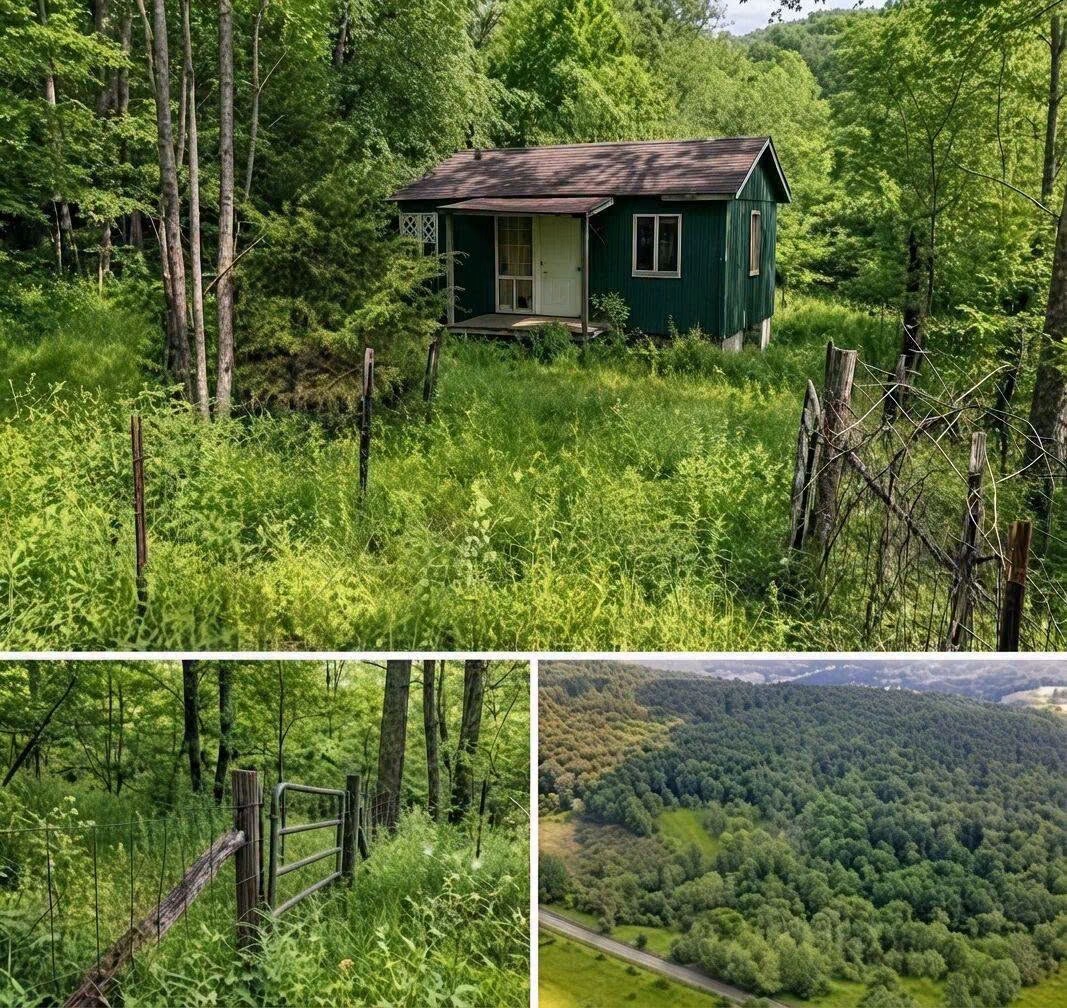
For nineteen thousand dollars, the little property seemed almost too good to be true. Hidden behind mature trees, the one-and-a-half-acre retreat offered something increasingly difficult to find: genuine peace and privacy. There were no nearby houses, busy roads, or constant sounds of traffic. A narrow creek curved through the property, creating a gentle background of running water. At the center stood a modest ten-by-sixteen EF Hodgson bungalow. Although weathered and in need of repairs, it had plenty of potential as a weekend retreat, creative studio, or simple country getaway. A recent six-thousand-dollar price reduction made the property even more appealing.
The notebooks also described how he had planted many of the surrounding trees himself. He had intentionally avoided major development because he wanted the property to remain quiet and natural. Interestingly, some of his plans included solar power, rainwater collection, and a wood-burning stove. Those were almost exactly the improvements I had imagined making after purchasing the cabin.
Near the back of the final notebook, I found a simple message about the future of the property. The owner hoped that whoever came next would recognize its value in simplicity. He did not want the land filled with buildings or unnecessary improvements. Instead, he wanted the creek protected, the trees preserved, and the property kept as a peaceful place where people could slow down and enjoy nature.
Suddenly, the low price made more sense. The cabin was not valuable because it was luxurious or modern. Its appeal came from the things it did not have: heavy traffic, crowded surroundings, and excessive development. I eventually purchased the bungalow and began restoring it carefully. I repaired the porch, cleaned the creek bank, planted a small garden, and added simple solar equipment while preserving the cabin’s original character.