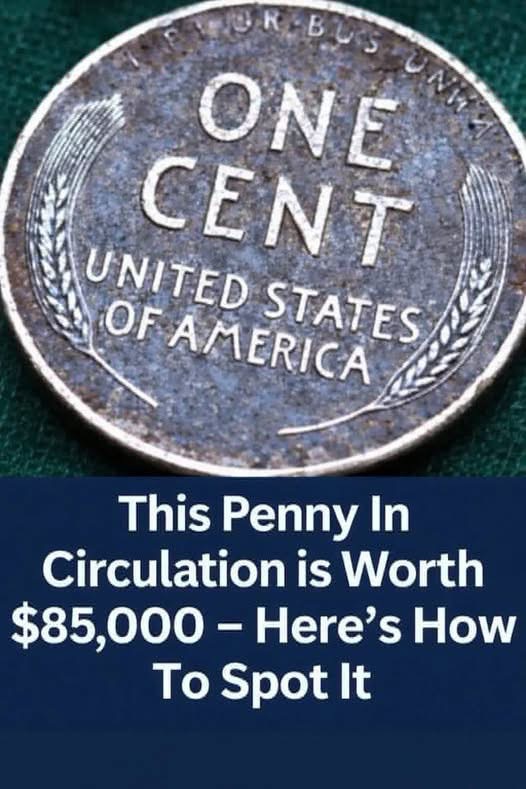
A 1943 copper wheat penny can be worth an extraordinary amount because it was never supposed to exist in ordinary circulation. During the Second World War, the United States Mint planned to produce 1943 cents from zinc-coated steel so copper could be reserved for wartime needs. A small number of copper blanks from the previous year apparently remained in the presses and were struck by mistake.
Collectors prize those accidental copper cents, and examples authenticated in excellent condition have been valued in the tens of thousands of dollars. Figures around $85,000 are often mentioned for a strong mint-state example, while the exact price depends on condition, origin, demand, and the result of professional grading.
The rarity has also created many counterfeits. Some altered coins begin as 1948 copper cents, with part of the final digit filed away to resemble a 3. Others are ordinary 1943 steel cents coated with copper. A simple magnet is therefore a useful first check. A genuine copper cent should not stick, while a copper-plated steel cent normally will.
Collectors also examine the date, weight, color, and surface carefully before assigning any value. A genuine copper cent from 1943 should weigh close to the standard used for copper cents of that era, while the common zinc-coated steel version is lighter and responds to a magnet. The magnet test is useful because a normal 1943 steel cent with a thin copper-colored coating will still be attracted.
The date deserves close inspection under magnification. Altered 1948 cents may show tool marks or an unnatural shape where part of the final digit was removed. Plating can also leave uneven color around the edge or in the recessed parts of the design. Cleaning the coin is not recommended because harsh polishing can damage its surface and reduce its value.
Even when a cent passes simple home checks, professional authentication remains essential. Rare-coin grading services can examine the metal, strike, weight, and die characteristics. They also place certified examples in protective holders that record the grade and identity. A large advertised value applies only when authenticity and condition are established, not merely because a penny looks copper-colored.
The excitement surrounding the 1943 copper cent comes from its accidental survival during a historic change in production. Most people will find the common steel version, but checking carefully can still be enjoyable. The important steps are to avoid damaging the coin, compare it with known examples, test it gently with a magnet, and seek expert verification before believing an extraordinary valuation.
Weight provides another clue. A genuine bronze cent from that period should weigh about 3.11 grams, while a standard 1943 steel cent is closer to 2.7 grams. A precise scale can help, although wear, dirt, and damage mean weight alone is not final proof.
The edge should also be examined. A plated steel cent may reveal a different-colored core where the surface has worn. Genuine mint errors should match known dies and striking characteristics from the Philadelphia, Denver, or San Francisco facilities. Specialists compare tiny details that counterfeiters often miss.
Owners should resist offers made before authentication. A rare-looking coin can attract both excitement and opportunistic buyers. Keeping clear photographs, recording where it was found, and submitting it through a respected grading service protects the owner and gives serious collectors confidence.
Values quoted in headlines are estimates, not guaranteed payments. Auction prices rise and fall, and condition can create an enormous difference. Still, the accidental 1943 copper cent remains one of the best-known treasures that might theoretically appear in an old jar or inherited collection. That possibility is why people continue checking their change with magnets and magnifying glasses.