I opened my sixteen-year-old daughter’s bedroom door early one morning, hoping to talk to her about something unexpected. But her bed was empty, her sewing machine sat untouched, and her bedroom window was slightly open. Concerned, I hurried downstairs, where Annie and her mother, Marissa, were waiting at the kitchen table. I had no idea that the conversation ahead would change how I understood my daughter, my family, and the importance of telling the truth.
Two years earlier, my husband, Daniel, had passed away unexpectedly. Since then, Lily and I had learned to navigate life together. I worked extra hours at the dental office to support us, while Lily spent her free time sewing. She could turn ordinary fabric into beautiful dresses, skirts, and jackets. She dreamed of becoming a fashion designer, and I encouraged her to keep working toward that goal.
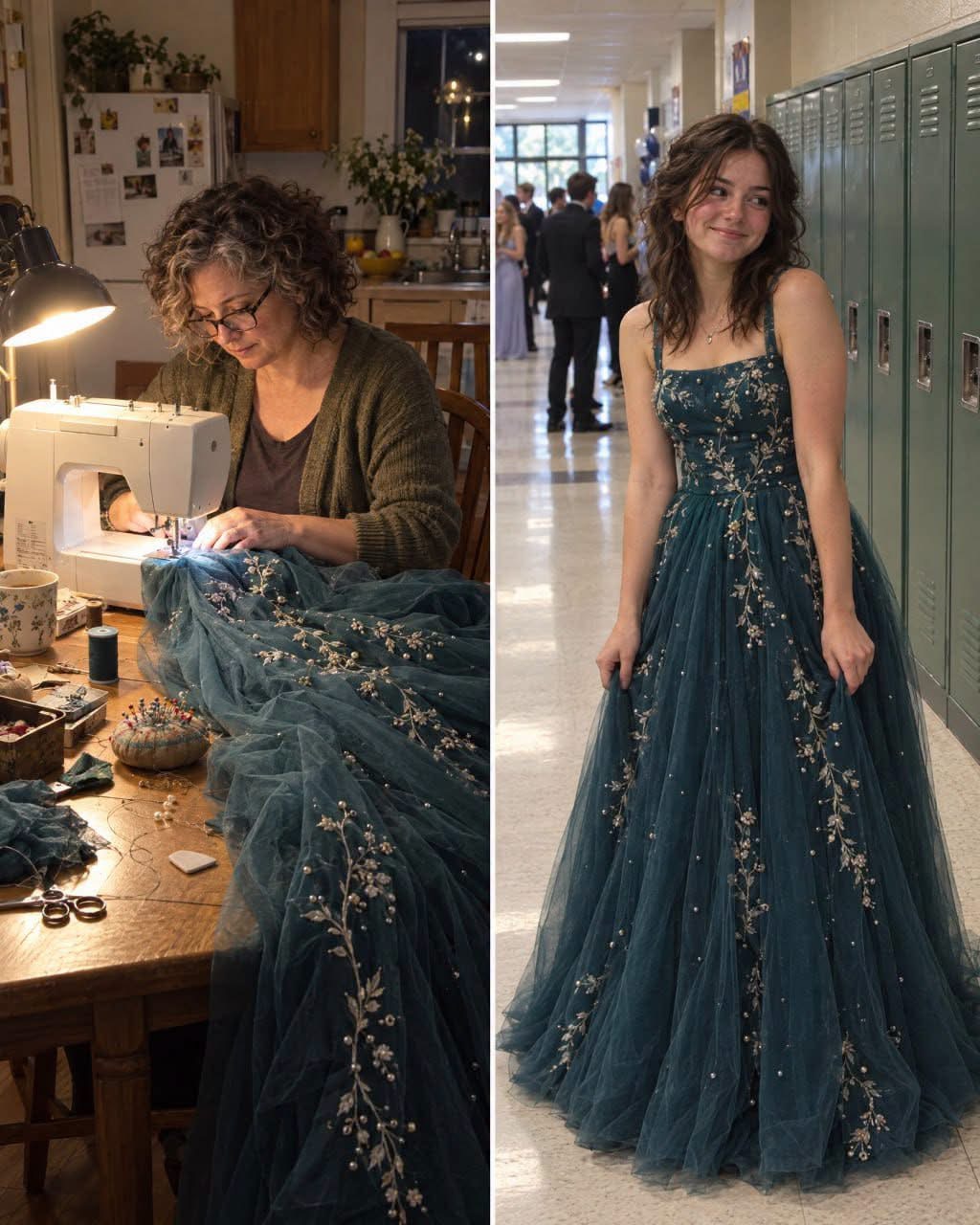
One week, Lily began spending long hours at her sewing machine. She explained that her classmate Annie needed a dress for an upcoming school concert but that her family could not afford to buy one. Annie was a quiet student whose mother worked cleaning offices to support them. Lily wanted her friend to feel comfortable and confident on stage, so she carefully made a beautiful green dress just for her.
Then Lily surprised me by adding a blue cardigan to the gift. It was the last cardigan Daniel had bought for her before his death. She had kept it close for years because it reminded her of him. I asked whether she was certain about giving it away, and she assured me that she was. I respected her decision, although I knew how much the cardigan meant to her.
The following afternoon, Lily returned from school unusually quiet. She went straight to her bedroom and asked to be left alone. I wondered whether something had gone wrong with the dress or whether her classmates had said something upsetting. I prepared her favorite grilled cheese sandwich and left it outside her door, hoping she would feel ready to talk when she was comfortable.
Early the next morning, Annie arrived with her mother. Annie was wearing Lily’s blue cardigan, and Marissa carried a small box containing a flash drive. She explained that there was something important I needed to see before I spoke with my daughter. I invited them inside, opened my laptop, and watched a recording that showed Lily participating in a series of unkind incidents directed at Annie. Several students had laughed at Annie’s clothes, made hurtful comments about her family, and recorded the moments on their phones. Lily had joined them.
When I realized Lily had left home, I became worried and asked Annie whether she knew where my daughter might have gone. She suggested the train station, a place where the two girls had often talked about their hopes for the future. Marissa drove us there, and we found Lily waiting on the platform with a small travel bag.
I approached her and asked her to come home so we could talk. Lily admitted that she had been afraid I would see her differently after learning what she had done. I told her that I was disappointed in her choices, but that she did not have to face the consequences alone. We would speak with the school, work on making things right with Annie, and find healthier ways to handle difficult feelings.
Before Annie and Marissa left, Annie returned the cardigan to Lily. She explained that it belonged to Lily and that she wanted her to keep it. Her decision did not mean everything was forgiven, but it gave both girls an opportunity to begin moving forward at their own pace.
That morning reminded me that parenting means more than knowing a child’s dreams and celebrating their achievements. It also means helping them take responsibility when they make mistakes. Children need guidance, honest conversations, and the opportunity to learn from their choices. And sometimes, the first step toward repairing a relationship is simply having the courage to tell the truth.