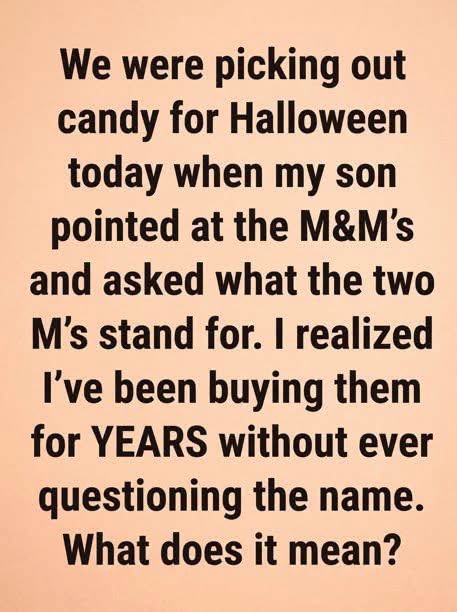
M&M’s are among the most recognizablecandies in the world, famous for their colorfulshells and chocolate centers. People enjoy themat movie theaters, share them at parties, and addthem to cookies and desserts. Despite theirsimple appearance, the two letters printed oneach candy have an interesting history datingback to the early 1940s.
The initials M&M stand for Mars and Murrie, thesurnames of the two men behind the originalcandy. Forrest Mars Sr., the son of the founder ofthe Mars candy company, partnered with BruceMurrie, whose father, William Murrie, was asenior executive at Hershey. Their partnershipcombined Mars’s business vision with access toHershey’s chocolate supplies.
M&M’s were first introduced in 1941, during aperiod when convenient, portable food wasespecially valuable. The inspiration reportedlycame from chocolate covered in a hard sugarshell, which soldiers had eaten during theSpanish Civil War. This coating helped preventthe chocolate from melting quickly whenhandled.
During World War II, M&M’s became popularamong American military personnel becausethey were easy to carry and could withstandwarmer conditions better than uncoatedchocolate. Their practical design helpedestablish the candy’s reputation as a convenientsnack for people on the move.
The original M&M’s looked different from thevarieties sold today. Early candies featuredbrown shells with a small letter printed on eachpiece. As the brand grew, new colors appeared,making the candies more appealing to childrenand adults alike.
Over the years, the company introduced peanutM&M’s, peanut butter varieties, and numerousother flavors. Seasonal colors, specialpackaging, and creative advertising helpedtransform the candy into a worldwide favorite.However, the basic combination of chocolateand a protective candy shell remainedunchanged.
Although Bruce Murrie helped establish theoriginal partnership, it eventually ended, andForrest Mars gained control of the business.M&M’s continued to expand under the Marscompany, becoming one of its best-knownproducts.
Today, M&M’s are sold in countries around theworld. Their familiar letters represent more thana brand name: they commemorate thecollaboration between two businessmen whosepartnership helped create a lasting candysensation.