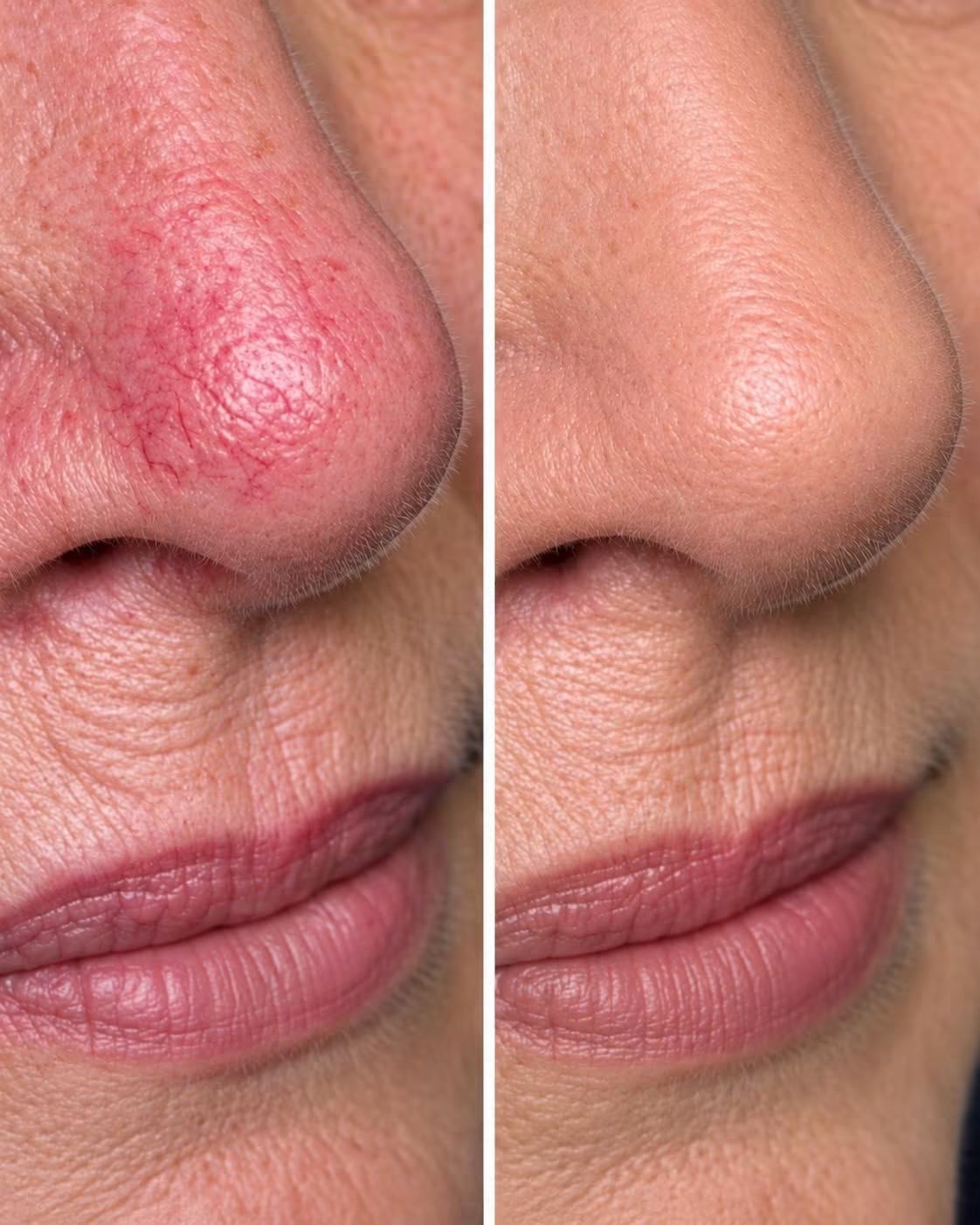
Persistent redness around the nose may seem harmless, especially when it appears after washing your face, exercising, or spending time in cold weather. However, when redness and tiny red lines remain visible, the cause may be more than temporary irritation.
These fine lines can be small superficial blood vessels known as telangiectasia. They may become more noticeable with age, sun exposure, repeated flushing, or certain skin conditions. However, redness can also result from dryness, irritation, or inflammation, so appearance alone cannot confirm the cause.
The skin around the nose faces daily stress from sunlight, wind, temperature changes, facial cleansers, cosmetics, and frequent wiping. The creases beside the nostrils can also collect oil, sweat, and product residue, making them particularly vulnerable to irritation.
Several conditions may contribute to persistent redness. Rosacea can cause recurring flushing, visible blood vessels, and lasting redness across the central face. Seborrheic dermatitis may produce redness and flaky skin around the nose, eyebrows, or scalp. Contact dermatitis can develop when the skin reacts to an irritating ingredient or cosmetic product.
Skincare habits may also make the problem worse. Harsh exfoliants, abrasive scrubs, fragranced products, and excessive use of active ingredients can weaken the skin’s protective barrier. This may lead to dryness, tightness, burning, and increased sensitivity. Adding more products can intensify the irritation.
Sun exposure is another important factor because ultraviolet radiation contributes to cumulative skin damage and can make visible blood vessels more noticeable. Protecting the skin from sunlight may help prevent further damage and support a healthier-looking complexion.
A gentle routine is often a sensible starting point. Use a mild cleanser, apply a moisturizer suited to sensitive skin, and wear broad-spectrum sunscreen. Avoid known triggers and introduce new products gradually. Green color-correcting makeup may temporarily make redness less noticeable, but it does not treat the underlying cause or remove visible blood vessels.
If redness persists, worsens, or appears alongside itching, burning, swelling, or flaking, consult a dermatologist or qualified healthcare professional. Different causes require different treatments, and identifying the problem correctly is the first step toward calmer, healthier-looking skin.