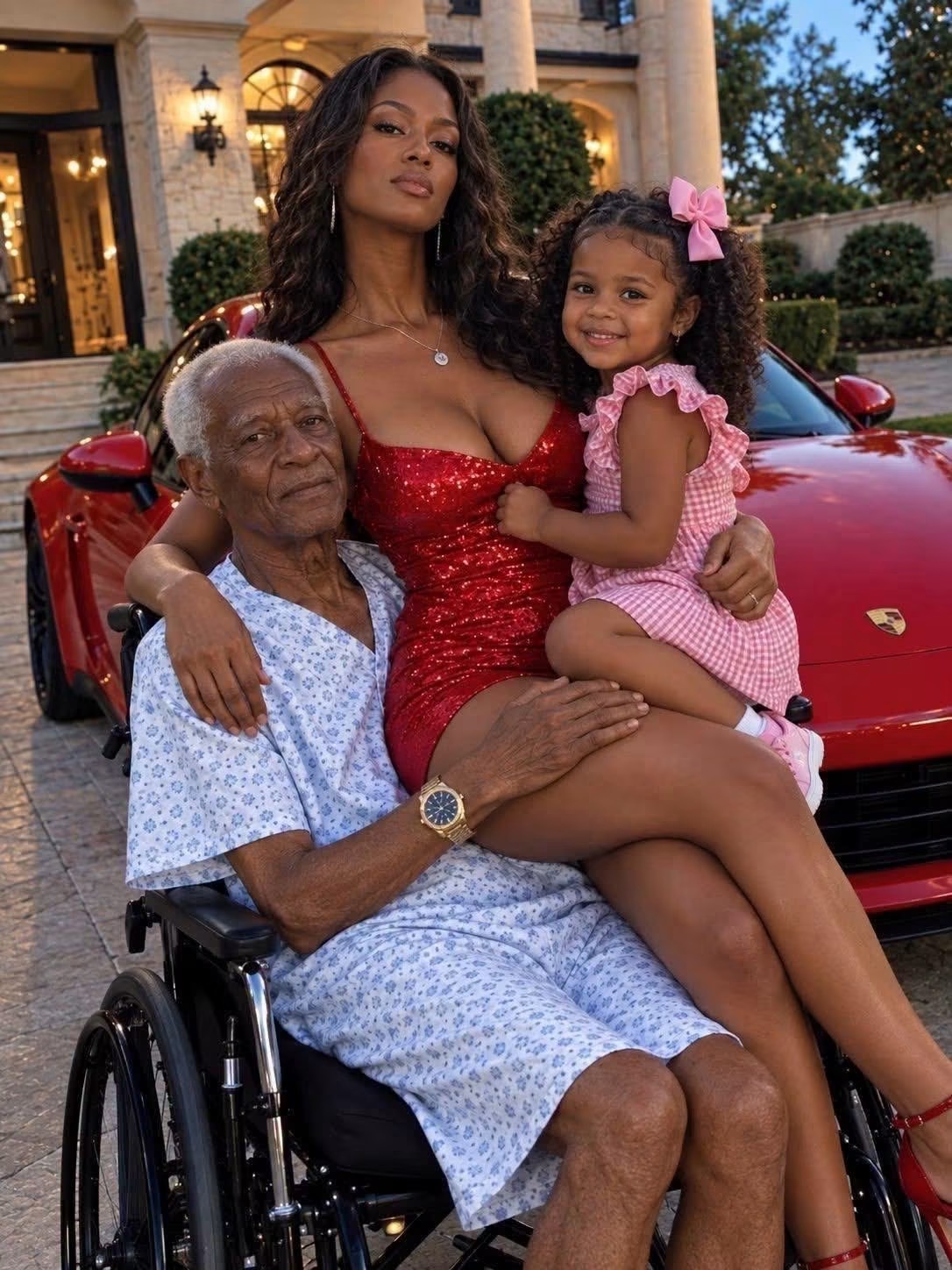
I was thirty-five years old when I married a seventy-two-year-old man.
No, I didn’t love him at first. I was simply trying to find stability for myself and my young daughter.
I grew up moving from one foster family to another. From an early age, I learned how difficult it could be to build a sense of belonging when you never knew how long you would stay in one place.
My first husband, Ben, had also grown up in the foster care system. Perhaps that was why we understood each other so well.
We weren’t wealthy. I worked in a small store, and Ben was a mechanic. We had a modest apartment, an old car, and our daughter, Sophie. To us, that was a good life.
Then Ben became seriously ill.
After a year of medical appointments and difficult decisions, he passed away. I was left with outstanding medical bills, a young daughter, and the responsibility of rebuilding our lives.
Eventually, I found work as a housekeeper for a wealthy widower named William. He was seventy-two years old and lived alone in a large home.
I cleaned the house, prepared his meals, and helped with everyday errands. I was grateful for the job, but my income barely covered our expenses.
When Sophie became ill, paying for her medication became another challenge. Around the same time, my landlord informed me that I needed to find another place to live because I had fallen behind on rent.
I know this may come as a surprise,” he said, “but I have developed strong feelings for you. Would you consider marrying me?”
I was speechless.
He continued, explaining that he wanted Sophie and me to have a stable home and that he hoped we could build a life together.
I thought carefully about his offer. My circumstances were difficult, and my daughter’s future was my greatest concern.
Then William passed away.
I was grieving the loss of my husband while trying to help Sophie understand what had happened. I assumed that we would continue living in the house where we had built so many memories.
The day after the funeral, William’s lawyer visited me.
He sat across from me and opened a folder of documents.
But I was his wife,” I replied.
The lawyer nodded before reaching into his briefcase. He took out a thick white envelope and placed it on the table.
My name was written across the front in William’s familiar handwriting.
I reached for it, but the lawyer gently asked me to wait.
“Before you open this, there is something you should know. Several months before William passed away, he gave me specific instructions about this letter. He asked me to explain the contents of his will first and then give you this envelope.”
I looked at him, confused.
“Why would he do that?”
The lawyer paused before answering.
“He wanted you to understand that the will was not the whole story. He believed the letter would help explain decisions he had made long before his death.”
My heart began to beat faster.
“What does that mean?”
He moved the envelope closer to me.
“Open it, Laura. William left you an explanation, and I believe it will help you understand his wishes.”
With trembling hands, I picked up the envelope and carefully opened it.
Inside was a letter written in William’s handwriting.
“Dear Laura,
“If you are reading this, I am no longer beside you. The lawyer has explained that you are not receiving the house or other assets through my will. I imagine you have many questions, and I want you to have the answers.
“Please keep reading.
“When I was younger, my wife and I wanted to help children who were growing up without stable families. We decided to support programs that provided educational opportunities, clothing, and medical assistance to children in foster care.
“Over the years, our efforts grew into a charitable foundation that helped many families.
“I never expected anything in return for that work. I simply believed that every child deserved an opportunity to build a better future.”
I stopped reading and looked at the lawyer.
“What does this have to do with me?”
He explained that some of the educational programs and medical expenses I had received as a child had been supported by William’s foundation.
I could hardly believe it.
Years before we had met, William had unknowingly helped provide resources that made parts of my childhood a little easier.
I returned to the letter.
William explained that he had not recognized me when he first hired me. Later, while reviewing some household paperwork, he noticed the name of the group home where I had grown up.
That discovery led him to realize that I had once benefited from the charitable work he and his wife had supported.
“I could have offered you financial assistance,” he wrote, “but I understood that you wanted to support yourself and your daughter through your own efforts.
“What mattered to me was not whether you could repay a kindness. It was seeing how hard you worked to create a stable life for Sophie.
“Over time, I came to care deeply about both of you.”
I paused to wipe my eyes.
The letter reminded me of the ordinary moments that had gradually changed our relationship.
When William had difficulty walking after a fall, I helped him with his daily routine. I accompanied him through the garden and spent evenings talking with him when he could not sleep.
Our relationship had become more than an arrangement based on security. We had developed trust, friendship, and love.
I continued reading.
“Laura, I never expected you to have everything figured out when we married. You were doing your best for your daughter, and I respected that.
“You gave me five meaningful years. Sophie brought laughter and warmth into my home, and hearing her call me Grandpa was one of the happiest experiences of my life.
“I hope you will remember that our family was built through the choices we made every day to care for one another.”
By the time I reached the final page, tears were running down my face.
Then I looked up at the lawyer.
“If I am not receiving the house through the will, why did William ask you to give me this letter?”
The lawyer placed another folder on the table.
“Because the will does not contain every arrangement William made during his lifetime.”
I opened the folder.
The first document concerned the house. It showed that ownership had been transferred to me before William passed away.
I stared at the document in disbelief.
The next papers described an investment account established for Sophie several years earlier. The account was intended to help support her future education.
There was also documentation about William’s charitable foundation, which continued to support children in foster care and families experiencing financial difficulties.
William had made arrangements for me to help oversee its work.
I sat quietly, trying to understand everything I had just learned.
The lawyer explained that these arrangements were separate from the assets distributed under the will. He also encouraged me to review the documents carefully and seek independent legal advice if I had questions about their meaning or administration.
For the first time since William’s funeral, I felt that I could begin planning for the future.
As the lawyer prepared to leave, he handed me a small box.
Inside was a white chess queen.
Beneath it was a note written in William’s handwriting.
“Give this to Sophie when she is old enough to understand that family is not defined only by where we begin. It is also shaped by the people who choose to care for us.”
I held the chess piece in my hand and remembered all the afternoons William had spent teaching Sophie the game.
That evening, Sophie came home from school and asked whether we could keep William’s chair in the garden.
“I want it to stay there,” she said. “It reminds me of Grandpa.”
I hugged her.
“Of course we can keep it.”
Then I showed her the white chess queen.
She smiled as soon as she recognized it.
“Grandpa always said the queen was one of the strongest pieces on the board.”
“He certainly did,” I replied.
In the months that followed, I began learning more about the foundation and its responsibilities. With the help of experienced advisers, I worked to ensure that its programs continued serving the families William had wanted to support.
One of the first families we helped was a mother raising two young children. She had fallen behind on her housing expenses and needed assistance to remain in her home.
When she learned that the foundation could help cover several months of rent, she became emotional.
I understood her relief because I remembered standing in William’s kitchen years earlier, wondering how I would provide a secure future for Sophie.
That experience changed the way I understood William’s legacy.
He had helped me build a home, but he had also shown me how meaningful it could be to help someone else find stability.
His greatest gift was not simply the property or the financial arrangements he had made. It was the opportunity to continue work that had once made a difference in my own life.
I had married William during one of the most uncertain periods of my life. Over time, we built a relationship based on care, trust, and shared experiences.
After his death, I discovered that the choices he had made years earlier were still helping people.
And I realized that the most meaningful inheritance was not measured only by money or possessions.
Sometimes, it is the opportunity to give another family the same sense of security and hope that once changed your own life.