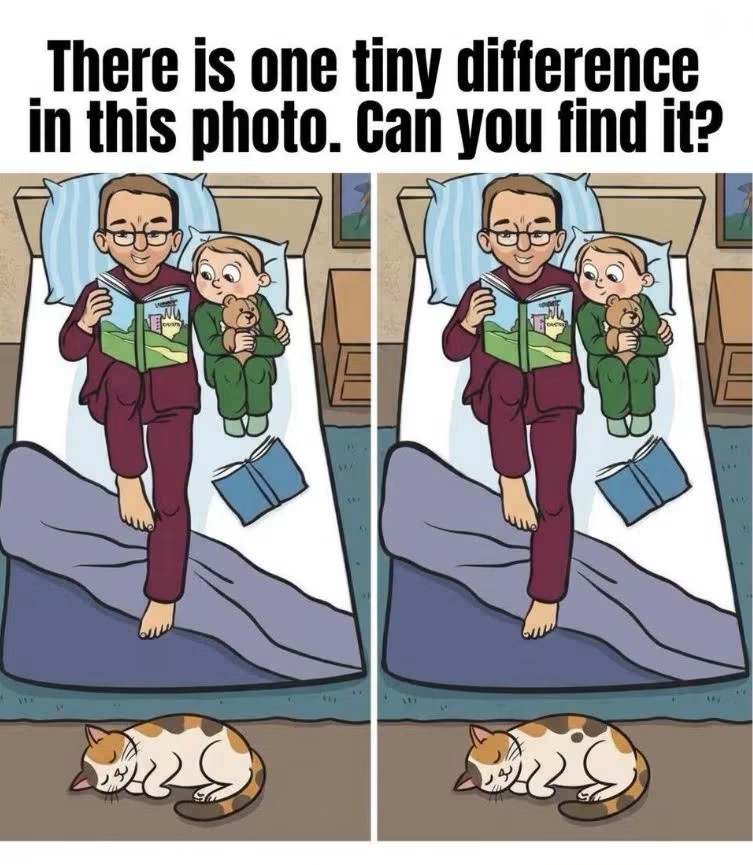
At first glance, the two illustrations appear completely identical. A father wearing glasses sits comfortably beside his young child, reading a storybook aloud. The child holds a favorite teddy bear, while a relaxed cat rests nearby. The peaceful scene looks ordinary, but there is one small detail that makes the pictures different. Can you spot it before thirty seconds are up?
Picture puzzles are a fun way to spend a few quiet moments and challenge your observation skills. They encourage us to slow down, pay attention, and notice details that might otherwise go unnoticed. Sometimes, the smallest change can be surprisingly difficult to find, even when the two pictures are placed directly beside each other.
Before you begin, take a deep breath and look at both illustrations carefully. Try not to focus on the entire scene at once. Instead, divide the pictures into smaller sections and compare each area separately. This simple approach can help you notice details that might be missed during a quick glance.
Start by Examining the Father
Begin with the father sitting beside his child. Look carefully at his glasses, facial features, clothing, and the storybook in his hands. Compare the shapes and positions of these objects in both illustrations.
Pay attention to small details, such as the outline of his glasses or the way he holds the book. Even a minor change in an object’s appearance can be the clue you need to solve the puzzle.
Sometimes, details become harder to recognize when objects overlap. The child’s hands might cover part of the toy, for example, making a small difference less noticeable. Look at the outlines carefully and compare the corresponding areas one at a time.
There is no need to rush through every detail. Taking a few extra seconds to examine the scene can make the challenge more satisfying.
Do Not Forget the Cat and the Surroundings
Challenge Yourself With Thirty Seconds
For an extra bit of fun, set a timer for thirty seconds and see whether you can find the difference before it reaches zero. You can also invite family members or friends to participate and compare your results.
Everyone may approach the puzzle differently. One person might notice the answer immediately, while another may need several careful looks. The goal is simply to enjoy the activity and appreciate the little details hidden within an apparently familiar scene.
These puzzles are designed for entertainment. Solving them quickly is not a scientific measure of intelligence, so there is no reason to feel discouraged if the answer takes longer than expected.
Did You Find the Hidden Detail?
If you spotted the difference within thirty seconds, congratulations! Careful observation and patience helped you complete the challenge. If you are still searching, take one final look at both pictures. Compare the father’s glasses, the storybook, the child’s hands, the teddy bear, and the cat before checking the remaining surroundings.
You can even turn this simple puzzle into a family activity by asking everyone to identify the difference before discussing their answers. It is an easy way to share a little friendly competition and enjoy time together.
Remember, the fun comes from the challenge itself, not from finishing first. Sometimes, the smallest details make an ordinary illustration surprisingly interesting.