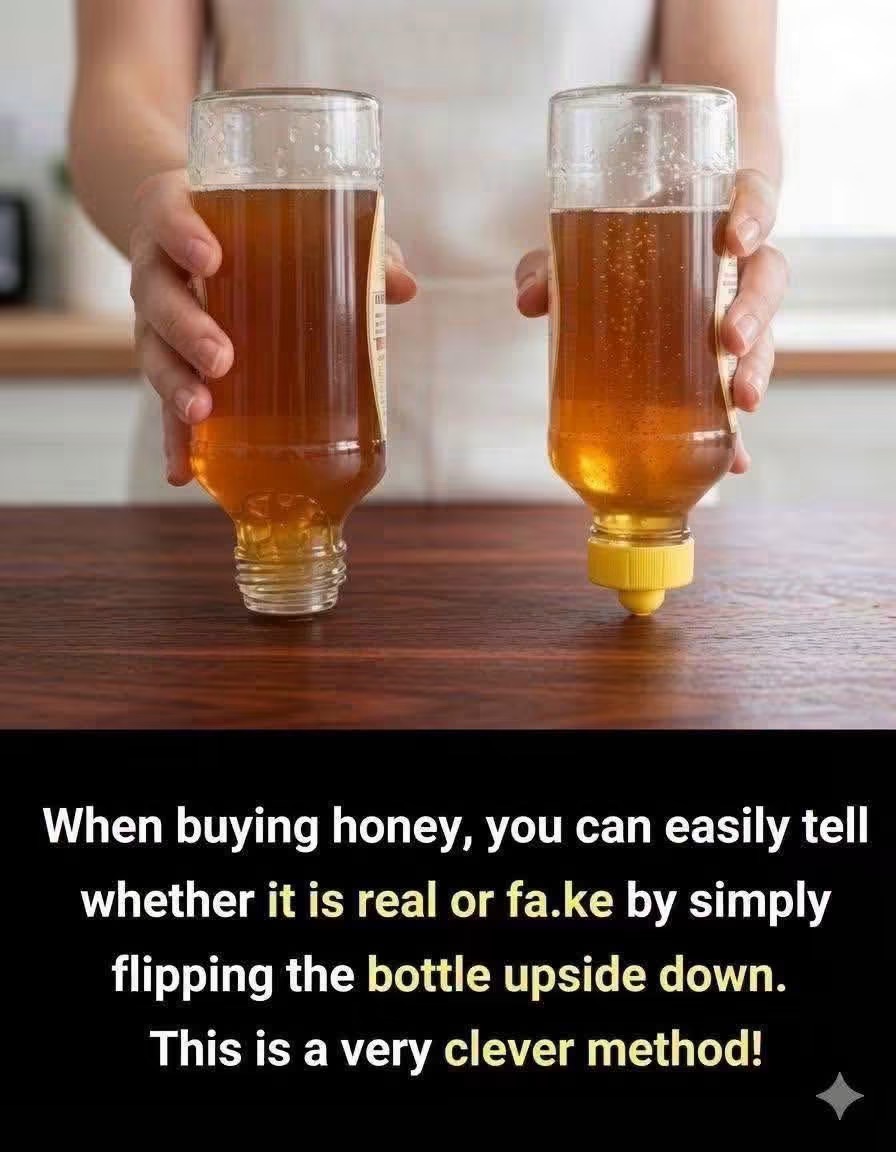
Honey is one of the most valued natural sweeteners, but concerns about fake or diluted products have grown as demand increases worldwide. Many consumers are now looking for simple ways to check whether the honey they buy is pure or mixed with syrups or additives at home.
One popular method often shared online is the “upside-down bottle test.” It suggests that you can observe honey quality by simply flipping the bottle and watching how the contents behave inside the container.
When the bottle is turned upside down, people look at how fast the air bubble moves through the honey. The idea is that thicker, more natural honey allows the bubble to rise more slowly compared to thinner, diluted honey.
This observation is based on viscosity. Pure honey generally has a dense texture due to its natural sugars, enzymes, and low water content, while adulterated honey may contain added syrups or extra moisture that make it flow more easily.
However, experts point out that this method is not fully reliable. Honey consistency can change depending on temperature, floral source, processing methods, and storage conditions, which all affect how fast it flows.
The bottle test can offer a clue, but it cannot prove purity on its own. Temperature, moisture content, floral source, and storage conditions all affect how quickly honey flows. Some authentic varieties are naturally thin, while others crystallize rapidly. A product that behaves differently from expectations is not automatically fake.
Other popular home tests involving water, flame, bread, or paper have similar limits. They may demonstrate thickness or moisture, but sophisticated syrups can still pass them. Laboratory analysis is the most reliable way to identify added sugars and confirm origin, especially when regulators or commercial buyers need a definite result.