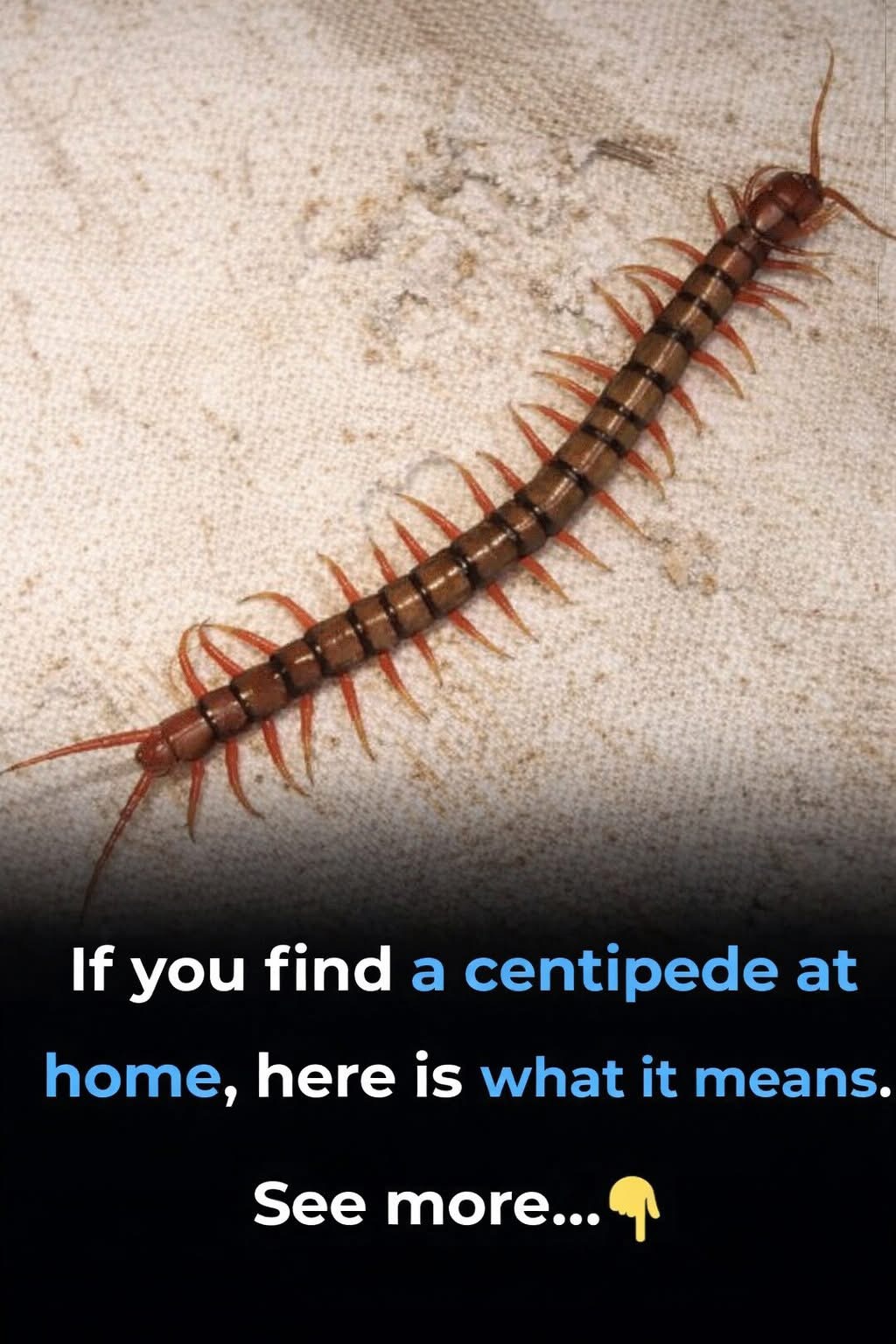
Few household encounters trigger as immediate a reaction as spotting a centipede. Its many legs, rapid movement, and unexpected appearance—often in quiet, dim corners—can create a strong instinct to eliminate it on sight. Bathrooms, basements, and other damp spaces are common locations where these creatures appear, reinforcing the sense that they are unwelcome intruders. Yet, despite the discomfort they cause, centipedes are often misunderstood. Taking a closer look at their role, behavior, and impact on the home environment reveals that killing them may not always be the best decision.
At first glance, centipedes seem like pests themselves. Their appearance alone is enough to make many people uneasy, and their quick, darting movements can feel unsettling. However, this very design—the long body, numerous legs, and speed—is what makes them highly effective predators. Centipedes are not drawn to homes randomly; they are there for a reason. Their presence typically signals that other small insects are already living in the same environment.
Centipedes thrive in humid, dark conditions because these spaces tend to support other insects. Where there is moisture, there is often a food source. Instead of feeding on household materials or contaminating surfaces, centipedes actively hunt other pests. This includes insects that are far more problematic, such as cockroaches, spiders, ants, silverfish, and even small flies. In this way, they function as natural pest control agents, quietly reducing the populations of creatures that can spread bacteria, damage belongings, or create ongoing infestations.
Understanding this role shifts the perspective. Rather than being a threat, a centipede can be seen as part of a natural balance within the home. It is not there to harm residents but to feed on other insects that may be harder to detect. In many cases, the appearance of a centipede is less about the centipede itself and more about what it indicates—that there may be other pests present that have gone unnoticed.
Despite this, the instinct to remove or eliminate centipedes remains strong. This reaction is understandable. Human beings are naturally cautious around unfamiliar or fast-moving creatures, especially those that appear in personal spaces. However, reacting without understanding can sometimes lead to unintended consequences. Removing a centipede without addressing the underlying conditions—such as humidity or the presence of other insects—may not solve the problem. In fact, it may allow other pests to increase in number without a natural predator to control them.
One of the most common concerns about centipedes is whether they pose any danger to humans. While it is true that centipedes possess venom, it is important to understand its purpose and limitations. Their venom is designed to subdue small prey, not to harm humans. House centipedes, in particular, are not aggressive and rarely interact with people unless provoked. Their mouthparts are not strong enough to easily penetrate human skin, and even in rare cases of contact, the effects are typically minimal—far less severe than those caused by many common household insects.
This distinction is important because fear often leads to unnecessary actions. When something is perceived as dangerous, the instinct is to eliminate it quickly. However, in the case of centipedes, the perceived threat does not match the reality. They are not seeking out human interaction, and their primary focus is hunting other insects.
For those who still prefer not to have centipedes inside their home, there are effective and humane alternatives to killing them. One of the most practical approaches is to address the conditions that attract them in the first place. Since centipedes are drawn to moisture, reducing humidity can make a significant difference. Using dehumidifiers, improving ventilation, and fixing leaks can create an environment that is less appealing to both centipedes and the insects they feed on.
In addition to controlling moisture, maintaining cleanliness and reducing clutter can limit hiding places for insects. Regularly checking areas like basements, under sinks, and around drains can help identify potential issues before they become larger problems. By focusing on prevention, it becomes possible to reduce the likelihood of encountering centipedes without resorting to harmful methods.
If a centipede does appear, a simple and humane removal method can be used. Trapping it in a glass or container and releasing it outside allows you to remove it from your home without disrupting its role in the ecosystem. When released in a suitable outdoor environment—such as areas with moist soil, rocks, or vegetation—it can continue to function as a predator, contributing to the balance of local insect populations.
This approach not only addresses the immediate situation but also reflects a broader understanding of how small creatures interact with their environment. Every organism plays a role, even those that seem unpleasant or unnecessary at first glance. Centipedes, despite their appearance, are part of a system that helps regulate insect populations naturally.
Another aspect worth considering is how perception shapes behavior. The reaction to a centipede is often based on its appearance rather than its actual impact. Creatures that look unfamiliar or move quickly tend to be associated with danger, even when there is no real threat. By learning more about these organisms, it becomes possible to replace instinctive fear with informed awareness.
This shift in perspective does not mean that everyone must welcome centipedes into their homes. Personal comfort and preferences are valid, and it is reasonable to want a living space that feels safe and controlled. However, understanding the role of centipedes allows for more thoughtful decisions. Instead of reacting purely out of fear, actions can be guided by knowledge and practicality.
In many ways, the presence of a centipede can be seen as a signal rather than a problem. It indicates that the environment may support other insects, and addressing those conditions can lead to a more effective and lasting solution. Removing the underlying causes—such as excess moisture or hidden food sources—benefits the entire household, not just in relation to centipedes.
Ultimately, the question of whether to kill a centipede comes down to perspective. If viewed solely as an unwanted intruder, the instinct to eliminate it is understandable. But when seen as a natural predator that helps control more harmful pests, the decision becomes less straightforward. In many cases, allowing it to exist—or removing it humanely—may be the more beneficial choice.
The key takeaway is not that centipedes are desirable, but that they are not as harmful as they are often perceived to be. They are part of a natural system that operates quietly and efficiently, often without notice. By understanding their role, it becomes possible to make decisions that are both practical and informed.
In the end, small changes in awareness can lead to better outcomes. Recognizing the function of creatures like centipedes helps create a more balanced approach to managing living spaces. Instead of reacting immediately, taking a moment to understand the situation can lead to solutions that are more effective, sustainable, and aligned with the natural processes that exist all around us.
So the next time a centipede appears, it may be worth pausing before acting. What seems like a problem at first glance might actually be part of the solution.