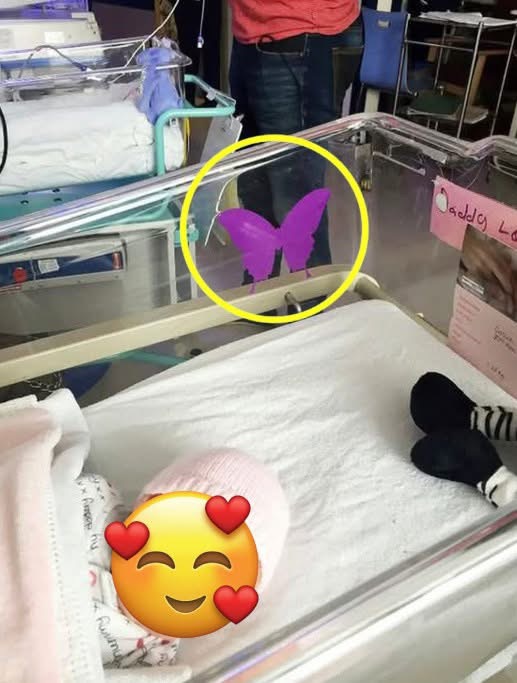
When Millie Smith and Lewis Cann learned they were expecting twin girls, excitement quickly turned to heartbreak. One of the twins, Skye, was diagnosed with a fatal condition called anencephaly, which meant she would not survive long after birth. Despite the devastating news, the couple decided to continue the high-risk pregnancy, determined to cherish every moment with both babies. The twins were born prematurely.
Skye lived for three hours, allowing her parents precious time to hold and say goodbye, while Callie, her healthy sister, remained in the neonatal intensive care unit (NICU) to gain strength. In the NICU, Smith experienced a moment that inspired change. A fellow parent, unaware of her loss, innocently remarked how lucky she was to not have twins. The comment was well-meaning but deeply painful, highlighting how easily others can misunderstand families who have lost a child. This moment sparked the idea for a symbol that could communicate such losses respectfully and sensitively within hospitals.
Smith created the concept of the purple butterfly, placing it on incubators to signify that a baby from a multiple pregnancy had passed away. The purple butterfly is neutral in color and represents remembrance, helping staff and visitors understand the situation without needing to ask or make assumptions. The initiative, now part of the Skye High Foundation, has spread to hospitals in several countries and is used in items such as cards, ornaments, blankets, and stuffed animals.
Today, Callie is a lively, happy seven-year-old, while Skye’s memory continues to support grieving families around the world. The purple butterfly provides comfort, understanding, and a way to honor babies who have passed, ensuring that other parents do not face similar misunderstandings during such a delicate time.