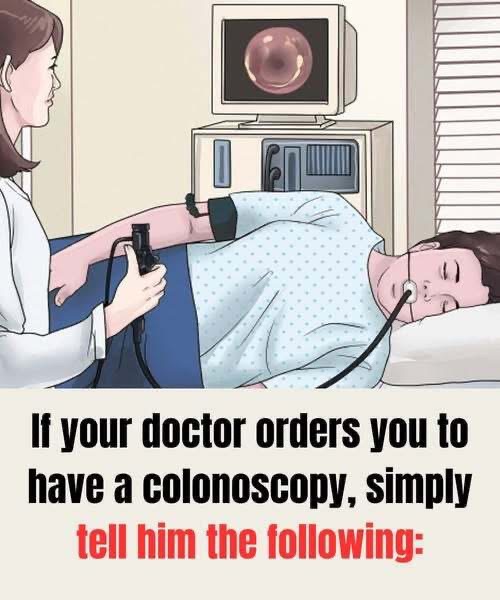
The word colonoscopy often triggers anxiety the moment people hear it. Many immediately associate the test with embarrassment, discomfort, or the fear of receiving bad news. These reactions are common and completely understandable, especially when the procedure is discussed in hushed or joking tones that make it seem intimidating. Much of this fear comes not from the procedure itself, but from uncertainty and misinformation. When people do not fully understand what will happen, their imagination often fills the gaps with worst-case scenarios. In reality, a colonoscopy is a routine medical exam performed millions of times each year, and for most patients it is far less dramatic than expected. Understanding the purpose of the test and what it truly involves can significantly reduce anxiety and help people approach it with a clearer, calmer mindset.
Doctors do not recommend colonoscopies casually or without reason. They are considered one of the most effective tools for identifying problems in the colon and rectum before symptoms ever appear. This includes detecting polyps, inflammation, internal bleeding, and colorectal cancer at very early stages, when treatment is simplest and most successful. Colorectal cancer often develops slowly over many years and may cause no noticeable symptoms until it has progressed. Because of this silent progression, screening plays a critical role in prevention and early intervention. A colonoscopy allows doctors to directly examine the lining of the colon, providing information that no blood test or scan can fully replace. This ability to see potential issues early is what makes the procedure such a powerful lifesaving tool.
The procedure itself is usually brief and performed under sedation. Most patients receive medication that helps them relax deeply or fall asleep, and many remember little or nothing about the exam afterward. There is typically no sharp pain, no prolonged discomfort, and no emotional ordeal like many people imagine beforehand. The exam often takes less than an hour, and patients spend most of that time resting comfortably. For the vast majority, the colonoscopy is over before they even realize it has begun. Medical professionals performing the procedure are trained to prioritize patient comfort, dignity, and safety at every step. This reality stands in stark contrast to the fear that often builds up beforehand.
What many patients find most challenging is not the procedure itself, but the preparation the day before. Preparing for a colonoscopy involves clearing the colon so the doctor can see its lining clearly during the exam. This usually means following a specific diet and drinking a prescribed solution that causes temporary diarrhea. While this process can be inconvenient and unpleasant, it is short-lived and manageable. The discomfort is temporary, and the benefits far outweigh a single day of inconvenience. Many people later say that the anticipation of the preparation was worse than the experience itself. Once the exam is complete, most patients feel relief knowing the hardest part is already behind them.
Understanding why a colonoscopy is being recommended can greatly ease fear. It is not automatically a sign that something is wrong. In many cases, it is a preventive step meant to protect long-term health. Doctors commonly recommend routine screening beginning around midlife, or earlier for those with risk factors such as a family history of colorectal cancer, certain medical conditions, or ongoing digestive symptoms. One of the most powerful benefits of colonoscopy is its ability to prevent cancer altogether. During the exam, doctors can remove precancerous growths called polyps before they ever become dangerous. Unlike many other screening tests, a colonoscopy does not just detect disease—it can stop it before it starts.
Avoiding or delaying a colonoscopy out of fear can allow silent problems to grow unnoticed for years. By the time symptoms finally appear, treatment may be far more complicated and outcomes less favorable. Early detection almost always leads to simpler treatment, fewer complications, and better long-term results. Many people who were once afraid later say the colonoscopy they postponed ended up saving their life. Doctors increasingly encourage patients to view the test not as something to dread, but as an act of self-care and responsibility. Asking questions, understanding the process, and knowing what to expect can replace fear with confidence. A colonoscopy is not about discomfort or embarrassment—it is about protection, peace of mind, and giving yourself the best possible chance at a healthier future.