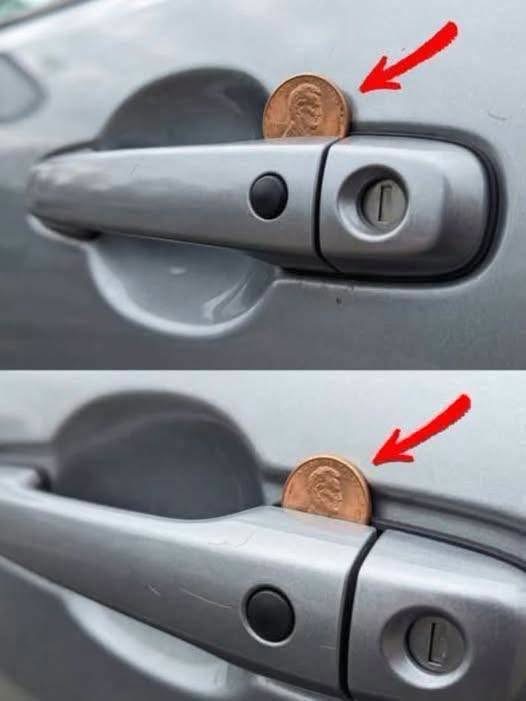
A penny wedged into a car door handle can look like evidence of a clever theft method. Viral warnings claim that a coin can stop a door from locking, allowing a thief to return later. The story has circulated for years, but the mechanism does not work reliably on most modern vehicles. A coin placed near an exterior handle generally cannot override the electronic locks inside the door.
That does not mean an unfamiliar object on a car should be ignored. A penny could be a prank, litter, an accidental placement, or a marker left by someone watching the vehicle. It might also draw a driver’s attention to one side of the car while another person approaches. The right response is awareness without panic.
Before entering, look around the vehicle and surrounding area. If something feels unsafe, return to a populated place and ask security or law enforcement for help. Do not stand beside the car for a long time while searching online. Personal safety matters more than determining why the coin is there.
Check doors, windows, tires, license plates, and the area beneath the car for visible damage or unfamiliar objects. Avoid touching suspicious packages, wires, powders, or devices. A simple coin can be removed when it is safe, but anything suggesting tampering should be photographed from a distance and reported. Drivers should not confront a person they suspect of watching them.
After getting inside, lock the doors immediately and verify that the vehicle responds. Electronic key fobs can sometimes be affected by battery problems or radio interference, so visual or audible confirmation is useful. Never leave the key inside while stepping away to inspect something. If a lock appears damaged, move to a safe place and contact a dealer, locksmith, insurer, or police depending on the situation.
More common vehicle crimes rely on unlocked doors, visible valuables, stolen keys, relay attacks against keyless systems, or broken windows. Basic precautions are therefore more useful than focusing on a penny alone. Park in well-lit areas, remove valuables from view, keep keys away from exterior doors at home, and consider a signal-blocking pouch if the vehicle is vulnerable to relay theft.
A steering-wheel lock, alarm, tracking system, dash camera, or immobilizer can add layers of protection. No device makes a car impossible to steal, but multiple obstacles can make it less attractive. Owners should also install manufacturer software updates and respond to security recalls.
Viral warnings often spread because they combine a familiar object with a hidden threat. People remember the story and share it to protect friends. The intention may be good, but presenting an unproven technique as a widespread crime can create unnecessary fear and distract from more likely risks.
If a penny appears in a door handle, the balanced conclusion is simple. The coin probably has an ordinary explanation and is unlikely to defeat the vehicle’s locking system. Still, an object placed deliberately can justify a quick safety check. Stay aware, move away if the surroundings feel wrong, verify the locks, and report clear evidence of tampering. Caution is useful; panic and unsupported certainty are not.
Drivers can test the viral claim safely at home only by consulting their vehicle manual or a qualified technician, not by repeatedly manipulating a door in a public parking area. Lock designs differ, and forcing objects into a handle may damage paint, seals, or sensors. The goal is not to prove a rumor through risky experimentation. It is to understand the vehicle’s real security features and use them correctly.
Insurance records can also help after real tampering. Photograph damage, note the time and location, preserve camera footage, and obtain a police report when required. Removing evidence before documenting it may make a claim harder to investigate. A small object deserves proportionate attention, while scratches, broken components, or repeated incidents justify a more formal response.