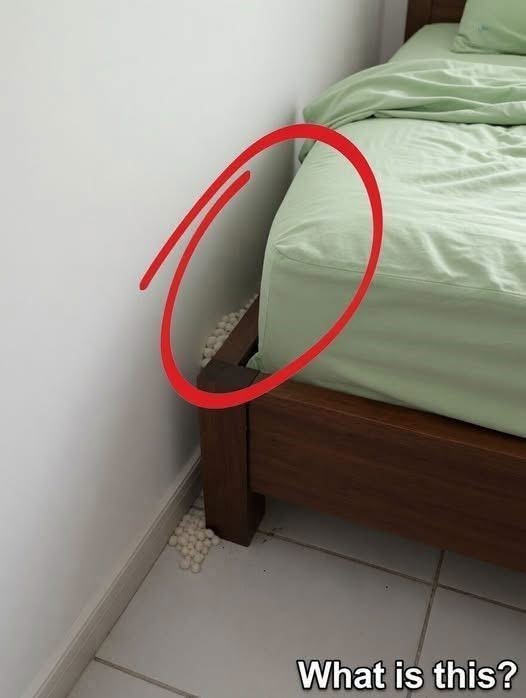
Small white spheres found near a bed can trigger fears about insects, mold, or something dangerous. In the case described by the source, the objects were identified as lizard eggs. Their hidden location makes biological sense. Many small lizards look for warm, sheltered spaces where eggs are less likely to be disturbed by weather or predators.
Lizard eggs are often white or off-white and may have a leathery rather than hard shell. Size and shape vary by species. Some house geckos lay pairs of eggs and may return to protected locations. Several females can also use the same area, creating a cluster that looks larger than one animal could produce.
Appearance alone is not always enough for identification. Snail eggs, insect egg sacs, rodent bait, foam beads, and other household materials can look similar in a photograph. Before touching the objects, note their size, texture, number, exact location, and whether adult animals or droppings have been seen nearby. A local wildlife professional can identify species more reliably than a viral comment section.
Most small house lizards are not interested in attacking people. They often enter buildings while hunting insects and may reduce populations of mosquitoes, moths, or roaches. Their presence near a bedroom is still understandable cause for concern, especially when residents do not know whether the species is protected, invasive, or potentially harmful to pets.
Eggs should not be crushed or sprayed. If they belong to native wildlife, local rules may protect them. Breaking them can also create odor and contamination. Moving reptile eggs carelessly may harm developing embryos because rotation can disrupt their orientation. Anyone who wants them removed should contact local animal control, a wildlife rehabilitator, or a pest professional familiar with reptiles.
The room should be checked for entry points. Gaps around windows, doors, pipes, vents, rooflines, and baseboards can allow small lizards inside. Screens should fit securely, and cracks can be sealed after animals and eggs are removed safely. Reducing insects through sanitation and moisture control makes the home less attractive without relying on poison.
Cleaning around the area requires ordinary hygiene. Avoid sweeping dry droppings into the air. Wear gloves, use an appropriate disinfecting method, wash hands, and keep children and pets away during removal. People with significant allergies, respiratory conditions, or immune concerns may prefer professional cleaning.
A discovery beside the bed can feel personal because bedrooms are expected to be controlled, private spaces. The presence of eggs does not mean the home is filthy or dangerous. It usually means a small animal found a quiet opening and a protected place. Understanding the cause helps replace disgust with a practical response.
The answer to the mysterious white spheres is likely lizard eggs, but confirmation should come before action. Identify them, follow local wildlife guidance, and remove or protect them appropriately. Then address the gaps and insect activity that invited the lizard indoors. A calm, humane response protects the household while avoiding unnecessary harm to an animal that was simply looking for a safe place to reproduce.
If experts advise leaving the eggs temporarily, the area can be isolated so children and pets do not disturb them. Residents should not attempt to warm, incubate, or hatch unknown eggs without guidance, because temperature and orientation requirements vary. The humane option is not always to keep them. It is to let someone familiar with the local species decide whether relocation, monitoring, or removal gives the animals and household the safest outcome.
After removal, monitor the same area for several weeks. Another clutch can reveal that the access point remains open or that several animals are using the site. Repeated evidence is easier to solve when dates and photographs are recorded. Prevention should focus on exclusion and insect control rather than glue traps or poisons that can harm lizards, pets, and other wildlife.