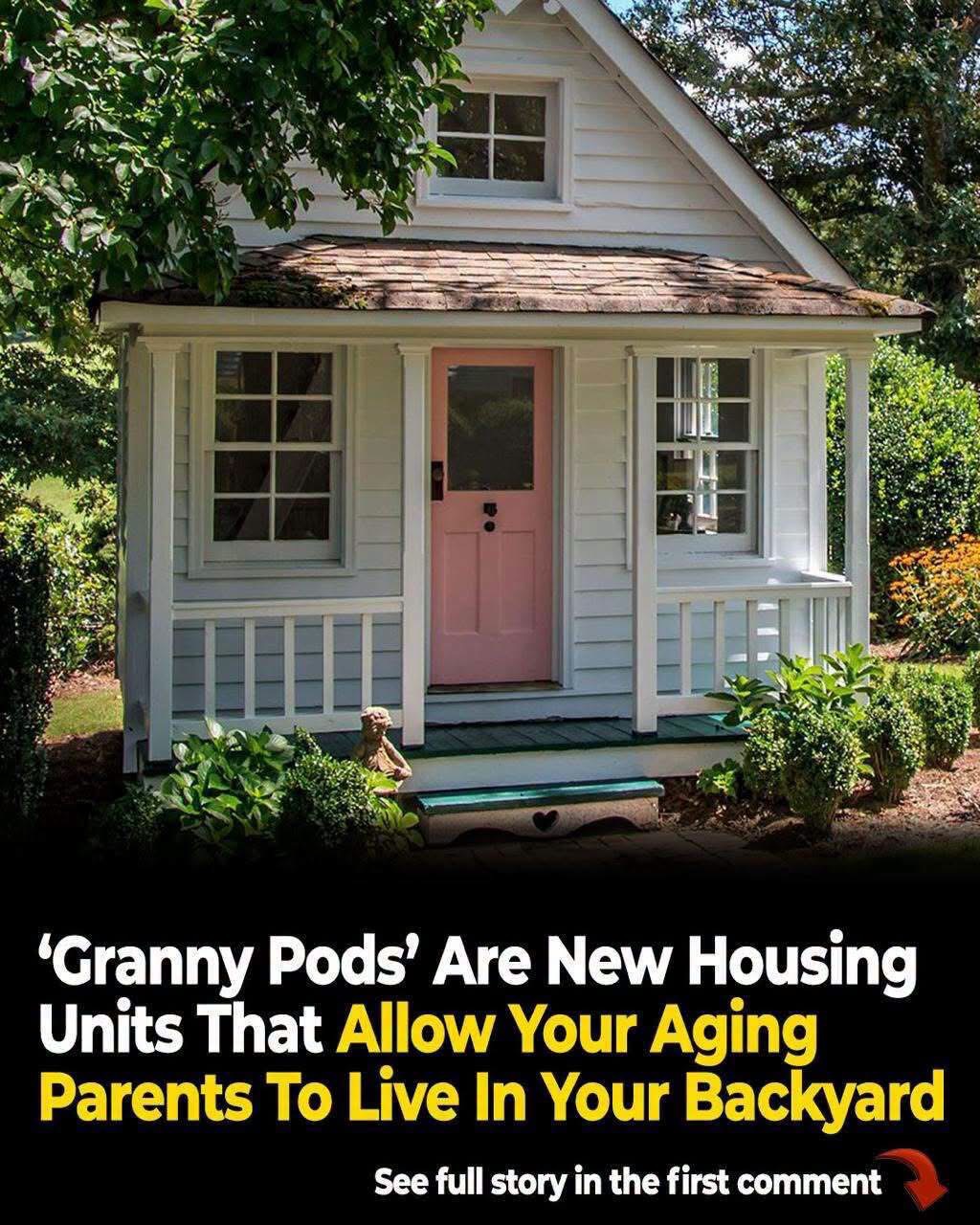
A quiet revolution is unfolding across neighborhoods throughout America, and it is happening one backyard at a time. As parents grow older, childcare expenses continue to soar, and housing prices remain out of reach for millions of families, more households are being forced to reconsider what living together really means. What was once viewed as an unusual arrangement is rapidly becoming a practical solution to multiple generations of challenges. Small backyard homes—often called “granny pods” or accessory dwelling units (ADUs)—are transforming the way families think about aging, caregiving, and financial stability. Yet behind every construction project lies an emotional decision filled with love, guilt, responsibility, and difficult conversations about independence, privacy, and the future.
For countless families, building a backyard ADU is not about following the latest housing trend or increasing property value. It is about survival. Many adult children face the impossible task of balancing full-time careers, raising young children, and caring for aging parents at the same time. Traditional assisted-living facilities can cost anywhere from several thousand dollars to well over $10,000 per month depending on location and the level of care required. For many households, those expenses simply are not sustainable. A small, self-contained home built only a few steps from the main residence can provide an alternative that allows aging parents to remain close to loved ones while preserving a meaningful degree of independence. Rather than becoming full-time caregivers or paying enormous monthly fees, families can create a living arrangement that offers both support and dignity.
The appeal extends well beyond financial considerations. Many older adults fear losing their independence far more than they fear aging itself. Moving into a nursing facility or assisted-living community often means leaving behind familiar routines, neighbors, treasured possessions, and the sense of control they have spent a lifetime building. A backyard cottage allows them to maintain many of those daily comforts while remaining close enough for family members to provide assistance whenever necessary. Parents can enjoy their own kitchen, living room, bedroom, and private entrance while still sharing meals, celebrations, and everyday moments with children and grandchildren only a short walk away. This balance between closeness and personal space has become one of the greatest attractions of multigenerational living.
For younger families, the benefits often extend in both directions. Grandparents living nearby may be able to help with childcare, school pickups, or simply being present when unexpected emergencies arise. Parents juggling demanding work schedules frequently discover that having trusted family members close by creates flexibility that would otherwise require expensive daycare services or outside caregivers. Children also benefit from spending more time with grandparents, developing stronger relationships that might be difficult to maintain across long distances. In many households, three generations living on a single property creates a stronger sense of family connection while reducing some of the financial pressures affecting every generation.
Still, choosing to build an ADU is rarely as straightforward as it first appears. Local zoning regulations differ dramatically from one city or county to another. Some communities actively encourage accessory dwelling units as a response to housing shortages, while others impose strict size limits, occupancy rules, setback requirements, parking regulations, or homeowner association restrictions that can delay or completely prevent construction. Families often spend months navigating permits, inspections, financing, and design approvals before a single foundation is poured. Construction costs themselves can also be substantial, requiring careful financial planning and long-term budgeting before the project becomes reality.
Even after construction is complete, families must navigate emotional questions that no building permit can solve. Living close together requires clear boundaries, mutual respect, and honest communication. Adult children may worry about maintaining their own privacy, while aging parents often struggle with accepting help without feeling like a burden. Daily routines, household expectations, financial responsibilities, and caregiving roles all require thoughtful discussion long before anyone moves into the new space. Successful multigenerational living depends not only on well-designed buildings but also on healthy relationships built on understanding and flexibility.
When these challenges are addressed successfully, however, the rewards can be remarkable. Families often discover a renewed sense of security knowing loved ones are nearby without sacrificing personal independence. Elderly parents remain active participants in family life rather than distant visitors. Grandchildren grow up surrounded by multiple generations, learning family traditions and creating memories that might otherwise be impossible. Adult children gain peace of mind knowing help is only a few steps away if an emergency occurs, while older relatives maintain a level of autonomy that institutional care cannot always provide.
Ultimately, the growing popularity of granny pods reflects more than a changing housing market. It represents a broader shift in how families approach aging, caregiving, and community in an increasingly expensive world. Rather than viewing older relatives as people who must be separated from daily family life, many households are rediscovering the value of remaining connected across generations. Although zoning laws, financial challenges, and emotional decisions can complicate the process, a backyard ADU often becomes much more than a small house. It becomes a symbol of commitment, compassion, and shared responsibility—a place where three generations can live close enough to care for one another while still preserving the privacy and independence everyone deserves. In a time when so many families feel stretched to their limits, that balance may prove to be one of the most valuable investments they can make.